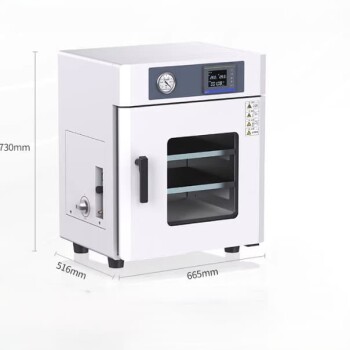
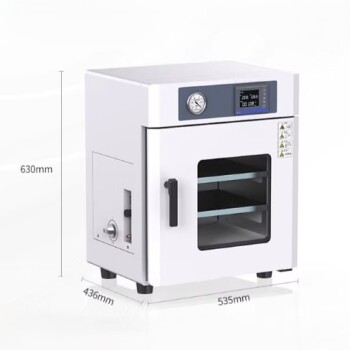
The primary requirement for using a vacuum drying oven in processing B4C-CeB6 ceramic precursor powders is to remove liquid media, specifically anhydrous ethanol, without compromising the chemical integrity of the material. By lowering the pressure, the oven reduces the boiling point of the solvent, allowing for rapid evaporation at a safe, low temperature like 110°C.
Core Takeaway Processing ceramic precursors requires a delicate balance between thorough drying and material preservation. Vacuum drying resolves this by enabling the complete removal of solvents at low temperatures, simultaneously preventing oxidation and ensuring high purity.
The Mechanics of Efficient Drying
Accelerating Solvent Removal
The fundamental advantage of this process is the manipulation of boiling points. Under standard atmospheric pressure, removing a solvent requires significant heat to trigger evaporation.
In a vacuum environment, the ambient pressure is drastically reduced. This physical change lowers the boiling point of the liquid media, such as anhydrous ethanol, allowing it to turn into vapor much faster.
Enabling Low-Temperature Processing
Because the solvent boils at a lower threshold, the oven can operate at relatively low temperatures, typically around 110°C.
This safeguards the B4C-CeB6 precursors from the thermal stress associated with high-heat drying methods. It allows for a thorough drying cycle without subjecting the delicate powder to excessive thermal energy.
Ensuring Material Purity
Preventing Oxidation
Standard drying ovens rely on circulating air, which exposes the powder to oxygen. For reactive ceramic precursors, this exposure can lead to powder oxidation, altering the chemical composition before the material is even sintered.
A vacuum oven evacuates the air from the chamber. By isolating the B4C-CeB6 mixture from oxygen during the heating phase, the system maintains the chemical stability of the raw materials.
Blocking Atmospheric Impurities
Beyond oxygen, the atmosphere contains moisture and particulate matter that can contaminate the powder.
The vacuum environment prevents the adsorption of atmospheric impurities. This isolation is critical for maintaining the strict purity standards required for high-performance ceramic applications.
Common Pitfalls and Considerations
Equipment Complexity
While effective, vacuum drying requires more complex infrastructure than standard convection drying. It necessitates reliable vacuum pumps and seals that must be maintained to prevent pressure leaks.
Throughput Limitations
Vacuum drying is typically a batch process. Unlike continuous conveyor dryers, the chamber must be sealed, evacuated, heated, and then repressurized for each load, which can limit high-volume throughput if not managed correctly.
Making the Right Choice for Your Goal
To optimize your B4C-CeB6 powder processing, align your drying strategy with your specific material requirements:
- If your primary focus is Chemical Purity: Prioritize the vacuum level to ensure total isolation from oxygen and prevent surface oxidation.
- If your primary focus is Process Efficiency: Focus on optimizing the temperature-to-pressure ratio to maximize the evaporation rate of the anhydrous ethanol without exceeding 110°C.
By utilizing a vacuum drying oven, you ensure the precursor powder remains pure, dry, and chemically stable for subsequent manufacturing steps.
Summary Table:
| Feature | Vacuum Drying Benefits for B4C-CeB6 |
|---|---|
| Boiling Point Reduction | Lowers ethanol boiling point for faster evaporation |
| Process Temperature | Operates safely at ~110°C to avoid thermal stress |
| Oxidation Control | Evacuates oxygen to maintain chemical integrity |
| Contamination Prevention | Blocks atmospheric moisture and particulate adsorption |
| Material Outcome | High-purity, chemically stable precursor powders |
Elevate Your Material Purity with KINTEK Precision Solutions
Advanced ceramic processing demands uncompromising control over environmental variables. At KINTEK, we specialize in providing high-performance laboratory equipment tailored for sensitive material synthesis. Whether you are processing B4C-CeB6 precursors or developing next-generation ceramics, our precision vacuum drying ovens and high-temperature furnaces (muffle, vacuum, and CVD) ensure optimal results without oxidation.
From high-pressure reactors to specialized crushing and milling systems, KINTEK provides the comprehensive tools necessary for research and industrial production. Contact us today to discover how our high-purity consumables and thermal solutions can streamline your laboratory workflow and enhance your product quality.
Related Products
- 56L Vertical Laboratory Vacuum Drying Oven
- 23L Laboratory Vacuum Drying Oven
- Laboratory Scientific Electric Heating Blast Drying Oven
- Benchtop Laboratory Vacuum Freeze Dryer
- Dental Porcelain Zirconia Sintering Ceramic Vacuum Press Furnace
People Also Ask
- Why is a laboratory vacuum drying oven recommended for rice straw residues? Protect Your Biomass Integrity
- What role does a laboratory vacuum drying oven play in the preparation of modified multi-walled carbon nanotubes?
- What is the importance of using a laboratory vacuum drying oven? Preserving Slow-Release Microcapsule Integrity
- Why is a Laboratory Vacuum Drying Oven recommended for PBAT microspheres? Protect Sensitive Polymer Integrity
- What role does a laboratory vacuum drying oven play in processing nanoparticle powder samples? Protect Sample Integrity