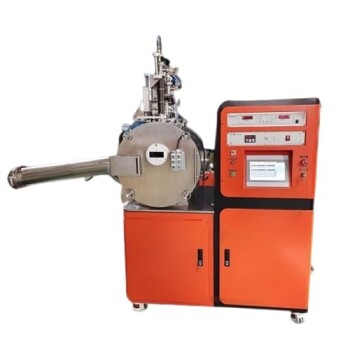
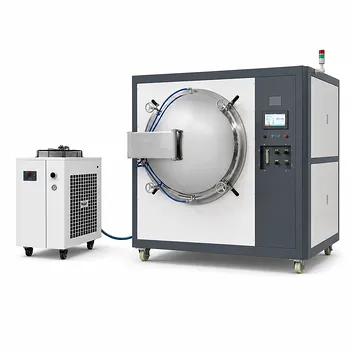
The primary reason a vacuum induction melting (VIM) furnace is essential for rare earth steel research is its ability to neutralize the extreme chemical reactivity of elements like lanthanum and cerium. Because these rare earth elements react instantly and aggressively with oxygen and sulfur, a standard open-air furnace would result in rapid oxidation, causing the valuable elements to burn off before they can integrate into the steel.
Core Takeaway: The VIM furnace acts as a necessary shield against "burning loss." By operating in a high-vacuum or inert atmosphere, it guarantees that highly reactive rare earth additions are preserved in their metallic form, ensuring precise alloying ratios and enabling deep purification of the molten steel.
The Chemistry of Rare Earth Additions
High Chemical Activity
Rare earth elements, specifically lanthanum and cerium, are characterized by high chemical activity.
In the presence of standard atmospheric air, they react easily and rapidly with oxygen. This reactivity makes them difficult to manage in conventional melting scenarios where exposure to air is constant.
The Threat of "Burning Loss"
When rare earth elements oxidize during the melting process, they are effectively lost from the alloy matrix, a phenomenon known as burning loss.
Without protection, the amount of rare earth you add to the crucible will not match the final composition of the steel. This unpredictability ruins experimental precision and wastes expensive materials.
How VIM Technology Solves the Problem
Atmosphere Protection
The VIM furnace solves the reactivity issue by creating a protective environment, either through a high-vacuum state or an inert gas atmosphere.
This isolation physically prevents oxygen from contacting the molten pool. It creates a controlled space where the chemical potential for oxidation is effectively removed.
Ensuring Precise Addition Amounts
Because the environment is controlled, the yield of rare earth elements becomes predictable and high.
Researchers can add specific quantities of lanthanum or cerium with the confidence that the final steel ingot will retain the intended composition. This precision is critical for laboratory studies attempting to correlate specific alloy percentages with material performance.
Enhancing Steel Quality
Deep Deoxidation and Desulfurization
Beyond simply retaining the elements, the VIM environment allows rare earths to perform their intended function: purifying the steel.
Protected from atmospheric oxygen, these elements can fully engage in deep deoxidation and desulfurization within the melt. This results in a cleaner microstructure and improved mechanical properties.
Removal of Dissolved Gases
The vacuum environment offers a secondary benefit by actively removing harmful dissolved gases from the liquid metal.
By degassing the melt and preventing reactions between the alloy and non-metallic inclusions, VIM ensures the final product is free from common pollutants that compromise steel integrity.
Understanding the Trade-offs
The Necessity of Strict Atmosphere Control
While VIM is ideal, it renders the process highly sensitive to seal integrity.
If the vacuum is breached or the inert gas purity is compromised, the high reactivity of the rare earths will immediately lead to rapid inclusion formation. The process relies entirely on the mechanical integrity of the vacuum system; there is no chemical "safety net" if the atmosphere fails.
Complexity vs. Conventional Melting
VIM requires more complex operational protocols compared to standard air induction melting.
The equipment is specialized for processing special steels, superalloys, and reactive metals (like titanium or aluminum). This makes the setup more resource-intensive, but it is a non-negotiable requirement when working with easily oxidized materials like rare earths.
Making the Right Choice for Your Goal
When planning your melting protocol for rare earth steel, consider your specific objectives:
- If your primary focus is Compositional Accuracy: You must use VIM to prevent burning loss, ensuring that the percentage of rare earths added matches the final alloy analysis.
- If your primary focus is Material Purity: Rely on VIM to facilitate deep desulfurization and the removal of dissolved gases, which are critical for high-performance steel grades.
Ultimately, for rare earth steel, the vacuum induction furnace is not just a tool for melting; it is the only reliable method for controlling the volatile chemistry of the alloying process.
Summary Table:
| Feature | VIM Furnace Performance | Advantage for Rare Earth Steel |
|---|---|---|
| Atmosphere | High-vacuum / Inert gas | Prevents "burning loss" of reactive RE elements |
| Composition Control | Precise & Predictable | Ensures exact ratios of La/Ce in the final ingot |
| Purification | Deep Deoxidation/Desulfurization | Produces a cleaner microstructure and superior steel |
| Gas Removal | Active Vacuum Degassing | Eliminates dissolved gases like oxygen and nitrogen |
| Material Integrity | Isolated Environment | Maximizes yield of expensive rare earth additions |
Elevate Your Metallurgy Research with KINTEK Precision
Don't let oxidation compromise your alloy integrity. KINTEK specializes in advanced laboratory equipment, providing the high-performance Vacuum Induction Melting (VIM) furnaces and vacuum/atmosphere systems necessary for complex rare earth steel research.
Our extensive portfolio—ranging from crushing and milling systems to high-temperature furnaces and PTFE consumables—is designed to meet the rigorous demands of material science. Partner with us to achieve unmatched compositional accuracy and deep purification in your laboratory processes.
Ready to optimize your melting results? Contact our technical experts today to find the perfect solution for your research goals.
References
- Yuzhen Bai, Aijun Gong. The Role of Rare Earths on Steel and Rare Earth Steel Corrosion Mechanism of Research Progress. DOI: 10.3390/coatings14040465
This article is also based on technical information from Kintek Solution Knowledge Base .
Related Products
- Lab-Scale Vacuum Induction Melting Furnace
- Vacuum Induction Melting Spinning System Arc Melting Furnace
- Vacuum Heat Treat Furnace and Levitation Induction Melting Furnace
- Non Consumable Vacuum Arc Induction Melting Furnace
- Vacuum Arc Induction Melting Furnace
People Also Ask
- How do vacuum induction or arc melting furnaces facilitate the synthesis of U-Al-C MAX phases? Precision Heat & Purity
- What is the primary function of a vacuum induction melting furnace in Ni-Mo-Cr-Fe master alloy prep? Ensure High Purity
- What types of metals are typically processed in a vacuum induction melting furnace? High-Purity Alloys for Critical Applications
- What is the function of a vacuum induction melting furnace? Essential Guide for High-Purity FeCrAl Alloy Production
- What are the key components inside the vacuum chamber of a vacuum induction melting furnace? A Guide to the Core Melting Assembly