The primary reason for selecting a water-cooled copper mold is its exceptional capacity for heat extraction, which drives an immediate and rapid solidification of the Nickel-based 625 alloy. This speed is functional, not incidental; it serves as a barrier that prevents the molten alloy from interacting chemically with the mold walls. By effectively "freezing" the interface instantly, the mold facilitates the creation of a "zero-dilution" sample that is a chemically perfect representation of the raw material.
Core Takeaway The integrity of a reference sample depends entirely on the speed of its solidification. A water-cooled copper mold acts as a massive heat sink, halting atomic diffusion before it begins, thereby ensuring the sample retains the exact chemical and physical identity of the raw alloy without contamination.
The Mechanics of Zero-Dilution Casting
Leveraging High Thermal Conductivity
Copper possesses inherently high thermal conductivity, making it an ideal material for transferring heat away from a source.
When coupled with active water cooling, the mold becomes an extremely efficient heat exchanger. This setup forces the molten Nickel-based 625 alloy to drop in temperature rapidly, transitioning from liquid to solid almost instantaneously upon contact.
Preventing Mutual Diffusion
The greatest threat to the accuracy of a reference sample is time. If molten metal sits against a mold surface for too long, a process called mutual diffusion occurs.
This is where atoms from the alloy migrate into the mold, and atoms from the mold migrate into the alloy. By inducing rapid solidification, the water-cooled copper mold denies the atoms the time required to move, effectively locking the chemical structure in place before any mixing can occur.
Ensuring Analytical Integrity
Preserving Raw Material Identity
For a sample to be a valid "reference," it must be a truthful clone of the bulk raw material.
Any interaction between the melt and the mold results in dilution, where the alloy's composition is altered by foreign contaminants or the loss of specific elements. This mold technology eliminates that variable, ensuring the final cast is chemically identical to the molten source.
Capturing Initial Physical Properties
Beyond chemical composition, the reference sample is used for comparative analysis of physical traits.
Because the mold prevents interaction and solidifies the material in its "raw" state, it allows engineers to measure the alloy's initial physical properties accurately. This establishes a reliable baseline for judging how subsequent processing affects the material.
The Risks of Alternative Methods
The Consequence of Slow Cooling
It is important to understand what happens if this specific mold type is not used.
Using a mold with lower thermal conductivity would slow down the solidification process. This extended liquid phase would open a window for diffusion, leading to a sample that is chemically "diluted."
Compromised Benchmarks
If a reference sample is diluted, even slightly, it ceases to be a reference.
Analysis based on a contaminated sample would yield false data regarding the alloy's purity and performance potential. The water-cooled copper mold is therefore not just a preference, but a technical necessity for maintaining data integrity.
Making the Right Choice for Your Goal
To ensure your comparative analysis is statistically and chemically valid, apply the following guidelines:
- If your primary focus is Chemical Composition: Rely on water-cooled copper molds to prevent elemental exchange, ensuring your spectrographic results match the true chemistry of the raw batch.
- If your primary focus is Process Benchmarking: Use this method to establish a "zero-state" baseline for physical properties, against which all future heat-treated or worked samples can be measured.
By prioritizing rapid solidification, you convert a variable casting process into a precise scientific standard.
Summary Table:
| Feature | Benefit for Nickel-based 625 Alloy |
|---|---|
| High Thermal Conductivity | Triggers instantaneous solidification upon contact. |
| Active Water Cooling | Acts as a massive heat sink for continuous heat extraction. |
| Rapid Solidification | Prevents chemical interaction between molten alloy and mold walls. |
| Zero-Dilution | Ensures the sample is a perfect chemical clone of the raw material. |
| Diffusion Prevention | Halts atomic migration to preserve high-purity metallurgical data. |
Elevate Your Material Analysis with KINTEK Precision
Don’t let sample contamination compromise your research integrity. At KINTEK, we specialize in high-performance laboratory solutions designed for the most demanding metallurgical applications. Whether you are casting reference samples of Nickel-based 625 or conducting advanced thermal processing, our expertise in high-temperature furnaces, vacuum systems, and specialized casting equipment ensures your results are accurate and repeatable.
From induction melting systems to high-pressure reactors and precision consumables, KINTEK provides the tools global researchers trust to establish reliable baselines and push the boundaries of material science.
Ready to optimize your lab’s casting and analysis workflow?
Contact KINTEK experts today to discover how our comprehensive range of equipment can enhance your precision and efficiency.
References
- Tiago José Antoszczyszyn, Adriano Scheid. Impact of dilution on the microstructure and properties of Ni-based 625 alloy coatings. DOI: 10.1590/0104-9224/si1902.05
This article is also based on technical information from Kintek Solution Knowledge Base .
Related Products
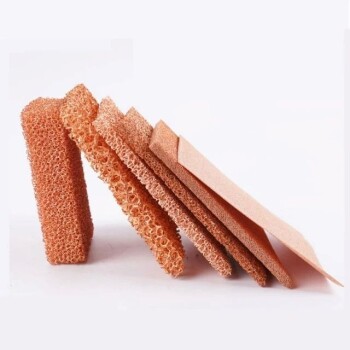
- Copper Foam
- Anti-Cracking Press Mold for Lab Use
- Ball Press Mold for Lab
- Double Plate Heating Press Mold for Lab
- Cylindrical Lab Electric Heating Press Mold for Laboratory Applications
People Also Ask
- What is copper foam used for? A Guide to Its High-Performance Thermal and Energy Applications
- How do you make copper foam? A Step-by-Step Guide to Creating Porous Metal Structures
- What are the available sizes and thicknesses for copper foam? Optimize Your Thermal and Filtration Performance
- What are the characteristics of copper foam? Unlock High-Performance Thermal and Electrical Solutions
- Is copper foam safe? Discover the facts about its antimicrobial and cooling benefits