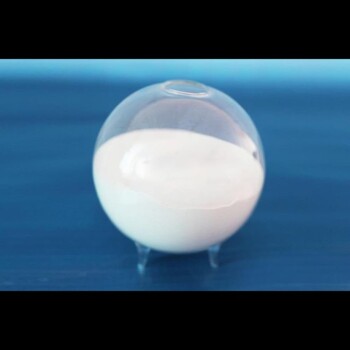
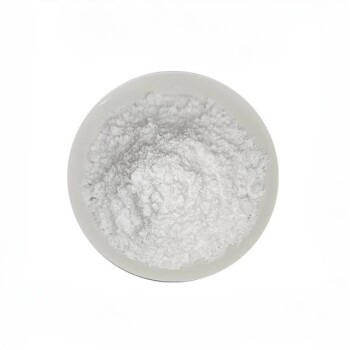
The layer of alumina (Al2O3) powder serves as a critical physical and thermal seal. Placed at the top of the crucible, its primary function is to block external air from entering the reaction zone. This isolation preserves the reducing atmosphere generated by the active carbon below, ensuring the WC/Cu materials are sintered in a strictly controlled, contaminant-free environment.
Core Takeaway Alumina powder acts as an inert, high-temperature "lid" for the sintering process. By preventing oxygen ingress and insulating the vessel, it allows the internal active carbon to maintain the stable reducing atmosphere necessary for successful material densification.
The Role of Alumina in Atmosphere Control
Blocking External Contaminants
The primary challenge in sintering WC/Cu (Tungsten Carbide/Copper) is preventing oxidation. The alumina powder layer creates a dense barrier at the opening of the crucible.
This barrier effectively blocks external air from infiltrating the vessel. Without this seal, oxygen would enter the reaction zone, compromising the integrity of the materials being sintered.
Preserving the Reducing Atmosphere
Inside the crucible, active carbon is used to generate a reducing atmosphere. This atmosphere is essential to strip away oxides and allow the metal particles to bond.
The alumina layer enhances the stability of this atmosphere. It acts as a containment zone, keeping the reducing gases concentrated around the workpiece rather than letting them escape or be diluted by ambient air.
Why Alumina is the Material of Choice
Unwavering Chemical Stability
Alumina is selected because it is chemically inert. In a powder embedding setup, the sealing material must not react with the crucible, the active carbon, or the WC/Cu components.
Because it is chemically stable, alumina performs its sealing function without introducing new impurities or unwanted chemical byproducts into the sensitive sintering zone.
High-Temperature Resistance
Sintering processes occur at extreme temperatures. The sealing material must maintain its physical form without melting or degrading.
Alumina is highly high-temperature resistant. It retains its powder structure and insulating properties throughout the thermal cycle, ensuring the seal remains intact from the beginning of the heat ramp to the final cooling phase.
Operational Criticality and Risks
The Consequence of Seal Failure
While alumina is effective, its performance relies on proper application. If the layer is too thin or unevenly packed, the "seal" becomes permeable.
Air infiltration is the immediate consequence of a compromised layer. This leads to the rapid consumption of the active carbon and the subsequent oxidation of the WC/Cu parts, resulting in poor mechanical properties or scrap parts.
Thermal Insulation vs. Atmosphere Flow
Alumina also serves as a thermal insulator. This helps maintain a uniform temperature within the crucible.
However, users must understand that alumina serves only as the passive barrier. It does not generate the reducing atmosphere itself; it simply protects the active carbon that does. Relying on alumina without sufficient active carbon underneath will fail to protect the parts.
Making the Right Choice for Your Project
To ensure high-quality sintering results for WC/Cu materials, consider the following based on your specific goals:
- If your primary focus is Avoiding Oxidation: Ensure the alumina layer is of sufficient depth and consistently packed to create an airtight physical barrier against oxygen.
- If your primary focus is Thermal Consistency: Verify that the alumina powder is distributed evenly across the top to prevent hot spots or rapid heat loss.
Success in powder embedding sintering relies on using alumina not just as a filler, but as a calculated engineering seal.
Summary Table:
| Feature | Function in Sintering Process |
|---|---|
| Physical Seal | Blocks external air and oxygen ingress into the crucible. |
| Atmosphere Preservation | Concentrates the reducing gases generated by active carbon. |
| Chemical Stability | Remains inert, preventing contamination of WC/Cu materials. |
| Thermal Resistance | Maintains structural integrity at extreme sintering temperatures. |
| Insulation | Promotes uniform temperature distribution within the reaction zone. |
Maximize Sintering Success with KINTEK Expertise
Achieving the perfect reducing atmosphere for WC/Cu materials requires precision at every step. At KINTEK, we specialize in providing high-performance laboratory equipment and consumables tailored for advanced metallurgy.
Whether you need high-temperature muffle or vacuum furnaces, premium alumina and ceramic crucibles, or precise crushing and milling systems, our comprehensive portfolio supports every stage of your research and production. From high-pressure reactors to battery research tools, we deliver the quality you need to eliminate oxidation and ensure material densification.
Ready to optimize your sintering results? Contact KINTEK today for professional guidance and tailored equipment solutions!
Related Products
- Boron Nitride (BN) Crucible for Phosphorous Powder Sintered
- Engineering Advanced Fine Ceramics Alumina Crucibles (Al2O3) for Thermal Analysis TGA DTA
- Engineering Advanced Fine Alumina (Al₂O₃) Ceramic Positioning Pin Straight Bevel for Precision Applications
- High Temperature Wear-Resistant Alumina Al2O3 Plate for Engineering Advanced Fine Ceramics
- Engineering Advanced Fine Ceramics Alumina Al2O3 Crucible With Lid Cylindrical Laboratory Crucible
People Also Ask
- Why use Boron Nitride (BN) crucibles in metal infiltration? Ensure sample purity and non-wetting performance.
- Why are Boron Nitride (BN) or Alumina crucibles preferred for Na-flux GaN growth? Optimize Your Crystal Yield
- What is the necessity of using a ceramic crucible as a carrier during BN synthesis? Ensure High-Purity Results
- How much heat can a ceramic crucible take? Find the Right Crucible for Your High-Temp Process
- What is the necessity of using ceramic crucibles in TGA for TClPhMA? Ensure Accurate Thermal Data Integrity