Knowledge Why is a PTFE crucible preferred for plasma etching? Ensure Chemical Integrity and Targeted Action
Author avatar

Tech Team · Kintek Solution

Updated 1 day ago

Why is a PTFE crucible preferred for plasma etching? Ensure Chemical Integrity and Targeted Action


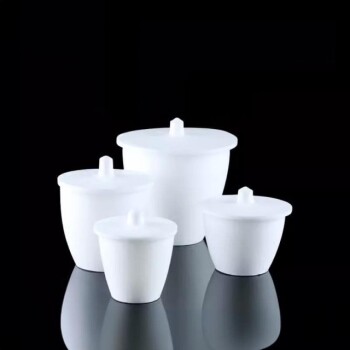
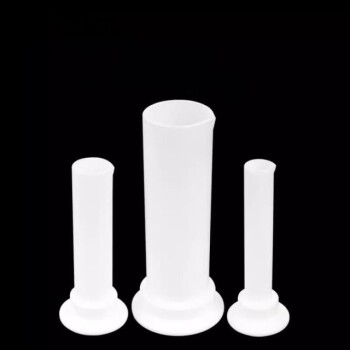
A Polytetrafluoroethylene (PTFE) crucible is the preferred vessel for plasma etching organic contaminants because it chemically isolates the sample while optimizing the electrical environment. Its high chemical inertness and low surface energy prevent the container from reacting with or holding onto organic samples, such as stearic acid. Simultaneously, the material allows the sample to maintain a floating potential, directing the plasma's active species toward the sample rather than the crucible itself.

The core value of PTFE in this context is isolation: it physically prevents sample adhesion and electrically ensures the plasma targets the contaminants, not the container.

Preserving Chemical Integrity

Unmatched Chemical Inertness

The primary requirement for an etching vessel is that it must not participate in the reaction. PTFE possesses high chemical inertness, ensuring it remains stable even when exposed to reactive plasma species. This prevents the crucible from introducing new contaminants into the organic sample.

Preventing Sample Loss via Adhesion

Organic samples, particularly substances like stearic acid, can easily stick to standard container walls. PTFE is selected for its extremely low surface energy. This non-stick property prevents the sample from adhering to the crucible, ensuring the entire sample surface remains exposed to the plasma.

Optimizing the Plasma Environment

Maintaining a Floating Potential

The electrical properties of the sample holder dictate how the plasma behaves. Because PTFE is an electrical insulator, it allows the sample to remain at a floating potential within the plasma chamber.

Targeted Etching Action

By maintaining this floating potential, the setup influences the trajectory of active species within the plasma. The ions and radicals are primarily directed toward the sample surface rather than being attracted to or grounded by the container. This ensures the etching process is efficient and focused solely on the organic contaminants.

Understanding the Trade-offs

Thermal Limitations

While PTFE is robust enough for gaskets and gears in aeronautics, it is ultimately a polymer. It is ideal for standard plasma etching of organics, but it lacks the extreme thermal resistance of ceramic or quartz crucibles used in ultra-high-temperature processes.

Specificity of Application

PTFE is specialized for chemical resistance and low adhesion. If the process requires the container to act as a grounded electrode or a heat sink, PTFE's insulating properties would become a hindrance rather than a benefit.

Making the Right Choice for Your Goal

To ensure your plasma etching process yields accurate results, apply the following guidelines:

  • If your primary focus is contamination control: Rely on PTFE to prevent the crucible material from chemically reacting with your organic samples.
  • If your primary focus is process efficiency: Use PTFE to maintain a floating potential, ensuring the plasma energy is concentrated on the sample surface.

By selecting PTFE, you transform the sample holder from a potential variable into a passive, reliable component of your experimental setup.

Summary Table:

Feature Benefit for Plasma Etching
Chemical Inertness Prevents reaction with reactive plasma species and contamination.
Low Surface Energy Non-stick properties ensure organic samples like stearic acid don't adhere.
Electrical Insulation Maintains a floating potential to direct plasma species toward the sample.
Application Scope Ideal for organic contaminant removal and chemical isolation.

Elevate Your Laboratory Precision with KINTEK

At KINTEK, we understand that the right consumables are just as critical as the machinery itself. Whether you are performing delicate plasma etching or high-temperature material synthesis, our premium range of PTFE products, ceramics, and crucibles ensures your samples remain uncontaminated and your results reproducible.

From advanced high-temperature furnaces (muffle, vacuum, CVD) to specialized high-pressure reactors and electrolytic cells, KINTEK provides the comprehensive tools needed for cutting-edge research and industrial excellence. Don't let container interference compromise your data.

Ready to optimize your lab's performance? Contact our technical experts today to find the perfect fit for your specific application requirements.

Related Products

People Also Ask

Related Products

Custom Machined and Molded PTFE Teflon Parts Manufacturer with PTFE Crucible and Lid

Custom Machined and Molded PTFE Teflon Parts Manufacturer with PTFE Crucible and Lid

PTFE crucibles, made from pure Teflon, offer chemical inertness and resistance from -196°C to 280°C, ensuring compatibility with a wide range of temperatures and chemicals. These crucibles feature machine-finished surfaces for easy cleaning and prevention of contamination, making them ideal for precise laboratory applications.

Custom PTFE Teflon Parts Manufacturer for PTFE Tweezers

Custom PTFE Teflon Parts Manufacturer for PTFE Tweezers

PTFE tweezers inherit the excellent physical and chemical properties of PTFE, such as high temperature resistance, cold resistance, acid and alkali resistance, and corrosion resistance to most organic solvents.

Custom PTFE Teflon Parts Manufacturer for PTFE Mesh F4 Sieve

Custom PTFE Teflon Parts Manufacturer for PTFE Mesh F4 Sieve

PTFE mesh sieve is a specialized test sieve designed for particle analysis in various industries, featuring a non-metallic mesh woven from PTFE filament. This synthetic mesh is ideal for applications where metal contamination is a concern . PTFE sieves are crucial for maintaining the integrity of samples in sensitive environments, ensuring accurate and reliable results in particle size distribution analysis.

Electron Beam Evaporation Coating Tungsten Crucible and Molybdenum Crucible for High Temperature Applications

Electron Beam Evaporation Coating Tungsten Crucible and Molybdenum Crucible for High Temperature Applications

Tungsten and molybdenum crucibles are commonly used in electron beam evaporation processes due to their excellent thermal and mechanical properties.

Alumina Al2O3 Ceramic Crucible Semicircle Boat with Lid for Engineering Advanced Fine Ceramics

Alumina Al2O3 Ceramic Crucible Semicircle Boat with Lid for Engineering Advanced Fine Ceramics

Crucibles are containers widely used for melting and processing various materials, and semicircular boat-shaped crucibles are suitable for special smelting and processing requirements. Their types and uses vary by material and shape.

Evaporation Crucible for Organic Matter

Evaporation Crucible for Organic Matter

An evaporation crucible for organic matter, referred to as an evaporation crucible, is a container for evaporating organic solvents in a laboratory environment.

Arc-Shaped Alumina Ceramic Crucible High Temperature Resistant for Engineering Advanced Fine Ceramics

Arc-Shaped Alumina Ceramic Crucible High Temperature Resistant for Engineering Advanced Fine Ceramics

In the journey of scientific exploration and industrial production, every detail is crucial. Our arc-shaped alumina ceramic crucibles, with their excellent high temperature resistance and stable chemical properties, have become a powerful assistant in laboratories and industrial fields. They are made of high-purity alumina materials and manufactured through precision processes to ensure excellent performance in extreme environments.

Electron Beam Evaporation Coating Oxygen-Free Copper Crucible and Evaporation Boat

Electron Beam Evaporation Coating Oxygen-Free Copper Crucible and Evaporation Boat

Electron Beam Evaporation Coating Oxygen-Free Copper Crucible enables precise co-deposition of various materials. Its controlled temperature and water-cooled design ensure pure and efficient thin film deposition.

Electron Beam Evaporation Coating Gold Plating Tungsten Molybdenum Crucible for Evaporation

Electron Beam Evaporation Coating Gold Plating Tungsten Molybdenum Crucible for Evaporation

These crucibles act as containers for the gold material evaporated by the electron evaporation beam while precisely directing the electron beam for precise deposition.

Desktop Fast Laboratory Autoclave Sterilizer 35L 50L 90L for Lab Use

Desktop Fast Laboratory Autoclave Sterilizer 35L 50L 90L for Lab Use

The desktop fast steam sterilizer is a compact and reliable device used for rapid sterilization of medical, pharmaceutical, and research items. It efficiently sterilizes surgical instruments, glassware, medicines, and resistant materials, making it suitable for various applications.

Twin Screw Extruder Plastic Granulation Machine

Twin Screw Extruder Plastic Granulation Machine

Twin screw extruder plastic granulation machine is designed for the mixing and processing experiments of engineering plastics, modified plastics, waste plastics and masterbatches.

Platinum Sheet Electrode for Laboratory and Industrial Applications

Platinum Sheet Electrode for Laboratory and Industrial Applications

Elevate your experiments with our Platinum Sheet Electrode. Crafted with quality materials, our safe and durable models can be tailored to fit your needs.

Benchtop Laboratory Freeze Dryer for Lab Use

Benchtop Laboratory Freeze Dryer for Lab Use

Premium benchtop laboratory freeze dryer for lyophilization, preserving samples with ≤ -60°C cooling. Ideal for pharmaceuticals & research.

Engineering Advanced Fine Alumina Al2O3 Ceramic Crucible for Laboratory Muffle Furnace

Engineering Advanced Fine Alumina Al2O3 Ceramic Crucible for Laboratory Muffle Furnace

Alumina ceramic crucibles are used in some materials and metal melting tools, and flat-bottomed crucibles are suitable for melting and processing larger batches of materials with better stability and uniformity.

Boron Nitride (BN) Crucible for Phosphorous Powder Sintered

Boron Nitride (BN) Crucible for Phosphorous Powder Sintered

Phosphorus powder sintered boron nitride (BN) crucible has a smooth surface, dense, pollution-free and long service life.

Platinum Sheet Electrode for Battery Lab Applications

Platinum Sheet Electrode for Battery Lab Applications

Platinum sheet is composed of platinum, which is also one of the refractory metals. It is soft and can be forged, rolled and drawn into rod, wire, plate, tube and wire.

Electron Beam Evaporation Coating Conductive Boron Nitride Crucible BN Crucible

Electron Beam Evaporation Coating Conductive Boron Nitride Crucible BN Crucible

High-purity and smooth conductive boron nitride crucible for electron beam evaporation coating, with high temperature and thermal cycling performance.

Laboratory Oscillating Orbital Shaker

Laboratory Oscillating Orbital Shaker

Mixer-OT orbital shaker uses brushless motor, which can run for a long time. It is suitable for vibration tasks of culture dishes, flasks and beakers.

Engineering Advanced Fine Ceramics Alumina Crucibles (Al2O3) for Thermal Analysis TGA DTA

Engineering Advanced Fine Ceramics Alumina Crucibles (Al2O3) for Thermal Analysis TGA DTA

TGA/DTA thermal analysis vessels are made of aluminum oxide (corundum or aluminum oxide). It can withstand high temperature and is suitable for analyzing materials that require high temperature testing.

1400℃ Controlled Atmosphere Furnace with Nitrogen and Inert Atmosphere

1400℃ Controlled Atmosphere Furnace with Nitrogen and Inert Atmosphere

Achieve precise heat treatment with KT-14A controlled atmosphere furnace. Vacuum sealed with a smart controller, it's ideal for lab and industrial use up to 1400℃.


Leave Your Message