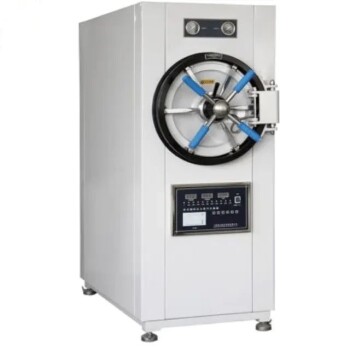
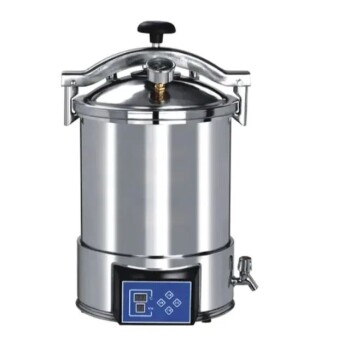
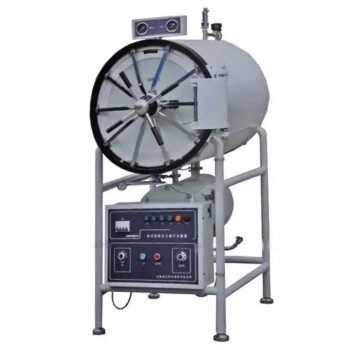
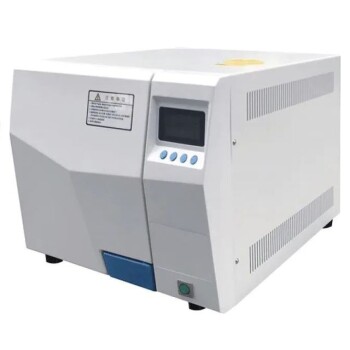
An autoclave simulation system is the singular tool required to accurately reproduce the harsh internal environment of a nuclear reactor without the risks of active operation. It allows researchers to subject zirconium-based cladding coatings to the precise water chemistry, temperature (360°C), and pressure (18.7 MPa) found in Light Water Reactors (LWR). By mimicking these conditions, engineers can observe critical failure modes that would not appear under standard atmospheric testing.
The core value of an autoclave system is its ability to accelerate and isolate degradation mechanisms. It reveals not just if a coating fails, but how it interacts with reactor fluids—specifically through corrosion, hydrogen uptake, and phase transformations—providing the data necessary to validate a material's lifespan.
Replicating the Reactor Environment
Precise Environmental Control
The primary function of the autoclave is to recreate the specific hydro-thermal conditions of a Pressurized Water Reactor (PWR).
It maintains a stable environment of 360°C and 18.7 MPa, using either static water or simulated reactor fluids. This high-fidelity simulation is the baseline requirement for any valid long-term performance data.
Bridging the Gap Between Lab and Reactor
Standard laboratory tests cannot replicate the synergistic effects of high pressure and specific water chemistry.
The autoclave acts as the final validation step, ensuring that materials tested in the lab will perform predictably when exposed to the extreme service status of an operating plant.
Identifying Degradation Mechanisms
Corrosion Rates and Hydrogen Absorption
Zirconium alloys are susceptible to oxidation and hydrogen pickup, which can lead to embrittlement.
The autoclave allows researchers to measure exactly how well a coating acts as a barrier against these elements. Quantifying hydrogen absorption behavior is critical for ensuring the structural integrity of the fuel cladding over time.
Monitoring Phase Transformations
Under reactor conditions, coating materials can undergo chemical changes that alter their protective properties.
For example, researchers use these systems to detect the formation of boehmite phases resulting from aluminum loss. Identifying these specific degradation pathways helps in predicting exactly when and how a coating will deplete.
Mechanical Wear Simulation
Beyond chemical interactions, the cladding faces physical stress from debris and coolant flow.
Supplementary high-pressure autoclave systems can conduct debris fretting tests. This validates the "anti-wear" capabilities of the coating, ensuring it resists physical abrasion while under extreme thermal and hydraulic pressure.
Understanding the Constraints
Simulation vs. Irradiation
While an autoclave perfectly simulates temperature, pressure, and chemistry, it typically does not introduce neutron irradiation.
Therefore, data from these simulations should be viewed as a baseline for chemical and mechanical durability, rather than a complete picture of radiation tolerance.
Static vs. Dynamic Flow
Some autoclave setups utilize static water, which differs from the high-velocity flow in a real reactor.
While useful for chemical screening, relying solely on static tests may underestimate erosion rates. It is vital to understand whether your simulation utilizes static fluid or active flow circulation.
Making the Right Choice for Your Goal
To maximize the value of your simulation data, align your testing parameters with your specific failure concerns.
- If your primary focus is chemical longevity: Concentrate on monitoring specific degradation markers, such as aluminum loss and boehmite phase formation, to predict coating depletion.
- If your primary focus is structural integrity: Prioritize data regarding hydrogen absorption rates, as this is the leading indicator of long-term cladding embrittlement.
- If your primary focus is physical durability: Ensure your simulation includes debris fretting tests to validate the coating's resistance to mechanical wear under high pressure.
An autoclave simulation is not just a test; it is the definitive stress-test required to certify safety in nuclear fuel design.
Summary Table:
| Feature | Reactor Condition | Autoclave Simulation Capability |
|---|---|---|
| Temperature | ~360°C | Precise thermal replication |
| Pressure | ~18.7 MPa | High-pressure hydraulic simulation |
| Chemistry | Simulated PWR fluids | Corrosion and hydrogen uptake analysis |
| Wear | Debris/Coolant flow | Fretting and mechanical abrasion testing |
| Phase Change | Chemical transformation | Monitoring boehmite and aluminum loss |
Advance Your Nuclear Research with KINTEK Precision
In the high-stakes field of nuclear fuel design, accuracy is non-negotiable. KINTEK specializes in advanced laboratory equipment designed to withstand the most demanding environments. Our industry-leading high-temperature high-pressure reactors and autoclaves provide researchers with the exact hydrothermal conditions (360°C, 18.7 MPa) required to validate zirconium-based cladding and prevent critical failures.
Beyond autoclave systems, KINTEK offers a comprehensive range of muffle and vacuum furnaces, crushing systems, and hydraulic presses to support every stage of your material science workflow.
Ready to accelerate your material validation? Contact us today to discuss how our specialized equipment can enhance your lab's testing accuracy and ensure the long-term performance of your innovations.
References
- Egor Kashkarov, А. М. Лидер. Recent Advances in Protective Coatings for Accident Tolerant Zr-Based Fuel Claddings. DOI: 10.3390/coatings11050557
This article is also based on technical information from Kintek Solution Knowledge Base .
Related Products
- Laboratory Horizontal Autoclave Steam Sterilizer Lab Microcomputer Sterilizer
- Portable Digital Display Automatic Laboratory Sterilizer Lab Autoclave for Sterilization Pressure
- Laboratory High Pressure Steam Sterilizer Vertical Autoclave for Lab Department
- Laboratory High Pressure Horizontal Autoclave Steam Sterilizer for Lab Use
- Laboratory Sterilizer Lab Autoclave Vertical Pressure Steam Sterilizer for Liquid Crystal Display Automatic Type
People Also Ask
- What precautions should be taken during autoclave in laboratory? A Complete Safety Guide to Prevent Burns and Explosions
- What extreme conditions does a laboratory autoclave simulate? Testing Wear Resistance of Nuclear Fuel Cladding
- What role does a laboratory autoclave play in HEA corrosion research? Key to Validating Advanced Reactor Materials
- Why is a laboratory autoclave necessary for Postgate Medium B (PMB)? Ensure Pure SRB Cultures & Accurate MIC Research
- What is the importance of using a laboratory autoclave in ZSM-5 synthesis? Achieve Perfect Zeolite Crystallization