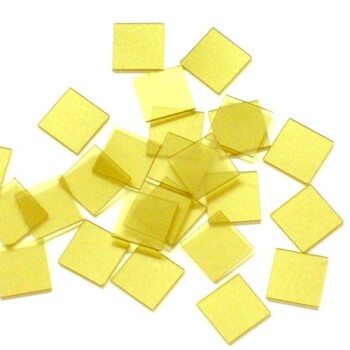
Boron-doped diamond (BDD) is the premier choice for electrooxidation because of its exceptionally wide electrochemical window and high oxygen evolution potential. These unique properties allow the anode to generate massive quantities of highly reactive hydroxyl radicals ($\cdot OH$) without wasting energy on side reactions like oxygen gas generation, making it uniquely capable of destroying stubborn organic pollutants.
The Core Insight BDD electrodes function as "non-active" anodes, meaning they physically adsorb hydroxyl radicals rather than chemically interacting with them. This allows the radicals to remain highly potent, facilitating the complete mineralization of organic contaminants into harmless byproducts, a feat that traditional anode materials often fail to achieve.
The Electrochemical Advantage
Superior Oxygen Evolution Potential
The primary technical reason for selecting BDD is its extremely high oxygen evolution potential. In standard electrolysis, water splits to form oxygen gas—a side reaction that consumes energy and reduces efficiency.
BDD suppresses this reaction. Because its potential for creating oxygen is so high, the system can operate at high voltages to generate oxidants without significant oxygen gas evolution.
Generation of Hydroxyl Radicals
By suppressing oxygen generation, BDD channels energy into the production of hydroxyl radicals ($\cdot OH$).
These radicals are among the strongest oxidants known in chemistry. They are generated efficiently on the BDD surface and are essential for breaking down complex organic structures.
Stability and Durability
Resistance in Harsh Environments
BDD is selected for its superior chemical stability and corrosion resistance.
Industrial wastewater often contains strong acids or exists under high-pressure conditions. While other anode materials might degrade or dissolve in these environments, BDD remains inert, ensuring a long operational lifespan and consistent performance.
Low Background Current
The primary reference notes that BDD exhibits an extremely low background current.
This signals high electrochemical efficiency. It means that the current applied to the system is being used effectively for the desired oxidation reactions rather than being lost to background noise or parasitic reactions.
The Operational Impact: Complete Mineralization
Non-Selective Degradation
The hydroxyl radicals produced by BDD are non-selective. They do not merely target specific chemical bonds; they attack virtually any organic compound present in the solution.
This is critical for removing recalcitrant compounds—substances that resist biological treatment or standard filtration—such as estrone (E1) and 17β-estradiol (E2).
Achieving Total Organic Carbon (TOC) Removal
Unlike softer oxidation methods that might only partially break down pollutants (leaving behind toxic intermediate byproducts), BDD facilitates complete mineralization.
This means complex pollutants are broken down entirely into water and carbon dioxide, leading to a significant reduction in Chemical Oxygen Demand (COD) and Total Organic Carbon (TOC).
Understanding the Trade-offs: Active vs. Non-Active
The "Active Anode" Pitfall
It is crucial to distinguish BDD from "active" anodes (like metal oxides). Active anodes chemically interact with oxygen species, forming higher oxide states.
While useful for some specific reactions, active anodes often lead to incomplete oxidation. They may convert a pollutant into a different organic compound rather than destroying it completely.
The BDD "Non-Active" Distinction
BDD is classified as a "non-active" anode. It interacts weakly with the hydroxyl radicals it generates, keeping them in a physically adsorbed state.
This weak interaction is actually a strength. Because the radicals are not chemically bound to the electrode surface, they remain highly reactive and available to aggressively attack organic pollutants in the wastewater.
Making the Right Choice for Your Goal
If you are designing an electrochemical treatment system, your choice of anode dictates your results.
- If your primary focus is Complete Mineralization: Choose BDD to ensure pollutants are fully converted to CO2 and water, minimizing Total Organic Carbon (TOC).
- If your primary focus is Durability in Acids: Select BDD for its ability to resist corrosion in chemically aggressive, low-pH environments.
- If your primary focus is Efficiency: Rely on BDD to minimize wasted energy on oxygen evolution side reactions.
BDD transforms the electrooxidation process from simple chemical modification into a powerful mechanism for total pollutant destruction.
Summary Table:
| Feature | BDD Anode Performance | Benefit to Electrooxidation |
|---|---|---|
| Oxygen Evolution Potential | Extremely High | Suppresses energy waste; maximizes radical production. |
| Oxidant Generation | High Hydroxyl Radical ($\cdot OH$) Yield | Non-selective destruction of recalcitrant pollutants. |
| Anode Type | Non-Active | Radicals remain highly reactive for complete mineralization. |
| Chemical Stability | Superior Corrosion Resistance | Long lifespan in harsh acidic or high-pressure environments. |
| Efficiency | Low Background Current | Optimized energy use for targeted chemical reactions. |
Revolutionize Your Wastewater Treatment with KINTEK BDD Technology
Maximize your mineralization efficiency and eliminate stubborn organic pollutants with KINTEK’s industry-leading boron-doped diamond (BDD) electrodes. As specialists in laboratory and industrial electrochemical solutions, we provide the high-performance materials necessary to achieve total TOC removal in the most demanding environments.
Beyond our premier electrolytic cells and electrodes, KINTEK offers a comprehensive range of high-temperature furnaces, high-pressure reactors, and specialized battery research tools to support your entire R&D and production workflow.
Ready to upgrade your electrooxidation system? Contact our technical experts today to find the perfect electrochemical solution for your application.
References
- Emily K. Maher, Patrick J. McNamara. Removal of Estrogenic Compounds from Water Via Energy Efficient Sequential Electrocoagulation-Electrooxidation. DOI: 10.1089/ees.2019.0335
This article is also based on technical information from Kintek Solution Knowledge Base .
Related Products
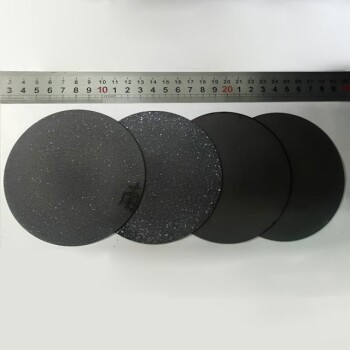
- Laboratory CVD Boron Doped Diamond Materials
- Boron Nitride (BN) Ceramic Plate
- Conductive Boron Nitride BN Ceramics Composite for Advanced Applications
- Boron Nitride (BN) Ceramic Rod for High Temperature Applications
- Boron Nitride (BN) Ceramic Tube
People Also Ask
- What is the purpose of adding a boron source in CVD diamond growth? Master P-Type Semiconductor Conductivity
- What materials are CVD deposition? From Semiconductors to Super-Hard Coatings
- What are the advantages of BDD electrodes? Maximize Wastewater Treatment Efficiency and Durability
- What are the applications of CVD diamonds? From Jewelry to High-Tech Tools
- Are CVD diamonds good? Real Diamonds with Ethical Origins & Better Value