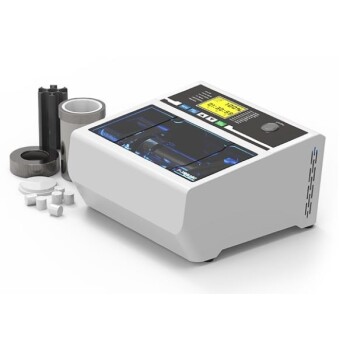
Corrosion resistance is the single most critical specification for these reactors because the chemical agents required to break down lignocellulosic biomass—specifically strong acids like sulfuric or nitric acid—are inherently destructive to standard materials. Without specialized resistance, the reactor vessel will suffer rapid structural degradation, compromising safety and halting production.
Core Insight: While acid hydrolysis is efficient for biomass conversion, it creates an aggressive chemical environment that standard metals cannot withstand. Using corrosion-resistant materials is not just about extending equipment life; it is essential for preventing catastrophic failure and maintaining the chemical purity of your feedstock.
The Aggressive Nature of the Chemical Environment
The Role of Strong Acids
Lignocellulosic acid hydrolysis relies on potent chemical agents to disrupt biomass structures.
Sulfuric acid and nitric acid are frequently used to achieve the necessary hydrolysis. Even when these acids are used in dilute concentrations to minimize sugar degradation, the chemical environment remains highly corrosive to the vessel walls.
The Impact of Concentration
The severity of corrosion correlates directly with acid concentration.
While dilute acid pretreatment is common, processes often require higher concentrations to achieve specific breakdown efficiency. Higher acid concentrations drastically increase the rate of material loss, making standard steel vessels unviable.
The Multiplier Effect of Temperature
Chemical aggression is rarely the only stressor.
Processes like this often operate at elevated temperatures and pressures to accelerate the reaction. Heat acts as a catalyst for corrosion, causing acidic agents to attack the reactor hardware much more aggressively than they would at room temperature.
Consequences of Material Failure
Structural Integrity and Safety
The primary risk of poor corrosion resistance is physical equipment failure.
Continuous exposure to acidic media causes erosion and thinning of the reactor walls. Under high-pressure operation, this degradation can lead to leaks, ruptures, or catastrophic structural failure, posing severe safety hazards to operators.
Process Stability
Operational consistency relies on the reactor maintaining its internal geometry and surface properties.
Corrosion alters the internal surface of the reactor, potentially creating irregularities that affect fluid dynamics or heat transfer. Ensuring the vessel remains intact is essential for long-term operational stability and predictable reaction kinetics.
Common Pitfalls and Trade-offs
The "Dilute" Misconception
A common error is assuming that "dilute" acid implies low corrosion risk.
Even dilute acids (such as sulfuric, hydrochloric, or phosphoric) become highly aggressive when combined with the high temperatures typical of pretreatment. Do not underestimate the need for robust materials simply because acid concentrations are low.
The Contamination Risk
Corrosion is not just about the hole in the tank; it is about what goes into your product.
When reactor walls corrode, they release metal ions into the biomass slurry. This metal ion contamination can inhibit downstream biological processes (such as fermentation) and degrade the quality of the final product.
Making the Right Choice for Your Goal
To select the correct reactor material, you must balance your operational parameters with your long-term production goals.
- If your primary focus is Operational Safety: Prioritize high-grade alloys or PTFE linings that are rated specifically for the maximum acid concentration and pressure your system will reach.
- If your primary focus is Product Purity: Select materials that are chemically inert to your specific acid type to prevent metal leaching and feedstock contamination.
Ultimately, investing in superior corrosion resistance is an investment in the reliability, safety, and purity of your entire production line.
Summary Table:
| Factor | Impact on Reactor | Requirement for Success |
|---|---|---|
| Acid Concentration | Causes rapid material degradation and wall thinning | High-grade alloys or PTFE lining |
| Temperature & Pressure | Acts as a catalyst for aggressive chemical attack | Heat-stabilized corrosion resistance |
| Structural Integrity | Risks catastrophic failure and leaks under pressure | Periodic monitoring and robust materials |
| Product Purity | Metal ion leaching inhibits downstream fermentation | Chemically inert contact surfaces |
Maximize Your Reactor Longevity with KINTEK
Don't let aggressive acids compromise your research or production safety. KINTEK specializes in high-performance laboratory equipment, offering a comprehensive range of high-temperature high-pressure reactors and autoclaves specifically engineered for demanding chemical environments.
Whether you are performing lignocellulosic acid hydrolysis or complex material synthesis, our portfolio includes specialized solutions like PTFE-lined vessels, corrosion-resistant alloys, and advanced cooling solutions to maintain process stability. Our experts understand the unique challenges of biomass conversion and can help you select the ideal reactor configuration to prevent contamination and ensure long-term reliability.
Ready to upgrade your lab's durability? Contact us today to discuss your project requirements!
References
- Alejandra Sánchez-Solís, Elier Ekberg Neri-Torres. Biodiesel Production Processes with Yeast: A Sustainable Approach. DOI: 10.3390/en17020302
This article is also based on technical information from Kintek Solution Knowledge Base .
Related Products
- Mini SS High Pressure Autoclave Reactor for Laboratory Use
- Customer Made Versatile CVD Tube Furnace Chemical Vapor Deposition Chamber System Equipment
- Visual High-Pressure Reactor for In-Situ Observation
- Customizable High Pressure Reactors for Advanced Scientific and Industrial Applications
- Customizable Laboratory High Temperature High Pressure Reactors for Diverse Scientific Applications
People Also Ask
- Why use high-pressure reactors for molecular sieve synthesis? Unlock Superior Crystallinity and Framework Control
- What are the advantages of using a high-pressure reactor like an autoclave? Maximize Liquefaction Speed & Yield
- What is the function of a high-pressure reactor autoclave? Enhancing Cu/N Co-Doped Carbon Catalyst Synthesis
- Why are high-pressure reactors or autoclaves necessary for the synthesis of new functional materials? Unlock Precision.
- How are high-pressure reactors used to prepare metaphosphate electrocatalysts? Master In-Situ Precursor Growth