Knowledge Why is cryogenic grinding used? To pulverize tough, heat-sensitive materials effectively.
Author avatar

Tech Team · Kintek Solution

Updated 1 week ago

Why is cryogenic grinding used? To pulverize tough, heat-sensitive materials effectively.


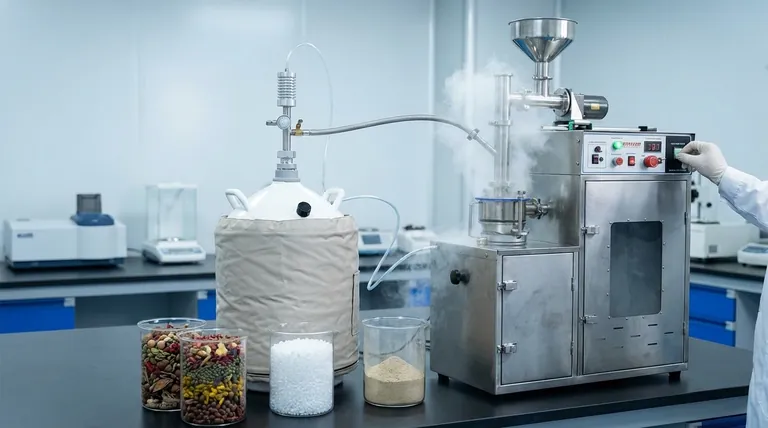
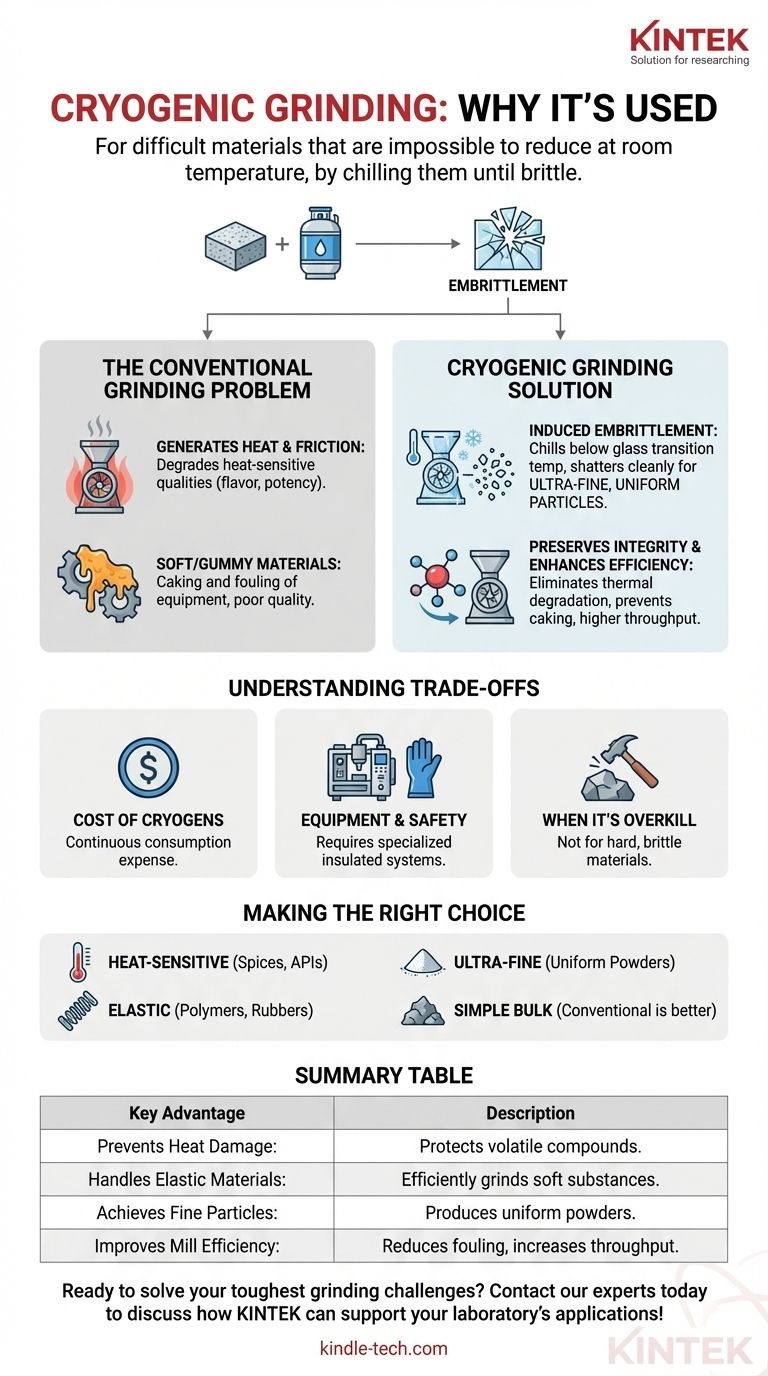
At its core, cryogenic grinding is used for materials that are difficult or impossible to reduce in size at room temperature. By using a cryogen like liquid nitrogen, the process chills a material until it becomes extremely brittle. This embrittlement allows for efficient shattering into fine, uniform particles, preventing issues like melting, stickiness, or the degradation of heat-sensitive components.

The primary purpose of cryogenic grinding is not simply to make a material cold, but to temporarily change its physical properties from ductile and tough to hard and brittle. This transformation overcomes the common failures of conventional grinding, such as heat damage, tool fouling, and inconsistent particle size.
Why is cryogenic grinding used? To pulverize tough, heat-sensitive materials effectively.

The Fundamental Problem with Conventional Grinding

Standard grinding methods rely on mechanical force—impact, shear, or compression—to break down materials. While effective for many substances, this process generates significant friction and heat.

Heat Generation and Its Consequences

The intense energy of grinding is largely converted into heat. For heat-sensitive materials like spices, pharmaceuticals, or certain polymers, this can degrade or destroy the very qualities you wish to preserve, such as flavor, aroma, or chemical potency.

The Challenge of Soft or Gummy Materials

Many materials, particularly plastics, elastomers, and waxes, do not grind well at ambient temperatures. Instead of shattering, they become soft, sticky, or elastic under the stress of the mill. This leads to caking and fouling of the equipment, reduced throughput, and poor particle quality.

How Cryogenic Grinding Solves the Problem

Cryogenic grinding directly addresses the limitations of heat and ductility by introducing extreme cold into the process, fundamentally changing how the material behaves.

The Principle of Embrittlement

Cooling a material below its glass transition temperature makes it lose its ductile properties and become brittle and glass-like. When the grinding force is applied, the embrittled material shatters cleanly and instantly. This is the key to achieving ultra-fine and highly uniform particles.

Preserving Product Integrity

Because the entire system is flooded with an inert cryogen like liquid nitrogen, heat is immediately absorbed. This eliminates thermal degradation, protecting the quality of heat-labile components. It also prevents oxidation by displacing oxygen, further preserving the final product's integrity.

Enhancing Mill Efficiency

By preventing materials from becoming sticky, cryogenic grinding eliminates product caking inside the mill. This results in significantly higher production rates, lower energy consumption per unit of product, and reduced wear on grinding components. The process is faster and requires less downtime for cleaning.

Understanding the Trade-offs and Considerations

While powerful, cryogenic grinding is a specialized process with specific requirements. It is not a universal solution for all grinding tasks.

The Cost of Cryogens

The primary operational cost is the continuous consumption of liquid nitrogen or another cryogen. This expense must be justified by the added value, such as improved product quality or the ability to process an otherwise impossible material.

Equipment and Safety Complexity

Cryogenic systems require insulated machinery, specialized handling equipment, and strict safety protocols for managing extremely cold substances. The initial capital investment and operational complexity are higher than for conventional grinding setups.

When It Is Overkill

For hard, brittle materials that grind easily at room temperature (e.g., minerals, salts, or ceramics), cryogenic grinding offers no significant advantage and would only add unnecessary cost and complexity.

Making the Right Choice for Your Application

Selecting the right grinding method depends entirely on your material's properties and your final product goals.

  • If your primary focus is preserving heat-sensitive qualities: Cryogenic grinding is essential for protecting volatile compounds in spices, foods, and active pharmaceutical ingredients (APIs).
  • If your primary focus is processing soft or elastic materials: Cryogenic grinding is the superior method for polymers, rubbers, waxes, and adhesives that would otherwise melt or foul equipment.
  • If your primary focus is achieving ultra-fine, uniform powders: The embrittlement process allows for a level of particle size control and consistency that is often unattainable with conventional methods.
  • If your primary focus is cost-effective bulk reduction of simple materials: Conventional grinding remains the most economical and straightforward choice for materials that are not heat-sensitive or ductile.

By fundamentally altering a material's physical state for the purpose of size reduction, cryogenic grinding unlocks processing capabilities that are otherwise unattainable.

Summary Table:

Key Advantage Description
Prevents Heat Damage Protects volatile compounds in spices, pharmaceuticals, and polymers.
Handles Elastic Materials Efficiently grinds soft, sticky substances like plastics and rubbers.
Achieves Fine Particles Produces ultra-fine, uniform powders through material embrittlement.
Improves Mill Efficiency Reduces equipment fouling, increases throughput, and lowers energy use.

Ready to solve your toughest grinding challenges? If you work with heat-sensitive spices, pharmaceuticals, polymers, or other difficult-to-grind materials, KINTEK's cryogenic grinding solutions can preserve your product's quality and enhance your process efficiency. Our expertise in lab equipment ensures you get the right system for your needs. Contact our experts today to discuss how we can support your laboratory's grinding applications!

Visual Guide
Why is cryogenic grinding used? To pulverize tough, heat-sensitive materials effectively. Visual Guide

Related Products

People Also Ask

Related Products

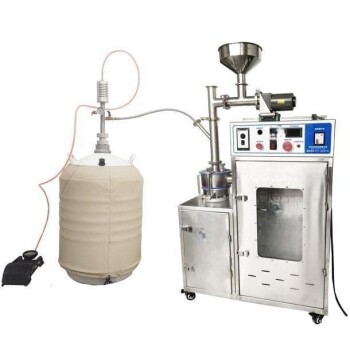
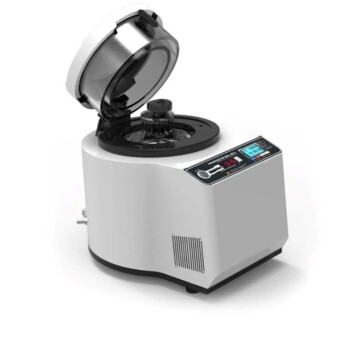
Liquid Nitrogen Cryogenic Grinder Mill Cryomill with Screw Feeder

Liquid Nitrogen Cryogenic Grinder Mill Cryomill with Screw Feeder

Discover the Liquid Nitrogen Cryogenic Pulverizer with Screw Feeder, perfect for fine material processing. Ideal for plastics, rubber, and more. Boost your lab efficiency now!

lab cryogenic grinding use liquid-nitrogen for pulverizing plastic raw materials and heat sensitive materials

lab cryogenic grinding use liquid-nitrogen for pulverizing plastic raw materials and heat sensitive materials

Discover the KT-CG01 Liquid Nitrogen Cryogenic Pulverizer, Ideal for Plastic and Heat-Sensitive Material Pulverization, Preserving Material Integrity and Delivering Ultra-Fine Results.

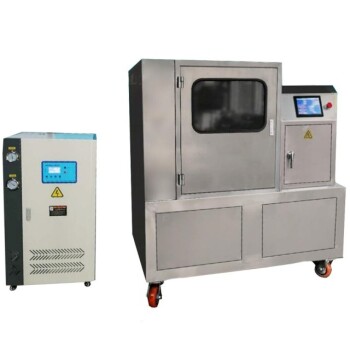
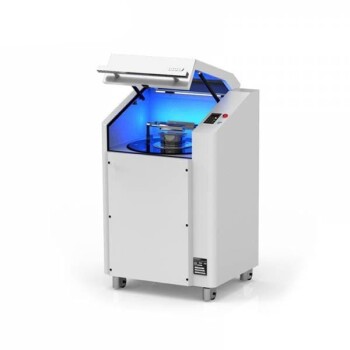
Low-Temperature Water-Cooled Touchscreen Vibratory Ultrafine Pulverizer

Low-Temperature Water-Cooled Touchscreen Vibratory Ultrafine Pulverizer

Low-temperature water-cooled vibratory pulverizer for ultrafine grinding. Preserves material integrity. Ideal for labs and production. Learn more.

Laboratory Jar Ball Mill with Alumina Zirconia Grinding Jar and Balls

Laboratory Jar Ball Mill with Alumina Zirconia Grinding Jar and Balls

Grind to perfection with alumina/zirconia grinding jars and balls. Available in volume sizes from 50ml to 2500ml, compatible with various mills.

Laboratory Hybrid Tissue Grinding Mill

Laboratory Hybrid Tissue Grinding Mill

KT-MT20 is a versatile laboratory device used for rapid grinding or mixing of small samples, whether dry, wet, or frozen. It comes with two 50ml ball mill jars and various cell wall breaking adapters for biological applications such as DNA/RNA and protein extraction.

Laboratory Disc Cup Vibratory Mill for Sample Grinding

Laboratory Disc Cup Vibratory Mill for Sample Grinding

The vibrating disc mill is suitable for non-destructive crushing and fine grinding of samples with large particle sizes, and can quickly prepare samples with analytical fineness and purity.

Laboratory High Throughput Tissue Grinding Mill Grinder

Laboratory High Throughput Tissue Grinding Mill Grinder

KT-MT is a high-quality, small, and versatile tissue grinder used for crushing, grinding, mixing, and cell wall breaking in various fields, including food, medical, and environmental protection. It is equipped with 24 or 48 2ml adapters and ball grinding tanks and is widely employed for DNA, RNA, and protein extraction.

Lab Vibration Mill

Lab Vibration Mill

Vibration Mill for Efficient Sample Preparation, Suitable for Crushing and Grinding a Variety of Materials with Analytical Precision. Supports Dry / Wet / Cryogenic Grinding and Vacuum/Inert Gas Protection.

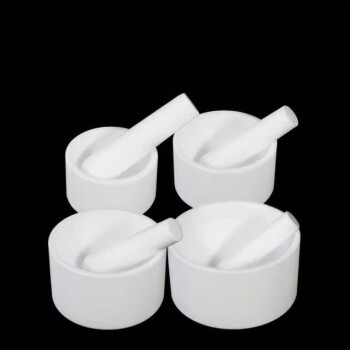
Custom PTFE Teflon Parts Manufacturer Grinding Bowl

Custom PTFE Teflon Parts Manufacturer Grinding Bowl

PTFE is renowned for its exceptional chemical resistance, thermal stability, and low friction properties, making it a versatile material in various industries. The PTFE grinding bowl, specifically, finds applications where these properties are crucial.

Laboratory High Pressure Horizontal Autoclave Steam Sterilizer for Lab Use

Laboratory High Pressure Horizontal Autoclave Steam Sterilizer for Lab Use

The horizontal autoclave steam sterilizer adopts the gravity displacement method to remove the cold air in the inner chamber, so that the inner steam and cold air content is less, and the sterilization is more reliable.

Desktop Fast Laboratory Autoclave Sterilizer 35L 50L 90L for Lab Use

Desktop Fast Laboratory Autoclave Sterilizer 35L 50L 90L for Lab Use

The desktop fast steam sterilizer is a compact and reliable device used for rapid sterilization of medical, pharmaceutical, and research items. It efficiently sterilizes surgical instruments, glassware, medicines, and resistant materials, making it suitable for various applications.

Electron Beam Evaporation Coating Conductive Boron Nitride Crucible BN Crucible

Electron Beam Evaporation Coating Conductive Boron Nitride Crucible BN Crucible

High-purity and smooth conductive boron nitride crucible for electron beam evaporation coating, with high temperature and thermal cycling performance.

Laboratory Sterilizer Lab Autoclave Pulsating Vacuum Desktop Steam Sterilizer

Laboratory Sterilizer Lab Autoclave Pulsating Vacuum Desktop Steam Sterilizer

The pulsating vacuum desktop steam sterilizer is a compact and reliable device used for rapid sterilization of medical, pharmaceutical, and research items.

Ultra-High Temperature Graphite Vacuum Graphitization Furnace

Ultra-High Temperature Graphite Vacuum Graphitization Furnace

The ultra-high temperature graphitization furnace utilizes medium frequency induction heating in a vacuum or inert gas environment. The induction coil generates an alternating magnetic field, inducing eddy currents in the graphite crucible, which heats up and radiates heat to the workpiece, bringing it to the desired temperature. This furnace is primarily used for graphitization and sintering of carbon materials, carbon fiber materials, and other composite materials.

Lab-Scale Vacuum Induction Melting Furnace

Lab-Scale Vacuum Induction Melting Furnace

Get precise alloy composition with our Vacuum Induction Melting Furnace. Ideal for aerospace, nuclear energy, and electronic industries. Order now for effective smelting and casting of metals and alloys.

Custom PTFE Teflon Parts Manufacturer for PTFE Mesh F4 Sieve

Custom PTFE Teflon Parts Manufacturer for PTFE Mesh F4 Sieve

PTFE mesh sieve is a specialized test sieve designed for particle analysis in various industries, featuring a non-metallic mesh woven from PTFE filament. This synthetic mesh is ideal for applications where metal contamination is a concern . PTFE sieves are crucial for maintaining the integrity of samples in sensitive environments, ensuring accurate and reliable results in particle size distribution analysis.

Single Punch Electric Tablet Press Machine Laboratory Powder Tablet Punching TDP Tablet Press

Single Punch Electric Tablet Press Machine Laboratory Powder Tablet Punching TDP Tablet Press

The single-punch electric tablet press is a laboratory-scale tablet press suitable for corporate laboratories in pharmaceutical, chemical, food, metallurgical and other industries.

Laboratory Vibratory Sieve Shaker Machine Slap Vibrating Sieve

Laboratory Vibratory Sieve Shaker Machine Slap Vibrating Sieve

KT-T200TAP is a slapping and oscillating sieving instrument for laboratory desktop use, with 300 rpm horizontal circular motion and 300 vertical slapping motions to simulate manual sieving to help sample particles pass through better.

Graphite Vacuum Furnace High Thermal Conductivity Film Graphitization Furnace

Graphite Vacuum Furnace High Thermal Conductivity Film Graphitization Furnace

The high thermal conductivity film graphitization furnace has uniform temperature, low energy consumption and can operate continuously.

Customizable High Pressure Reactors for Advanced Scientific and Industrial Applications

Customizable High Pressure Reactors for Advanced Scientific and Industrial Applications

This laboratory-scale high-pressure reactor is a high-performance autoclave engineered for precision and safety in demanding research and development environments.


Leave Your Message