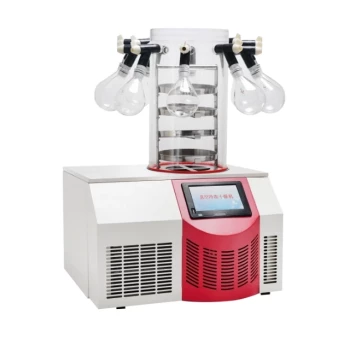
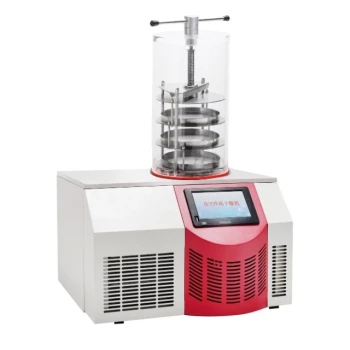
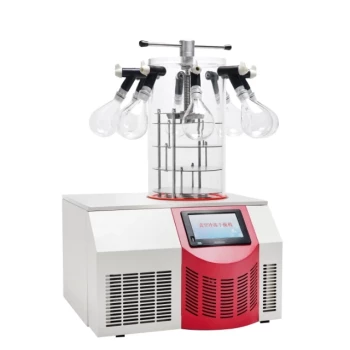
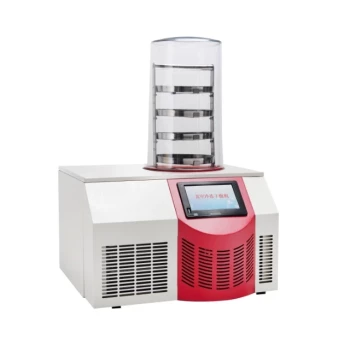
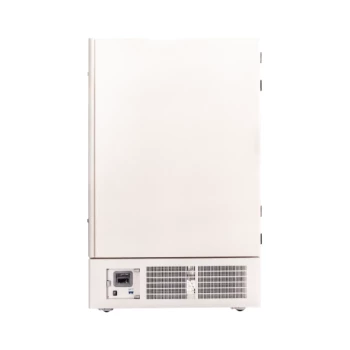
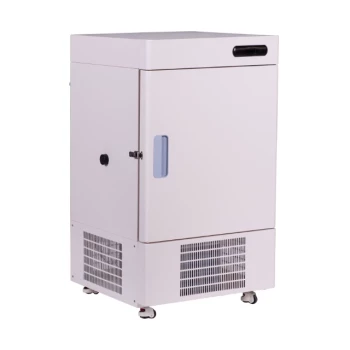
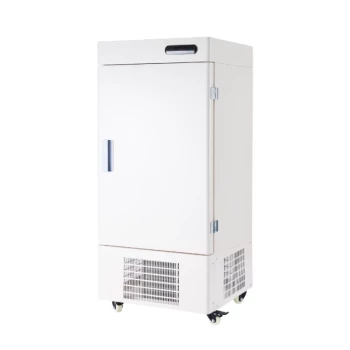
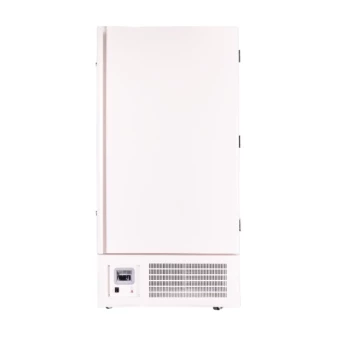
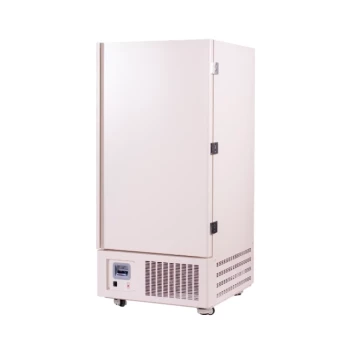
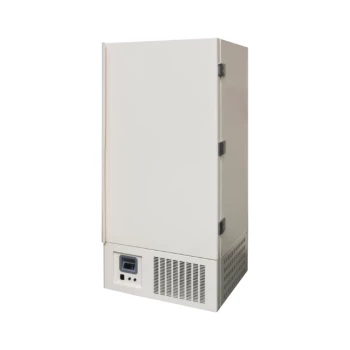
Freeze-drying equipment is the critical enabler for high-performance aerogel electrodes because it removes solvents through sublimation rather than evaporation. By maintaining low temperature and pressure, this process bypasses the liquid phase entirely, thereby eliminating the surface tension forces that would otherwise crush delicate nanostructures. This preservation of geometry is the only reliable way to retain the high specific surface area required for optimal electrochemical function.
Core Takeaway Traditional thermal drying introduces capillary forces that frequently cause structural collapse in delicate gels. Freeze-drying circumvents this by transitioning solvents directly from solid to gas, effectively locking in the nanometer-scale porosity essential for high-performance electrodes.
The Mechanics of Structural Preservation
The Threat of Capillary Action
In standard drying processes, liquid solvents evaporate from the gel. as the liquid recedes, it creates significant surface tension and capillary forces.
For delicate aerogel structures, these forces are destructive. They pull on the pore walls, causing the structure to shrink or collapse entirely, destroying the internal network.
The Sublimation Advantage
Freeze-drying safeguards the material by utilizing sublimation. The solvent within the gel is first frozen solid, then converted directly into gas under a vacuum.
Because the solvent never transitions back into a liquid state during removal, surface tension is effectively eliminated. The structural integrity of the gel is maintained exactly as it was when frozen.
Protecting 3D Printed Geometries
Advanced electrodes are often shaped using 3D printing methods like Direct Ink Writing (DIW). These methods rely on precise, pre-designed architectures.
Freeze-drying ensures that the intricate, macro-scale shapes defined by the printer are not distorted during the final processing steps.
Maximizing Electrochemical Performance
Retaining Nanometer-Scale Pores
The true value of an aerogel electrode lies in its microstructure. The primary reference notes that freeze-drying specifically preserves nanometer-scale pores.
These tiny pores are responsible for the material's massive specific surface area. If they collapse, the electrode loses the majority of its active sites.
Ensuring High Surface Area
Electrochemical performance is directly linked to how much surface area is available for reaction. A collapsed pore structure results in a dense, inefficient block of material.
By preventing collapse, freeze-drying guarantees an extremely high electrochemical surface area. This maximizes charge storage capacity and reaction efficiency.
Common Pitfalls to Avoid
Incomplete Sublimation
It is critical to ensure the process runs to completion. If the vacuum pressure is insufficient or the cycle is too short, residual solvent may melt rather than sublime.
Even a small amount of liquid solvent returning to the phase can reintroduce surface tension. This can lead to localized structural collapse, creating defects in the electrode.
Thermal Instability
Strict temperature control is required throughout the process. If the temperature rises above the solvent's freezing point before sublimation is complete, the structure is compromised.
Reliable equipment must maintain consistent low temperatures to prevent the "slush" phase that destroys pore architecture.
Making the Right Choice for Your Project
To ensure you achieve the necessary electrode performance, match your drying strategy to your design goals:
- If your primary focus is maximizing energy density: Prioritize freeze-drying to preserve the finest nanometer-scale pores, creating the largest possible surface area for charge storage.
- If your primary focus is structural fidelity: Use freeze-drying to lock in the specific geometry of 3D-printed (DIW) scaffolds without the shrinkage associated with thermal drying.
The integrity of your final electrode is defined not by how it is printed, but by how gently it is dried.
Summary Table:
| Feature | Traditional Thermal Drying | Freeze-Drying (Sublimation) |
|---|---|---|
| Phase Transition | Liquid to Gas (Evaporation) | Solid to Gas (Sublimation) |
| Structural Impact | Capillary forces cause pore collapse | Zero surface tension; preserves structure |
| Surface Area | Significant reduction due to shrinkage | Maximum retention of nanometer pores |
| Application | Basic bulk materials | High-performance 3D electrodes & aerogels |
Elevate Your Battery & Aerogel Research with KINTEK
Don't let structural collapse compromise your electrochemical performance. KINTEK provides advanced freeze-drying solutions (freeze dryers and cold traps) designed to protect delicate 3D-printed geometries and nanometer-scale porosity.
From high-temperature furnaces and vacuum systems to specialized battery research tools and autoclaves, we offer the precision equipment needed to ensure your materials achieve maximum specific surface area. Contact KINTEK today to optimize your laboratory workflow and secure the structural integrity of your next-generation electrodes.
References
- Yanran Xun, Jun Ding. A minireview on 3D printing for electrochemical water splitting electrodes and cells. DOI: 10.1063/5.0138178
This article is also based on technical information from Kintek Solution Knowledge Base .
Related Products
- High Performance Laboratory Freeze Dryer
- High Performance Laboratory Freeze Dryer for Research and Development
- Benchtop Laboratory Freeze Dryer for Lab Use
- Benchtop Laboratory Vacuum Freeze Dryer
- 938L Vertical Ultra Low Temperature Freezer for Advanced Laboratory Storage
People Also Ask
- What role does a laboratory freeze dryer play in the synthesis of graphene-based electrocatalysts? Preserve 3D Structures
- What are the technical advantages of using a laboratory freeze dryer for porous carbon precursors? Preserve 3D Networks
- What types of liquid samples can be processed using a laboratory freeze dryer? Preserve Your Sensitive Materials
- How do laboratory freeze dryers support scientific research? Preserve Sample Integrity for Reproducible Results
- Why is a laboratory freeze dryer preferred over traditional heating? Preserve Biochar Structure & Maximize Porosity