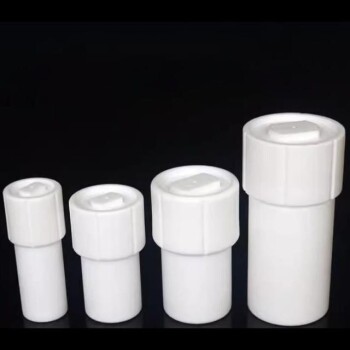
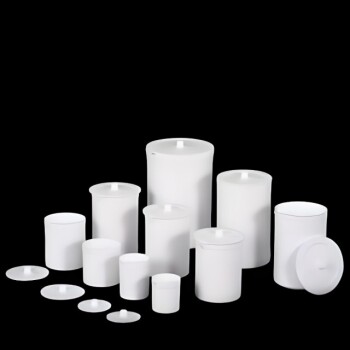
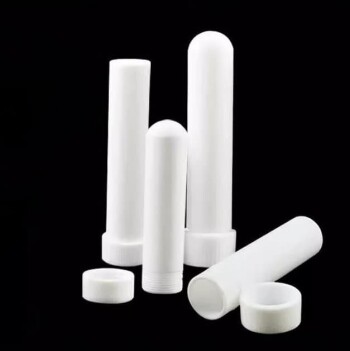
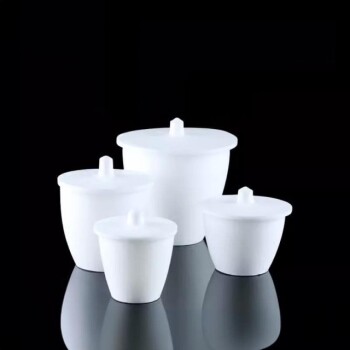
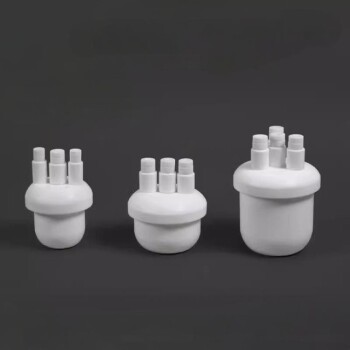
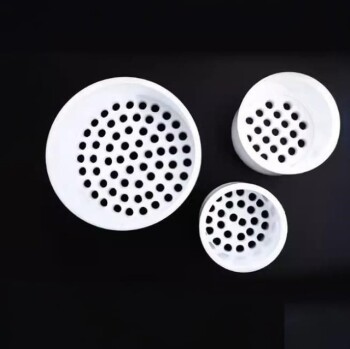
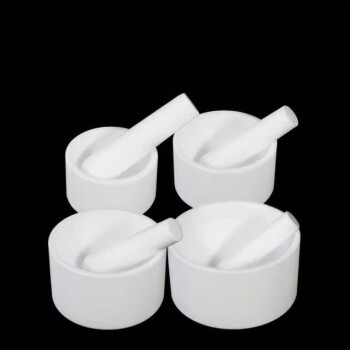
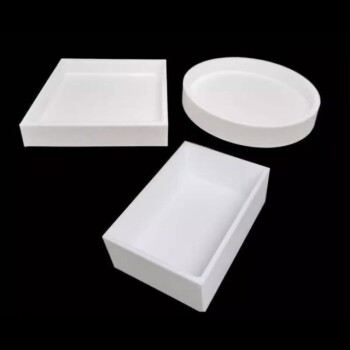
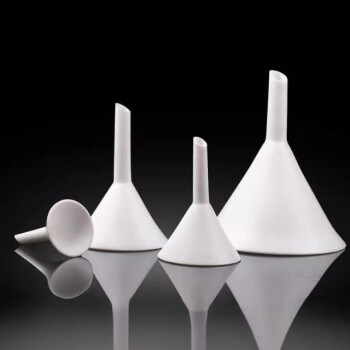
The use of a polytetrafluoroethylene (PTFE) liner is a non-negotiable requirement for safety and chemical purity when acid leaching alkaline fusion products. Because this process typically utilizes high-concentration hydrochloric acid at temperatures reaching 130°C, the liner is the only barrier preventing the acid from destroying the metal reactor walls and contaminating your sample.
The harsh environment of high-temperature acid leaching creates a dual threat: rapid equipment corrosion and sample contamination. A PTFE liner neutralizes both risks by providing a chemically inert shield between the aggressive solvent and the reactor's structural shell.
The Critical Role of Chemical Inertness
Withstanding Aggressive Solvents
The extraction of elements like iridium often requires high-concentration hydrochloric acid. This solvent is highly corrosive, particularly to the stainless steel or alloy materials typically used to build high-pressure reactors.
Stability at Elevated Temperatures
Chemical activity increases significantly with heat. At the required processing temperature of 130°C, the corrosive potential of hydrochloric acid amplifies exponentially.
PTFE maintains its structural and chemical integrity at these temperatures. It prevents the acid from breaching the containment, whereas other liner materials might degrade or deform under such thermal stress.
Ensuring Sample Purity
The Contamination Risk
In hydrometallurgy, the purity of the final solution is paramount. If the acid were to contact the metal walls of the reactor, it would dissolve iron, chromium, or nickel ions into the solution.
Isolating the Leaching Environment
The PTFE liner creates a hermetic environment for the reaction. By isolating the alkaline fusion products and acid from the vessel walls, you ensure that the only metal ions in your solution are the ones you intended to extract.
Operational Considerations and Trade-offs
Thermal Conductivity Limitations
While PTFE is excellent for corrosion resistance, it is a thermal insulator. This means that heat transfer from the external heater to the solution inside the liner will be slower than in a direct metal vessel.
Physical Durability
PTFE is softer than the metal shell it protects. While it resists chemical attack, it is susceptible to physical scratches from abrasive solids or improper cleaning, which can create sites for future failure.
Making the Right Choice for Your Goal
To maximize the success of your acid leaching process, consider your specific priorities:
- If your primary focus is Chemical Purity: Rely on the PTFE liner to completely eliminate the introduction of foreign metal ions that would skew your extraction analysis.
- If your primary focus is Equipment Longevity: View the liner as a sacrificial barrier that extends the life of your expensive high-pressure reactor by preventing structural corrosion.
A PTFE liner is not just an accessory; it is the fundamental component that makes high-temperature acid extraction viable.
Summary Table:
| Feature | PTFE Liner Benefit | Impact on Acid Leaching |
|---|---|---|
| Chemical Resistance | Inert to high-concentration HCl | Prevents reactor wall corrosion and vessel failure |
| Temperature Stability | Stable up to 130°C+ | Enables safe high-temperature leaching processes |
| Contamination Control | Zero metal ion leaching | Protects sample purity from Fe, Cr, and Ni ions |
| Equipment Protection | Sacrificial barrier | Significantly extends the lifespan of the metal reactor |
Maximize Your Lab’s Precision with KINTEK Solutions
Ensure the integrity of your metallurgical research with high-performance equipment from KINTEK. We specialize in providing researchers with premium high-temperature high-pressure reactors and autoclaves equipped with precision-fit PTFE products and crucibles designed to withstand the harshest chemical environments.
Whether you are performing acid leaching, alkaline fusion, or complex hydrometallurgy, KINTEK offers a comprehensive range of solutions—from crushing and milling systems to advanced cooling solutions and battery research tools.
Ready to upgrade your laboratory’s safety and efficiency? Contact our specialists today to find the perfect reactor and liner combination for your specific application requirements.
References
- Jaeryeong Lee, Youngjin Kim. Chemical Dissolution of Iridium Powder Using Alkali Fusion Followed by High-Temperature Leaching. DOI: 10.2320/matertrans.m2011202
This article is also based on technical information from Kintek Solution Knowledge Base .
Related Products
- Custom PTFE Teflon Parts Manufacturer for Hydrothermal Synthesis Reactor Polytetrafluoroethylene Carbon Paper and Carbon Cloth Nano-growth
- Custom PTFE Teflon Parts Manufacturer for Microwave Digestion Tank
- Custom PTFE Teflon Parts Manufacturer F4 Conical Flask Triangular Flask 50 100 250ml
- Custom PTFE Teflon Parts Manufacturer PTFE Beaker and Lids
- Custom PTFE Teflon Parts Manufacturer for Centrifuge Tubes
People Also Ask
- What is the function of a PTFE reactor in MXene etching? Ensure Safe, High-Purity MAX Phase Conversion
- Why is a PTFE reactor required for titanium-based nano-ceramic coating solutions? Ensure Chemical Inertness & Purity
- Why must a Polytetrafluoroethylene (PTFE) reactor be used for Ti3C2TX MXene etching? Ensure Safety and Purity
- Why are PTFE reactors preferred for silver phosphate glass testing? Ensure Purity and Kinetic Accuracy
- What are the advantages of using polytetrafluoroethylene (PTFE) liners in hydrothermal synthesis reactors? High Purity