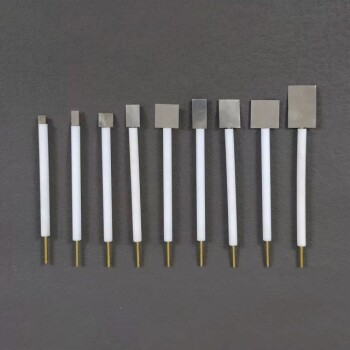
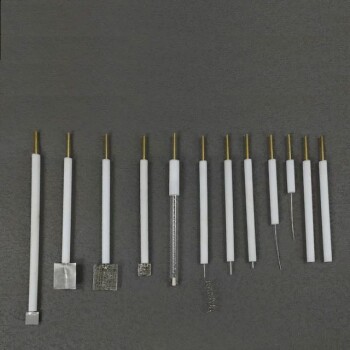
Platinum foil is primarily selected as the counter electrode (CE) due to its exceptional chemical inertness and superior electrical conductivity. In the context of testing TiSiCN coatings, particularly in corrosive environments like a 3.5% NaCl solution, platinum serves as a stable conduit for current that acts without dissolving or chemically reacting, ensuring the integrity of the electrochemical cell.
The counter electrode must complete the electrical circuit without becoming a variable in the experiment. Platinum is the standard choice because it remains chemically unchanged during testing, ensuring that all measured electrochemical activity originates solely from the coating being tested, not the testing hardware.
The Critical Role of Chemical Inertness
Preventing Electrode Dissolution
In aggressive electrolytes, such as the 3.5% NaCl solution used for TiSiCN testing, lesser metals would rapidly corrode.
Platinum foil remains stable in these environments. It resists dissolution, ensuring that the counter electrode does not physically degrade during the experiment.
Eliminating Parasitic Reactions
If a counter electrode reacts with the electrolyte, it alters the solution chemistry and contaminates the test results.
Platinum is chemically inert, meaning it does not participate in the chemical reactions occurring within the cell.
This guarantees that the electrochemical signals—specifically impedance data and corrosion currents—originate entirely from the surface of the TiSiCN coating (the working electrode).
Ensuring Electrical Stability
High Electrical Conductivity
To drive the electrochemical reactions required for corrosion testing, electrons must flow freely through the circuit.
Platinum possesses excellent electrical conductivity. This property minimizes the resistance within the hardware setup itself.
Stable Current Transmission
Reliable data depends on a consistent flow of current between the counter and working electrodes.
Platinum ensures stable current transmission within the three-electrode system. This stability is required to maintain the accuracy and repeatability of critical measurements, such as corrosion potential and current density data.
Understanding the Trade-offs
The Cost Factor
While platinum provides the highest data fidelity, it is a precious metal and represents a significant expense compared to alternatives like graphite or stainless steel.
However, for precision research on advanced coatings like TiSiCN, the cost is justified by the elimination of experimental error.
Surface Area Requirements
To prevent the counter electrode from limiting the reaction rate, it must have a sufficient surface area.
Platinum is often used in foil form because it provides a large active surface area relative to its mass, preventing the counter electrode from becoming a bottleneck in current flow.
Making the Right Choice for Your Goal
When setting up your electrochemical corrosion tests, the choice of electrode dictates the reliability of your data.
- If your primary focus is data accuracy: Rely on platinum foil to ensure that current density and potential readings reflect only the coating's performance, free from interference by electrode reaction products.
- If your primary focus is testing in aggressive media: Use platinum to withstand harsh environments (such as NaCl, HCl, or H2SO4) where other electrode materials would dissolve and invalidate the test.
The use of platinum foil transforms the counter electrode from a potential variable into a constant, allowing you to isolate the true behavior of the TiSiCN coating.
Summary Table:
| Feature | Benefit for TiSiCN Testing |
|---|---|
| Chemical Inertness | Prevents electrode dissolution and electrolyte contamination in 3.5% NaCl. |
| High Conductivity | Ensures stable current transmission and minimizes internal resistance. |
| Material Stability | Guarantees that measured electrochemical signals originate solely from the coating. |
| Foil Geometry | Provides a large surface area to prevent reaction rate bottlenecks. |
Elevate Your Electrochemical Research with KINTEK Precision
Accuracy in corrosion testing starts with high-quality components. KINTEK specializes in premium laboratory equipment and consumables, providing the high-performance electrolytic cells and electrodes—including platinum foil and specialized mesh—required for rigorous coating analysis.
Whether you are characterizing TiSiCN coatings or developing next-generation materials, our comprehensive range of high-temperature furnaces, hydraulic presses, and battery research tools ensures your lab operates at the cutting edge. Contact KINTEK today to discuss your specific testing requirements and discover how our expertise in electrochemical consumables can enhance your data reliability.
References
- M.N. Mirzayev, Alina Vlădescu. TiSiCN as Coatings Resistant to Corrosion and Neutron Activation. DOI: 10.3390/ma16051835
This article is also based on technical information from Kintek Solution Knowledge Base .
Related Products
- High-Purity Titanium Foil and Sheet for Industrial Applications
- High Purity Gold Platinum Copper Iron Metal Sheets
- Platinum Sheet Electrode for Laboratory and Industrial Applications
- Platinum Sheet Electrode for Battery Lab Applications
- High Purity Zinc Foil for Battery Lab Applications
People Also Ask
- What products are manufactured with titanium? The Ultimate Guide to High-Performance Materials
- What are the advantages of utilizing Polytetrafluoroethylene (PTFE) sheets as casting substrates? | KINTEK Solution
- In what way do portable laboratory consumables like PTFE sheets define a functional workspace? Transform Your Lab Bench
- What are the advantages of using titanium? Achieve Unmatched Strength and Corrosion Resistance
- What are the safety considerations for titanium? From Biocompatible Metal to Fire Hazard