Polytetrafluoroethylene (PTFE) is the material of choice primarily due to its exceptional chemical inertness. In the context of supported liquid membrane (SILM) processes, PTFE serves as a robust physical carrier that can withstand aggressive chemical erosion from ionic liquids. By utilizing capillary forces to anchor these liquids within its pores, PTFE creates a stable interface essential for the selective extraction of lignin.
The core value of PTFE lies in its ability to maintain structural integrity against corrosive solvents while providing the necessary pore structure to immobilize ionic liquids for effective separation.
The Critical Role of Chemical Stability
Withstanding Chemical Erosion
Lignin extraction often requires the use of ionic liquids (ILs), which can be chemically aggressive. PTFE is selected because it possesses high solvent resistance, allowing it to resist degradation when in direct contact with these solvents.
Maintaining Structural Integrity
Unlike weaker polymer supports that might swell or dissolve, PTFE maintains its physical form during the extraction process. This ensures the membrane remains a reliable physical carrier, preventing system failure due to material breakdown.
Mechanism of the Physical Carrier
Anchoring via Capillary Forces
The functionality of a SILM system relies on keeping the liquid phase stationary. The porous framework of PTFE utilizes capillary forces to stably anchor specific ionic liquids within its microstructure.
Creating a Stable Separation Interface
By locking the ionic liquid in place, PTFE facilitates a consistent separation interface. This stable boundary is critical for the selective transport mechanism required to separate lignin from other biomass components.
Understanding the System Dependencies
Reliance on Pore Structure
While PTFE is chemically robust, the success of the system depends heavily on the pore/liquid interaction. The membrane functions only as long as the capillary forces are strong enough to retain the ionic liquid against the pressure of the feed solution.
Material Compatibility
The "inertness" of PTFE is a double-edged sword; while it resists erosion, it must still be compatible enough with the ionic liquid to allow for wetting and anchoring. If the interaction is too weak, the liquid membrane may become unstable, compromising the extraction process.
Making the Right Choice for Your Goal
When designing a supported liquid membrane system for lignin extraction, PTFE offers a balance of durability and functional performance.
- If your primary focus is process longevity: Select PTFE to ensure the support material does not degrade or erode chemically over time when exposed to aggressive ionic liquids.
- If your primary focus is separation stability: Ensure the PTFE pore structure is optimized to generate sufficient capillary forces to anchor your specific ionic liquid choice.
PTFE transforms the volatile nature of liquid extraction into a stable, structured process capable of handling complex chemical environments.
Summary Table:
| Feature | Benefit in SILM Processes |
|---|---|
| Chemical Inertness | Resists aggressive erosion from ionic liquids and corrosive solvents. |
| Structural Integrity | Prevents swelling or dissolution, ensuring long-term process stability. |
| Porous Framework | Utilizes capillary forces to securely anchor ionic liquids. |
| Separation Interface | Creates a stable boundary for selective lignin transport. |
Optimize Your Lignin Extraction with KINTEK Precision
Maximize the longevity and stability of your separation processes with high-quality PTFE components and laboratory solutions. KINTEK specializes in providing premium laboratory equipment and consumables tailored for advanced material research. From durable PTFE products, ceramics, and crucibles to specialized high-temperature reactors and autoclaves, we empower your lab with the tools needed for complex chemical environments.
Ready to enhance your research efficiency? Contact our experts today to find the perfect materials and equipment for your specific biomass processing and extraction needs!
References
- Lan Ying Jiang, Yan Wang. Special Issue on “Novel Membrane Technologies for Traditional Industrial Processes”. DOI: 10.3390/pr7030144
This article is also based on technical information from Kintek Solution Knowledge Base .
Related Products
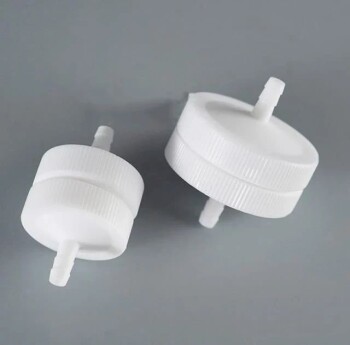
- Custom PTFE Teflon Parts Manufacturer for Sampling Filters
- Proton Exchange Membrane for Batteries Lab Applications
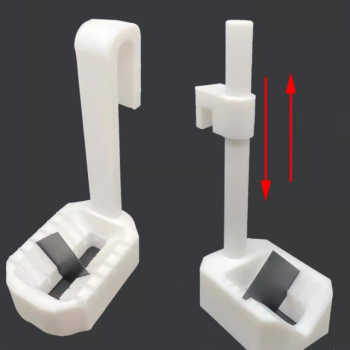
- Custom PTFE Wafer Holders for Lab and Semiconductor Processing
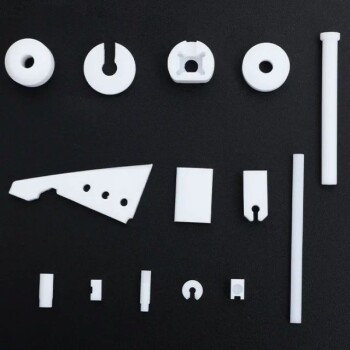
- Custom PTFE Teflon Parts Manufacturer for Non-Standard Insulator Customization
- Customizable PTFE Wafer Carriers for Semiconductor and Lab Applications
People Also Ask
- What are the advantages of using PTFE filters for ionic component analysis? Ensure Accurate Sample Quantification
- Why are PTFE membrane filters selected for rice husk fractionation? Ensuring Purity in Harsh Separation Stages
- Is PTFE corrosion resistant? Discover the Ultimate Chemical Resistance for Your Lab
- What are the specific applications of PTFE in micro-batch slug flow systems? Enhance Your Microfluidic Reaction Purity
- How is PTFE utilized for insulation in Alloy 22 corrosion setups? Ensure Signal Purity & Accuracy