The material of the mortar serves as the primary gatekeeper for chemical purity during powder preparation. Because mechanical grinding inevitably causes the tool itself to abrade, the mortar’s composition directly determines which contaminants enter your Yttria-stabilized Ceria (YSC) powder. Using high-hardness materials like agate or zirconia is the only effective way to minimize the introduction of performance-killing impurities.
Core Insight: Mechanical wear is unavoidable; you must control what that wear adds to your mixture. Selecting a high-wear-resistant mortar prevents the introduction of silicon, calcium, or aluminum—impurities that specifically target and degrade the grain boundaries of the final ceramic.
The Mechanics of Contamination
The Inevitability of Abrasion
Manual grinding is a friction-heavy process. As you reduce the particle size of the powder, the mortar and pestle are subjected to significant mechanical stress.
This friction causes microscopic amounts of the tool material to wear off. These particles mix indistinguishably with your sample, effectively altering its chemical composition.
Why Hardness Matters
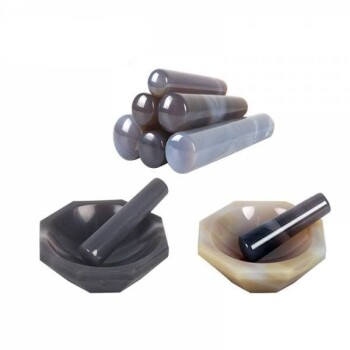
To combat this, the industry relies on materials with exceptional hardness and wear resistance, such as agate or zirconia.
These materials resist abrasion far better than softer alternatives. By resisting wear, they significantly lower the total volume of foreign material introduced into the YSC powder.
The Impact on Yttria-stabilized Ceria (YSC)
Impurity Enrichment at Grain Boundaries
The specific danger in preparing YSC is where these contaminants end up. Impurities do not stay evenly distributed; they tend to migrate to and concentrate at the grain boundaries.
The grain boundaries act as the "glue" holding the ceramic crystals together. When impurities like silicon, calcium, or aluminum enrich these areas, they fundamentally change the material's microstructure.
Vulnerability to Sodium Corrosion
A compromised grain boundary becomes a chemical weak point.
If the mortar introduces low-quality impurities, the resulting enrichment makes the YSC highly susceptible to sodium corrosion. The chemical stability of the entire component is undermined by the material chosen for the grinding tool.
Degradation of Electrical Conductivity
Yttria-stabilized Ceria is frequently utilized for its electrical properties.
Impurities at the grain boundaries act as resistive barriers. By using the wrong mortar and allowing these contaminants to enter, you inadvertently increase the internal resistance, negatively impacting the electrical conductivity of the final product.
Understanding the Risks of Material Selection
The "Hidden" Variable
It is a common pitfall to focus solely on particle size distribution while ignoring the chemical contribution of the tool.
You may achieve the perfect powder fineness, but if the mortar introduces silicon or calcium, the material will fail in application.
Controlling the Impurity Type
Since zero abrasion is impossible, the goal is to ensure that any abraded material is chemically benign or minimal.
Agate and zirconia are critical not just because they are hard, but because they specifically minimize the introduction of the most harmful elements (Si, Ca, Al) that attack YSC grain boundaries.
Making the Right Choice for Your Project
The selection of your grinding tools is a chemical engineering decision, not just a mechanical one.
- If your primary focus is corrosion resistance: Prioritize zirconia or agate tools to prevent impurity enrichment that invites sodium attacks.
- If your primary focus is electrical performance: Ensure high-hardness tools are used to avoid boundary contaminants that impede conductivity.
Ultimately, the integrity of your YSC powder is defined by the quality of the surface it is ground against.
Summary Table:
| Feature | Agate Mortars | Zirconia Mortars | Common Soft Materials |
|---|---|---|---|
| Hardness Level | High | Very High | Low to Medium |
| Wear Resistance | Excellent | Superior | Poor |
| Primary Contaminants | Minimal Silica | Minimal Zirconia | Si, Ca, Al, Fe |
| Impact on YSC | Preserves Conductivity | Maximum Purity | High Corrosion Risk |
| Best Application | General Lab Analysis | High-Purity Synthesis | Non-Critical Grinding |
Elevate Your Material Purity with KINTEK Specialized Solutions
Don't let tool abrasion compromise your research. KINTEK specializes in high-performance laboratory equipment designed for the most demanding material science applications. Whether you are preparing Yttria-stabilized Ceria or advanced ceramic composites, our premium agate and zirconia grinding systems, crushing and milling equipment, and high-temperature furnaces ensure your samples remain free from performance-killing impurities.
From high-pressure reactors to precision hydraulic presses and ceramic consumables, KINTEK provides the tools needed to maintain integrity at the grain boundary.
Ready to optimize your powder preparation? Contact our technical experts today to find the perfect equipment for your laboratory.
References
- Laurent Brissonneau, Martin-Garin Anna. Microstructure of Yttria-Doped Ceria as a Function of Oxalate Co-Precipitation Synthesis Conditions. DOI: 10.1007/s40553-016-0087-8
This article is also based on technical information from Kintek Solution Knowledge Base .
Related Products
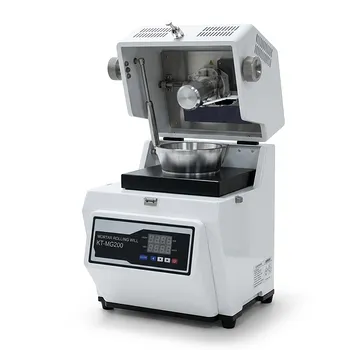
- Laboratory Grinding Mill Mortar Grinder for Sample Preparation
- Nature Agate Mortar and Pestle for Grinding and Mixing
People Also Ask
- What laboratory apparatus is used for grinding? Match the Right Mill to Your Sample Material
- What is the function of a laboratory grinding mill? Achieve Precise Sample Preparation for Accurate Results
- What is the purpose of using a laboratory grinder and standard sieves? Unlock Precise Rice Husk Pretreatment
- What is the role of laboratory-grade grinders and sieves in sample prep? Ensure High-Precision Corrosion Analysis
- What is the purpose of using a laboratory grinder with specific mesh sieves for oat straw? Optimize Pellet Quality