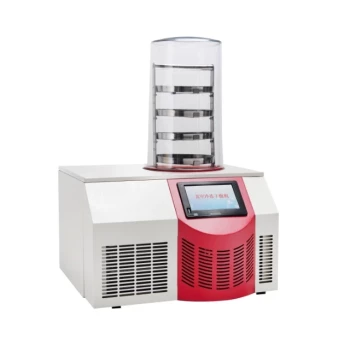
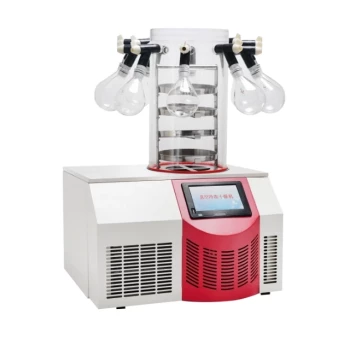
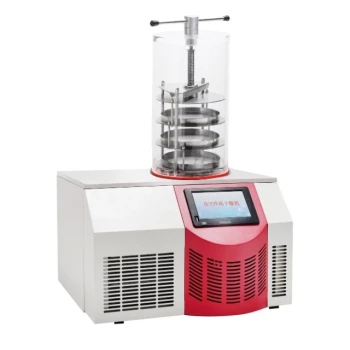
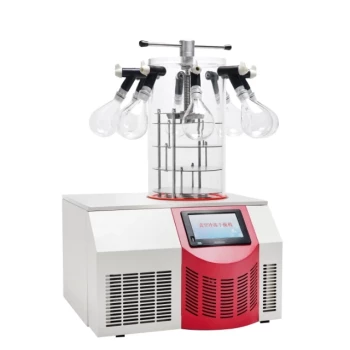
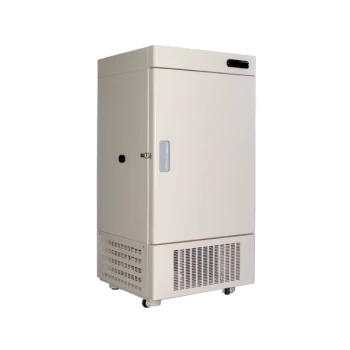
Vacuum freeze-drying is the strictly necessary mechanism for removing ice templates without destroying the delicate architecture of nacre-like alumina. By utilizing sublimation—the conversion of solid ice directly into gas—this equipment allows the water to escape without passing through a liquid phase. This circumvents the destructive capillary forces associated with standard evaporation, which would otherwise collapse the aligned ceramic structure.
The creation of nacre-like materials relies on preserving a fragile, microscopic alignment of particles. Vacuum freeze-drying is essential because it eliminates the intense surface tension caused by liquid evaporation, ensuring the ceramic body retains high structural integrity and directional uniformity prior to sintering.
The Critical Role of Sublimation
Bypassing the Liquid Phase
The core function of vacuum freeze-drying equipment is to facilitate sublimation.
In this process, the frozen water within the ceramic slurry transitions directly from a solid state to a gaseous state.
By operating under vacuum pressure, the equipment ensures that the ice never melts back into liquid water, which is the key to preserving the material's internal shape.
Eliminating Surface Tension
The primary adversary in drying micro-structured ceramics is surface tension.
When liquid water evaporates, it generates significant capillary forces that pull adjacent particles together.
In the context of nacre-like alumina, these forces are strong enough to disrupt the careful alignment of the alumina platelets, effectively destroying the "nacre-like" qualities before the material is even finished.
Preserving Structural Integrity
Protecting the Green Body
Before the final firing (sintering) stage, the ceramic material is referred to as a "green body."
At this stage, the structure is held together only by weak interactions and the geometry of the ice crystals.
Vacuum freeze-drying removes the ice scaffold gently, leaving the fragile green body intact and ready for the high temperatures of sintering.
Maintaining Directional Uniformity
The goal of ice-templating is to create a specific, directional alignment of ceramic particles.
This alignment mimics the strength and toughness of natural nacre (mother of pearl).
Because freeze-drying prevents structural collapse, it guarantees that this directional uniformity is maintained throughout the processing chain.
Understanding the Risks of Alternatives
The Failure of Evaporation Drying
It is critical to understand why standard drying methods are not viable alternatives.
Traditional evaporation drying introduces a liquid-gas interface that moves through the material.
This interface exerts stress on the pore walls; for nacre-like alumina, this stress leads to inevitable structural collapse and loss of alignment.
Equipment Dependency
The reliance on vacuum freeze-drying introduces a strict equipment dependency.
You cannot achieve the requisite low pressures and temperature controls with standard laboratory ovens.
Therefore, the quality of the final ceramic is directly tied to the capability and reliability of the vacuum freeze-drying hardware used.
Making the Right Choice for Your Process
To successfully fabricate nacre-like alumina, you must prioritize the integrity of the micro-structure above all else.
- If your primary focus is Structural Fidelity: You must use vacuum freeze-drying to ensure the alumina platelets remain aligned without the interference of capillary forces.
- If your primary focus is Process Yield: You must avoid evaporation-based drying, as it leads to high defect rates and collapsed micro-structures.
Vacuum freeze-drying is not merely a drying step; it is the structural preservation strategy that makes nacre-mimetic ceramics possible.
Summary Table:
| Feature | Vacuum Freeze-Drying (Sublimation) | Traditional Evaporation Drying |
|---|---|---|
| Phase Transition | Solid to Gas (Direct) | Liquid to Gas |
| Capillary Forces | Eliminated | High (Destructive) |
| Structural Impact | Preserves micro-alignment | Causes structural collapse |
| Green Body State | High integrity & uniformity | Loss of directional alignment |
| Outcome | High-performance nacre-like ceramic | Defective, non-uniform material |
Elevate Your Material Research with KINTEK Precision
To achieve the delicate structural fidelity required for nacre-like alumina and advanced biomimetic materials, compromising on your drying process is not an option. KINTEK specializes in high-performance laboratory equipment, including advanced freeze dryers (lyophilizers), vacuum solutions, and high-temperature furnaces designed to protect your most fragile green bodies from initial drying through to final sintering.
Our comprehensive portfolio supports every stage of your workflow:
- Cooling Solutions: High-stability freeze dryers and ULT freezers for perfect ice-templating.
- Thermal Processing: Precision muffle and vacuum furnaces for superior sintering results.
- Sample Prep: High-efficiency crushing, milling, and hydraulic presses for material consistency.
Ready to eliminate structural collapse and maximize your process yield? Contact our technical experts today to find the ideal equipment solution for your laboratory’s unique requirements.
References
- Florian Bouville. Strong and tough nacre-like aluminas: Process–structure–performance relationships and position within the nacre-inspired composite landscape. DOI: 10.1557/jmr.2019.418
This article is also based on technical information from Kintek Solution Knowledge Base .
Related Products
- Benchtop Laboratory Vacuum Freeze Dryer
- High Performance Laboratory Freeze Dryer
- High Performance Laboratory Freeze Dryer for Research and Development
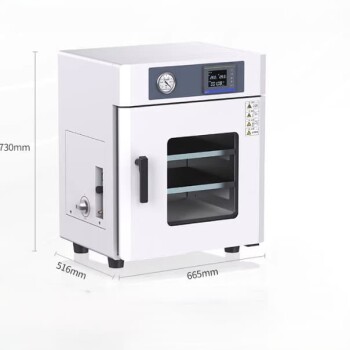
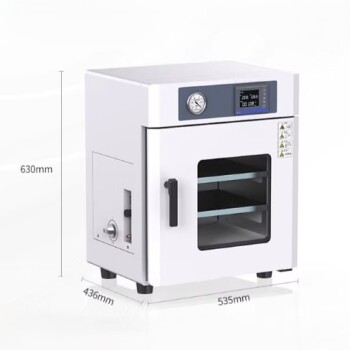
- 56L Vertical Laboratory Vacuum Drying Oven
- 23L Laboratory Vacuum Drying Oven
People Also Ask
- What are the technical advantages of using a laboratory freeze dryer for porous carbon precursors? Preserve 3D Networks
- How do laboratory freeze dryers support scientific research? Preserve Sample Integrity for Reproducible Results
- Why is a laboratory freeze dryer preferred over traditional heating? Preserve Biochar Structure & Maximize Porosity
- What types of liquid samples can be processed using a laboratory freeze dryer? Preserve Your Sensitive Materials
- What role do laboratory freeze dryers play in the food industry? Unlock Superior Food Preservation