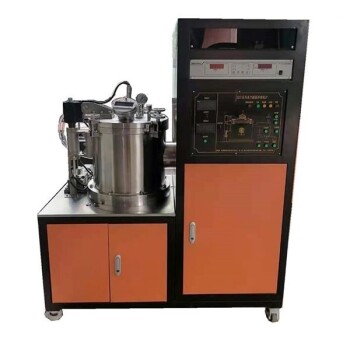
The immediate transfer of LAGP glass melts to a heating furnace is a critical safety and quality control measure designed to manage the extreme thermal shock of quenching. This step is necessary to eliminate residual thermal stress, preventing the glass from shattering during subsequent mechanical processing and ensuring the stability of its internal microstructure.
Core Takeaway: The 500°C annealing step is not about chemical synthesis, but rather physical stabilization. By maintaining a constant temperature immediately after quenching, you release internal tension within the glass block, ensuring it survives mechanical crushing and ball milling without uncontrolled fracturing.
The Physics of Stress Relief
Managing Rapid Temperature Changes
The preparation of LAGP involves heating materials to temperatures exceeding 1300°C to achieve a complete melt. When this molten material is quenched, it undergoes a drastic temperature drop that solidifies the structure instantly.
Eliminating Residual Thermal Stress
This rapid cooling locks immense tension inside the material, known as residual thermal stress. Immediate placement in a furnace provides a constant 500°C environment, which allows the material to relax and release this internal energy safely.
Implications for Downstream Processing
Preventing Accidental Cracking
If residual stress is not relieved, the glass block becomes mechanically unstable and brittle. Without annealing, the internal tension can cause the glass to crack or shatter unpredictably, ruining the sample before it can be processed further.
Facilitating Mechanical Crushing
The synthesis workflow requires the glass to undergo mechanical crushing and secondary ball milling. Annealing ensures the glass is robust enough to withstand these high-impact physical forces without disintegrating into unusable fragments.
Material Quality and Stability
Stabilizing Microstructure
Beyond preventing physical breakage, the annealing process stabilizes the microstructure of the glass. A consistent microstructure is essential for ensuring the uniformity of the final electrolyte material.
Ensuring Process Consistency
By standardizing the thermal history of the glass block, you ensure that every batch reacts the same way to milling. This leads to a more predictable particle size distribution and higher quality in the final ceramic product.
Common Pitfalls to Avoid
The Risk of Delayed Transfer
Time is a critical variable; the transfer from the quench to the 500°C furnace must be immediate. Allowing the glass to cool unevenly in ambient air before annealing can lock in stress fractures that annealing cannot reverse.
Inconsistent Temperature Maintenance
The furnace must maintain a constant temperature of 500°C. Fluctuations during this stabilization phase can reintroduce thermal gradients, negating the benefits of the annealing process and leaving the material vulnerable to stress fractures.
Making the Right Choice for Your Goal
To ensure high yields and material integrity during LAGP synthesis, follow these guidelines:
- If your primary focus is process yield: Prioritize the speed of transfer to the furnace to prevent waste caused by shattered glass blocks during milling.
- If your primary focus is material quality: Ensure the furnace temperature is strictly calibrated to 500°C to guarantee a homogeneous microstructure before grinding.
Treat the annealing phase not as a passive cooling period, but as an active stabilization step that defines the mechanical viability of your material.
Summary Table:
| Process Phase | Temperature | Primary Function |
|---|---|---|
| Melting | >1300°C | Achieving complete material fusion |
| Quenching | Rapid Drop | Instant solidification into glass state |
| Annealing | 500°C | Stress relief & physical stabilization |
| Milling | Ambient | Mechanical crushing into fine powder |
Secure Your Material Integrity with KINTEK Precision
Don't let thermal stress compromise your research. At KINTEK, we understand that high-performance solid electrolytes like LAGP require precise thermal management. Our high-temperature muffle and tube furnaces provide the thermal stability necessary for critical annealing steps, while our crushing and milling systems ensure your stabilized glass is processed into perfect powders.
Ready to elevate your lab's output? Our experts specialize in laboratory equipment for battery research and material science. Contact us today to discover how our comprehensive range of furnaces, hydraulic presses, and ceramic consumables can optimize your synthesis workflow and ensure repeatable, high-quality results.
Related Products
- Controlled Nitrogen Inert Hydrogen Atmosphere Furnace
- Horizontal High Temperature Graphite Vacuum Graphitization Furnace
- Ultra-High Temperature Graphite Vacuum Graphitization Furnace
- Non Consumable Vacuum Arc Induction Melting Furnace
- Vacuum Heat Treat Furnace and Levitation Induction Melting Furnace
People Also Ask
- What is the role of a hydrogen atmosphere furnace in diamond/copper composites? Enhance Your Material Purity
- Why is hydrogen used in furnaces? Achieve Superior Purity and Bright Finishes
- What are the characteristics and risks of a hydrogen atmosphere in a furnace? Master the Balance of Power and Control
- Why is a hydrogen atmosphere furnace necessary for W-Cu composite? Unlock Superior Infiltration and Density
- Can hydrogen be used in furnaces? Yes, for Oxide-Free Metal Processing & Rapid Heating