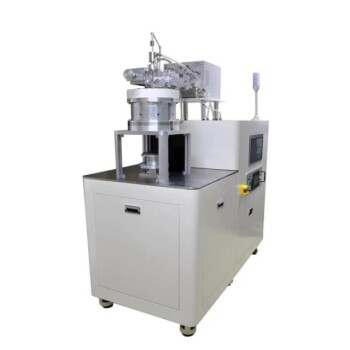
Reactors for Supercritical Water Gasification (SCWG) require exceptional pressure and corrosion resistance because the process fundamentally relies on operating water above its thermodynamic critical point—specifically pressures exceeding 22.064 MPa and temperatures above 373.946°C. Without robust hardware, the reactor cannot contain the immense mechanical stress or the unique solubility changes that turn water into a highly aggressive solvent capable of decomposing biomass.
To achieve high hydrogen selectivity and minimize tar formation, SCWG reactors must survive an environment where water acts as a dense, non-polar solvent. The equipment must simultaneously withstand mechanical forces comparable to deep-sea environments and chemical attacks that degrade standard metals.
The Imperative of Pressure Resistance
Exceeding the Critical Point
The entire SCWG process depends on maintaining water in a supercritical state. This requires a baseline pressure of at least 22.064 MPa (approximately 220 bar), though operational pressures often reach 25 MPa to 26 MPa to ensure stability. If the reactor cannot maintain this pressure, the water reverts to a subcritical state, and the gasification efficiency drops significantly.
Mechanical Integrity at High Heat
Pressure resistance alone is insufficient; the reactor must hold this pressure while subjected to extreme heat. Operational temperatures often range from 550°C to as high as 700°C. Standard steel weakens significantly at these temperatures, necessitating the use of specialized high-temperature alloys to prevent vessel rupture.
The Challenge of Corrosion Resistance
Aggressive Solubility Changes
Above the critical point, water behaves differently than it does at standard conditions; it becomes an aggressive solvent for organic materials. This property is necessary to decompose biomass, but it also means the fluid can actively attack the reactor walls. The environment causes severe degradation, including peeling and delamination of the interior surface.
Corrosive Byproducts
The gasification of biomass produces chemically corrosive substances, including organic acids and nitrogen compounds. These intermediates create a harsh chemical environment that accelerates erosion. Without high corrosion resistance, the reactor walls will suffer rapid material loss, leading to equipment failure and safety hazards.
Preventing Catalytic Interference
Corrosion does not just damage the reactor; it damages the reaction itself. If the reactor walls degrade, metal ions can leach into the reaction mixture. This acts as a catalyst poison or alters the reaction pathway, reducing hydrogen selectivity and potentially increasing the formation of unwanted tar.
Understanding the Trade-offs: Materials and Design
Alloy Limitations
High nickel-based alloys, such as Hastelloy, are frequently used to provide the necessary mechanical strength for these high-pressure, high-temperature (HPHT) conditions. However, even these superalloys are not immune to the severe oxidative corrosion found in SCWG. Relying solely on the alloy for chemical resistance often leads to reduced service life.
The Complexity of Liners
To mitigate alloy corrosion, engineers often introduce alumina ceramic liners. These liners effectively isolate the corrosive media from the load-bearing metal walls. The trade-off is increased design complexity, as the liner must be integrated without compromising the reactor's heat transfer capabilities or mechanical seal.
Making the Right Choice for Your Goal
To ensure the success of a Supercritical Water Gasification project, you must balance mechanical strength with chemical inertness.
- If your primary focus is Equipment Longevity: Prioritize the use of ceramic liners (such as alumina) to isolate the structural metal shell from the corrosive organic acids and nitrogen compounds.
- If your primary focus is Reaction Purity: Select materials that resist ion leaching, as dissolved metal ions from the reactor wall can catalytically interfere with hydrogen production.
- If your primary focus is Safety and Containment: Ensure the pressure vessel is fabricated from high nickel-based alloys capable of maintaining structural integrity at temperatures up to 700°C.
Invest in materials that separate the mechanical burden from the chemical burden to maximize both safety and efficiency.
Summary Table:
| Requirement | Operational Threshold | Primary Reason for Specification |
|---|---|---|
| Pressure Resistance | > 22.064 MPa (up to 26 MPa) | To maintain water in a supercritical state and prevent mechanical failure. |
| Temperature Tolerance | 550°C to 700°C | To ensure high hydrogen selectivity while maintaining vessel integrity. |
| Corrosion Resistance | High (Oxidative & Chemical) | To resist aggressive solvents, organic acids, and prevent metal ion leaching. |
| Material Solutions | Nickel Alloys & Ceramic Liners | To balance mechanical strength with chemical inertness and equipment longevity. |
Maximize Your SCWG Research Efficiency with KINTEK
Supercritical Water Gasification requires equipment that performs under the most demanding mechanical and chemical stresses. KINTEK specializes in high-performance laboratory solutions, offering a comprehensive range of high-temperature high-pressure reactors and autoclaves designed specifically for extreme environments.
Our expertise extends to essential consumables like ceramics and crucibles—critical for protecting your systems from corrosive biomass byproducts. Whether you are focusing on hydrogen selectivity or equipment longevity, KINTEK provides the precision engineering and high-temperature alloys needed to ensure safety and reaction purity.
Ready to elevate your gasification research? Contact us today to find the perfect reactor for your lab!
References
- Azwifunimunwe Tshikovhi, Tshwafo Ellias Motaung. Technologies and Innovations for Biomass Energy Production. DOI: 10.3390/su151612121
This article is also based on technical information from Kintek Solution Knowledge Base .
Related Products
- Customizable Laboratory High Temperature High Pressure Reactors for Diverse Scientific Applications
- Customer Made Versatile CVD Tube Furnace Chemical Vapor Deposition Chamber System Equipment
- Customizable High Pressure Reactors for Advanced Scientific and Industrial Applications
- Visual High-Pressure Reactor for In-Situ Observation
- Mini SS High Pressure Autoclave Reactor for Laboratory Use
People Also Ask
- How do high-pressure and high-temperature reactors ensure the effective treatment of lignocellulosic wastewater in WAO?
- What equipment is required for high-pressure high-temperature reactions? Master Extreme Chemistry Safely
- How do you control high pressure in a reactor? A Guide to Safe & Stable Operation
- Why is argon better than nitrogen for inert atmosphere? Ensure Absolute Reactivity & Stability
- How does initial oxygen pressure affect the wet oxidation of pharmaceutical sludge? Master Your Oxidation Depth