Milling Equipment
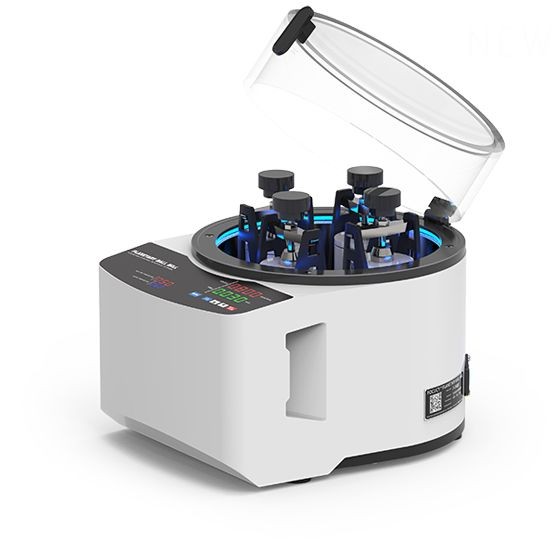
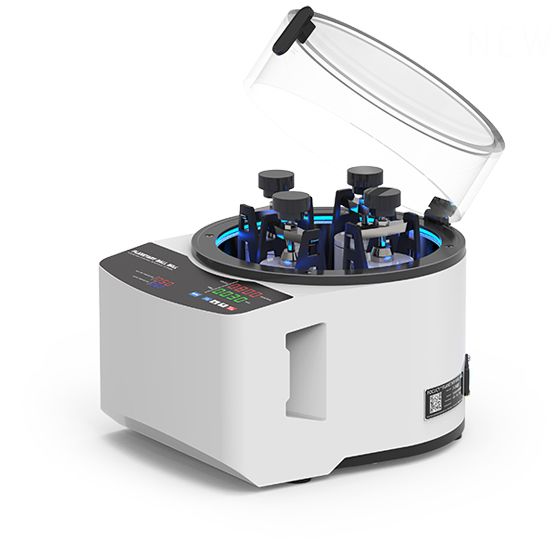
High Energy Planetary Ball Mill Milling Machine for Laboratory
Item Number : KT-P2000
Price varies based on specs and customizations
- Maximum injection size
- < 10 mm
- Maximum speed of ball mill tank
- 800 r/min
- Ball mill tank volume
- 500 ml
- Electrical description
- 100-120V/200-240VAC,50-60Hz,750W
- Dimensions (length, width and height)
- 570*570*420 mm

Shipping:
Contact us to get shipping details Enjoy On-time Dispatch Guarantee.
Why Choose Us
Easy ordering process, quality products, and dedicated support for your business success.
Introduction
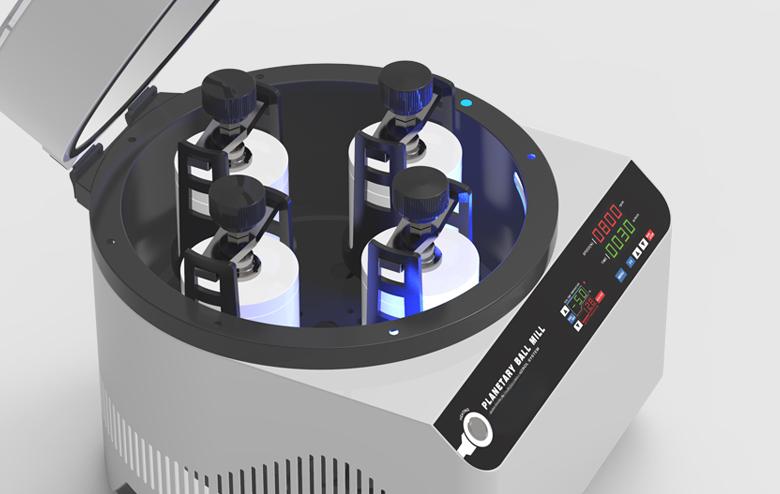
The high-energy planetary ball mill is renowned for its rapid and efficient processing capabilities along with its extensive application range. Through extensive technological advancements and user feedback, this product has undergone significant enhancements in dynamic efficiency, noise reduction, operational safety, and user comfort. Its dimensions of 575mm width, 570mm depth, and 420mm height align with ergonomic requirements for laboratory desktop operation, offering a compact and user-friendly design.
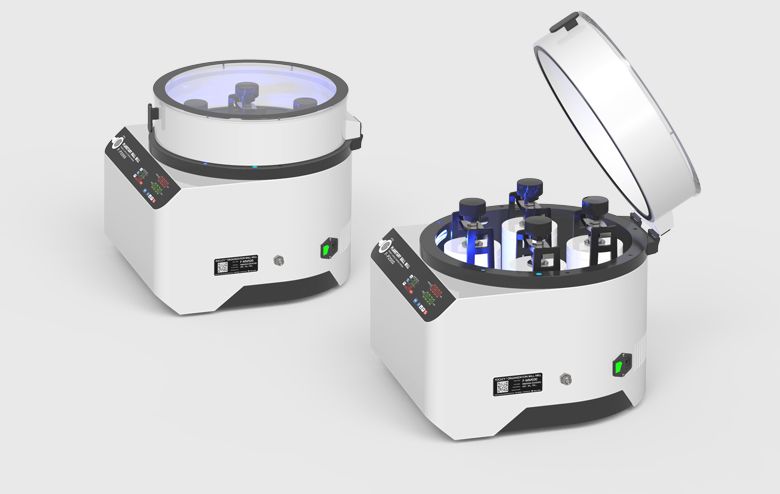
Featuring up to four ball mill tanks with a volume of 500ml or less, the P2000 provides various material options and utilizes variable frequency control for enhanced functionality. Notably, its 304 stainless steel planetary disk ensures balanced and safe operation, reducing the risk of sample contamination.
Operating on the principle of high-frequency collisions, shearing, and friction, this mill achieves rapid sample processing with consistent particle size distribution. Key features include self-lubricating polymer gears for reduced noise, dual rear fans for efficient heat dissipation, and a separated design for heat and dust management.
The instrument offers one-click start, automatic processing, and a range of control options such as grinding time and movement direction. Additionally, it supports liquid nitrogen cooling for low-temperature grinding and can accommodate vacuum ball mill tanks for anti-oxidation processes, enhancing its versatility and reproducibility in laboratory settings.
Detail & Parts
Applications
- Grinding and pulverizing of ores
- Sample preparation for minerals analysis
- Ferroalloys processing
- Ceramic material grinding
- Soil and aggregate testing
- Chemical sample preparation
- High-energy milling for research purposes
- Grinding of refractory materials
- Preparation of pharmaceutical compounds
- Grinding and mixing of various materials in laboratories
Features
- Effective for Mohs 1-10 hard material: Provides efficient grinding for a wide range of materials, ensuring thorough size reduction.
- No moving parts – utilizes compressed air: Ensures minimal maintenance and reduces the risk of mechanical failures, enhancing reliability and longevity.
- Size reduction to 2 microns and below: Offers precise and fine grinding capabilities, ideal for achieving desired particle sizes.
- Interchangeable liners in Polyurethane, Stainless Steel, Nylon, PTFE available on select models: Allows for versatile usage with different materials and easy maintenance.
- Personalized design to solve the affairs on grinding and classification: Customizable design options cater to specific needs, optimizing performance for various applications.
- Automatic control system: Enhances operational convenience and efficiency by automating processes and maintaining consistent performance.
Principle
The high-energy planetary ball mill F-P2000 utilizes superimposed rotational movements, creating Coriolis forces between grinding jars and balls. This interaction releases dynamic energies, achieving fast and effective size reduction. Its unique geometric structure and movement mode ensure high-frequency collision, shearing, and friction for excellent grinding results.
Advantages
- Easy to disassemble and clean with quick coupling installed
- Small footprint for efficient space utilization
- No risk of contamination during the grinding process
- Improved dynamic efficiency, noise reduction, operation safety, comfort, and convenience
- Good crushing ability for samples with larger particle sizes and hardness
- Up to four ball mill tanks with a volume of 500ml or less
- Variable frequency control interface for multiple functions
- 304 stainless steel planetary disk with higher balance and safety
- Fast processing speed with small, uniform, and consistent sample particle size
- Low noise with self-lubricating polymer gears and press-in grease noise reduction system
- Double fans at the rear for better heat dissipation
- Completely separated grinding chamber and control room for heat and dust isolation
- Edge-free 304 stainless steel planetary position for safety and balanced operation
- Low power consumption and low failure rate for long-term experiments
- Strong impact energy with finer particle size and faster processing speed
- Frequency conversion control for precise grinding parameters adjustment
- Liquid nitrogen cooling system option for low-temperature protection grinding
Parameters
| Product name | High energy planetary ball mill |
| Model | F-P2000 |
| Processing principle | impact force friction |
| Application sample characteristics | fine | medium to low hardness | brittle | dry or low viscosity |
| Processing type | crush|grind|mix |
| Maximum injection size | 10mm |
| Sample particle size range | 0.1-20um |
| Maximum processing volume | 2000ml |
| Maximum speed of ball mill tank | 800r/min |
| Transmission mode | European standard |
| Space movement mode | X-axis planetary motion |
| Function | Continuous and intermittent operation | Emergency stop | Timing | Power outage memory | Overload and hazardous operation protection |
| Additional features | LED Lighting|Heat Dissipation |
| Ball mill tank material | Tungsten carbide zirconia | agate | stainless steel | MC nylon and other optional |
| Number of ball mill tanks | 4个 |
| Ball mill tank volume | 500ml |
| Grinding ball material | Tungsten carbide | zirconia | agate | stainless steel, etc. optional |
| Grinding method | Dry grinding|Wet grinding |
| Electrical Description | 100-120V/200-240VAC,50-60Hz,750W |
| Power port | National Standard | European Standard | American Standard | British Standard, etc. |
| Net weight | 92kg |
| Dimensions (length, width and height) | 570*570*420mm |
| Protection level | IP650 |
| Standard | CE |
| Additional configurations available | Ultra-low temperature liquid nitrogen cooling touch operating system |
Accessory parameters
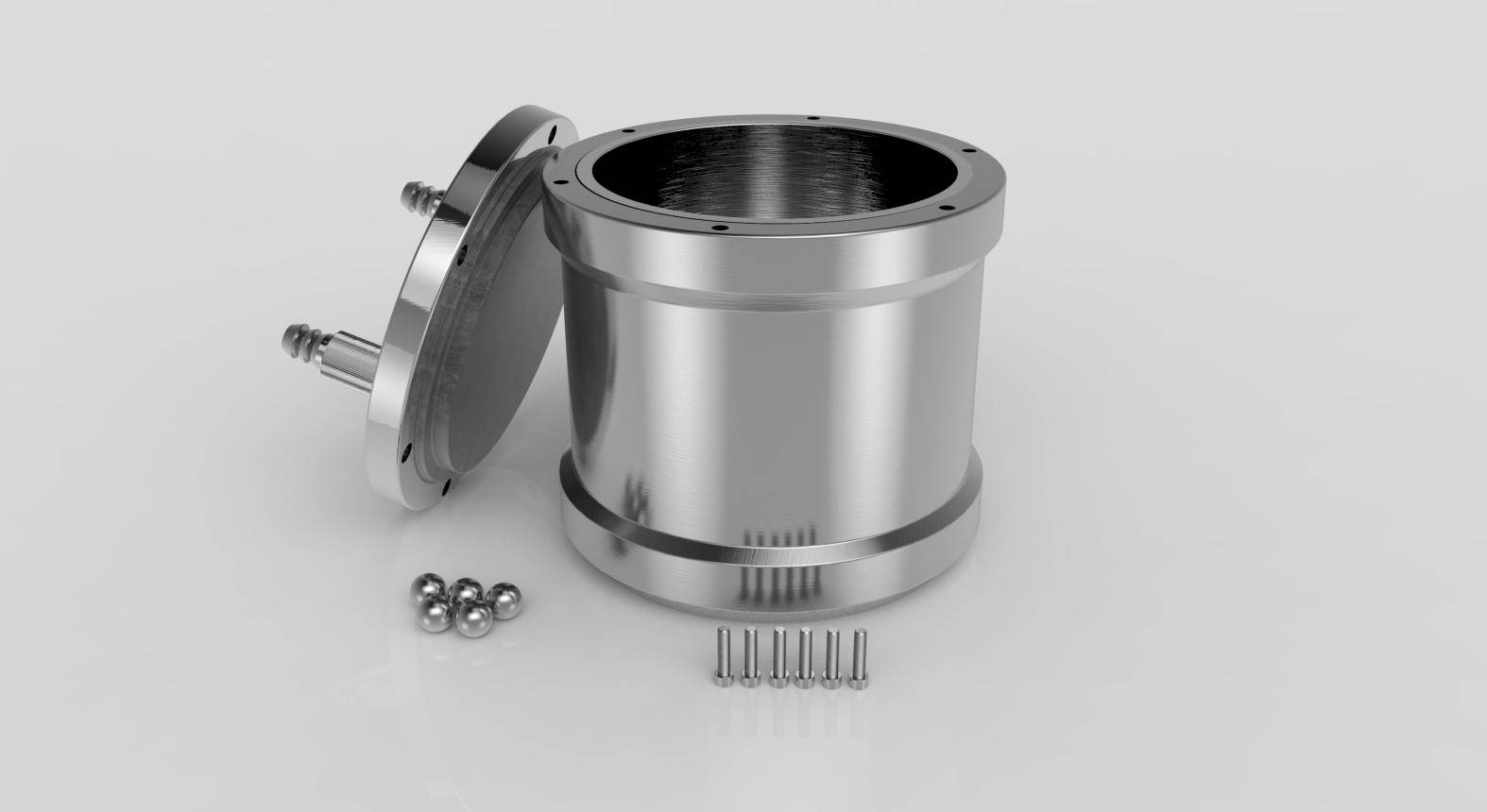
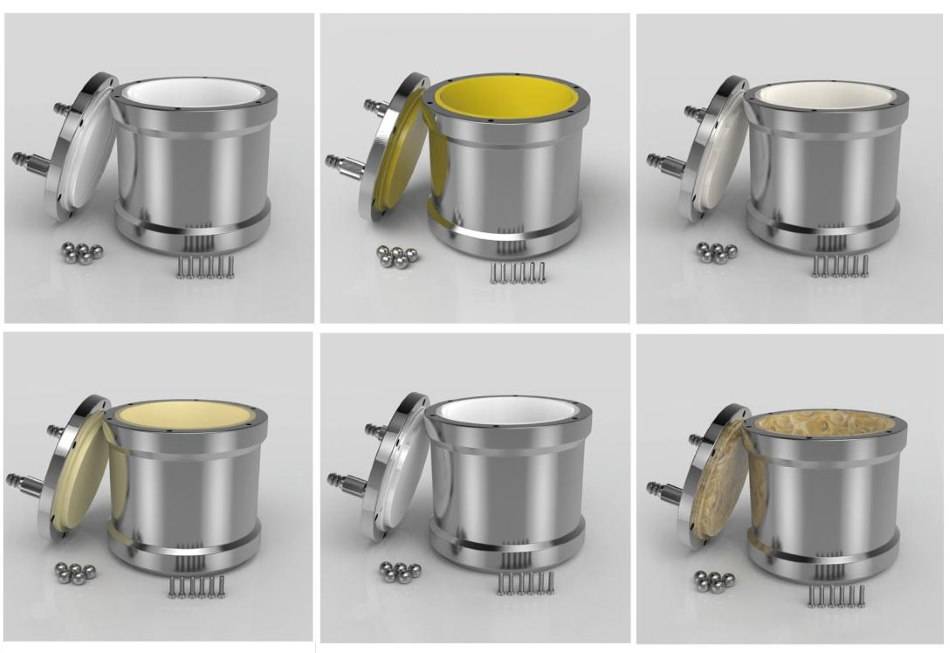
| Main accessories | Recommended standard configuration volume: 500ml | √: means it can be configured | ×: indicates that it cannot be matched | ||
| Ball mill tank | Material: | Type | 100ml | 250ml | 500ml |
| Tungsten carbide | Classic | √ | √ | √ | |
| Vacuum type | √ | √ | × | ||
| Zirconia | Classic | √ | √ | √ | |
| Vacuum type | √ | √ | × | ||
| Agate | Classic | √ | √ | √ | |
| Vacuum type | √ | √ | × | ||
| MC nylon | Classic | √ | √ | √ | |
| Vacuum type | √ | √ | |||
| Stainless steel | Classic | √ | √ | √ | |
| Vacuum type | √ | √ | √ | ||
| Polyurethane | Classic | √ | √ | √ | |
| Vacuum type | √ | √ | × | ||
| PTFE | Classic | √ | √ | √ | |
| Vacuum type | √ | √ | × | ||
| Corundum | Classic | √ | √ | √ | |
| Vacuum type | √ | √ | × | ||
| Grinding ball | Diameter(mm) | Material | |||
| 3/5/10/15/20 | Tungsten carbide | Zirconia | Agate | Stainless steel | Corundum | ||||
Trusted by Industry Leaders
FAQ
What Is A Planetary Ball Mill?
What Is A Laboratory Ball Mill?
What Are The Main Applications Of Planetary Ball Mills?
What Are The Applications Of A Laboratory Ball Mill?
What Is Milling Equipment Used For?
What Are The Key Features Of Planetary Ball Mills?
What Are The Main Types Of Laboratory Ball Mills?
What Are The Different Types Of Milling Equipment?
What Are The Advantages Of Using A Planetary Ball Mill?
What Is The Working Principle Of A Laboratory Ball Mill?
What Materials Can Be Processed Using Milling Equipment?
What Types Of Planetary Ball Mills Are Available?
What Are The Advantages Of Using A Laboratory Ball Mill?
How Does Milling Equipment Work?
How Does The Automatic Reversal Mechanism In Planetary Ball Mills Work?
What Materials Can Be Processed Using A Laboratory Ball Mill?
What Are The Advantages Of Using Milling Equipment?
What Makes Planetary Ball Mills Suitable For Small Particle Samples?
What Are The Key Features Of A High-energy Planetary Ball Mill?
What Factors Should Be Considered When Selecting Milling Equipment?
What Is The Difference Between A Planetary Ball Mill And A Vibratory Ball Mill?
REQUEST A QUOTE
Our professional team will reply to you within one business day. Please feel free to contact us!
Related Products

High Energy Planetary Ball Mill for Laboratory Horizontal Tank Type Milling Machine
KT-P4000H uses the unique Y-axis planetary motion trajectory, and utilizes the collision, friction and gravity between the sample and the grinding ball to have a certain anti-sinking ability, which can obtain better grinding or mixing effects and further improve the sample output.

High Energy Planetary Ball Mill Milling Machine for Laboratory
The biggest feature is that the high energy planetary ball mill can not only perform fast and effective grinding, but also has good crushing ability

High Energy Planetary Ball Mill Machine for Laboratory Horizontal Tank Type
The KT-P2000H uses a unique Y-axis planetary trajectory, and utilizes the collision, friction and gravity between the sample and the grinding ball.

High-Energy Omnidirectional Planetary Ball Mill Milling Machine for Laboratory
The KT-P4000E is a new product derived from the vertical high-energy planetary ball mill with a 360° swivel function. Experience faster, uniform, and smaller sample output results with 4 ≤1000ml ball mill jars.

High-Energy Omnidirectional Planetary Ball Mill Machine for Laboratory
The KT-P2000E is a new product derived from the vertical high-energy planetary ball mill with a 360°rotation function. The product not only has the characteristics of the vertical high-energy ball mill, but also has a unique 360°rotation function for the planetary body.

Hybrid High Energy Vibratory Ball Mill for Lab Use
KT-BM400 is used for rapid grinding or mixing of dry, wet and frozen small amount of samples in the laboratory. It can be configured with two 50ml ball mill jars

High Energy Vibratory Ball Mill for Lab Use
The high-energy vibrating ball mill is a high-energy oscillating and impacting multifunctional laboratory ball mill. The table-top type is easy to operate, small in size, comfortable and safe.

High Energy Vibratory Laboratory Ball Mill Double Tank Type
High-energy vibration ball mill is a small desktop laboratory grinding instrument. It uses 1700r/min high-frequency three-dimensional vibration to make the sample achieve the result of grinding or mixing.

High Energy Vibratory Laboratory Ball Mill Grinding Mill Single Tank Type
High-energy vibration ball mill is a small desktop laboratory grinding instrument.It can be ball-milled or mixed with different particle sizes and materials by dry and wet methods.

Laboratory Horizontal Planetary Ball Mill Milling Machine
Improve sample uniformity with our Horizontal Planetary Ball Mills. KT-P400H reduces sample deposition and KT-P400E has multi-directional capabilities. Safe, convenient and efficient with overload protection.

Laboratory Planetary Ball Mill Rotating Ball Milling Machine
KT-P400E is a desktop multi-directional planetary ball mill with unique grinding and mixing capabilities. It offers continuous and intermittent operation, timing, and overload protection, making it ideal for various applications.

Laboratory Planetary Ball Mill Cabinet Planetary Ball Milling Machine
The vertical cabinet structure combined with ergonomic design enables users to obtain the best comfortable experience in standing operation. The maximum processing capacity is 2000ml, and the speed is 1200 revolutions per minute.

Mini Planetary Ball Mill Machine for Laboratory Milling
Discover the KT-P400 desktop planetary ball mill, ideal for grinding and mixing small samples in the lab. Enjoy stable performance, long service life, and practicality. Functions include timing and overload protection.

Laboratory Jar Ball Mill with Alumina Zirconia Grinding Jar and Balls
Grind to perfection with alumina/zirconia grinding jars and balls. Available in volume sizes from 50ml to 2500ml, compatible with various mills.

Laboratory Jar Mill with Agate Grinding Jar and Balls
Grind your materials with ease using Agate Grinding Jars with Balls. Sizes from 50ml to 3000ml, perfect for planetary and vibration mills.
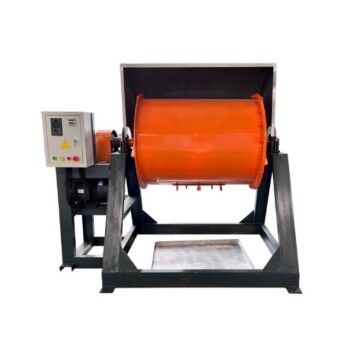
Stainless Steel Laboratory Ball Mill for Dry Powder and Liquid with Ceramic Polyurethane Lining
Discover the versatile stainless steel dry powder/liquid horizontal ball mill with ceramic/polyurethane lining. Ideal for ceramic, chemical, metallurgical, and building materials industries. High grinding efficiency and uniform particle size.

Laboratory Single Horizontal Jar Mill
KT-JM3000 is a mixing and grinding instrument for placing a ball milling tank with a volume of 3000ml or less. It adopts frequency conversion control to realize timing, constant speed, direction change, overload protection and other functions.
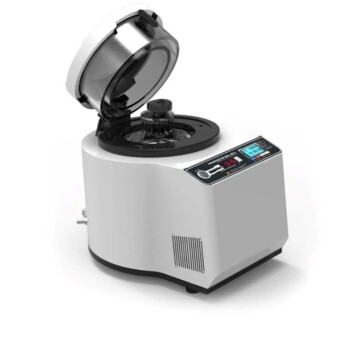
Laboratory High Throughput Tissue Grinding Mill Grinder
KT-MT is a high-quality, small, and versatile tissue grinder used for crushing, grinding, mixing, and cell wall breaking in various fields, including food, medical, and environmental protection. It is equipped with 24 or 48 2ml adapters and ball grinding tanks and is widely employed for DNA, RNA, and protein extraction.

Laboratory Four-Body Horizontal Jar Mill
The four-body horizontal tank mill ball mill can be used with four horizontal ball mill tanks with a volume of 3000ml. It is mostly used for mixing and grinding laboratory samples.
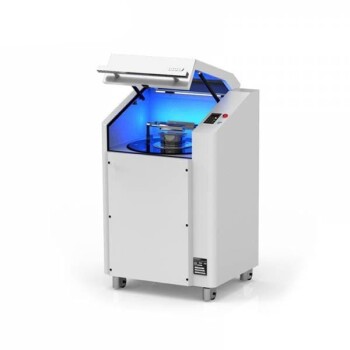
Lab Vibration Mill
Vibration Mill for Efficient Sample Preparation, Suitable for Crushing and Grinding a Variety of Materials with Analytical Precision. Supports Dry / Wet / Cryogenic Grinding and Vacuum/Inert Gas Protection.
Related Articles

Advantages of Planetary Ball Mill in Laboratory Applications
Discover the advantages of using planetary ball mills in laboratory settings. Learn about its ability to produce fine powder, suitability for toxic materials, wide range of applications, continuous operation, and usage for milling abrasive materials. Explore how planetary ball mills differ from traditional milling machines and their function in creating ultrafine and nano-sized materials.
Planetary Ball Mills: Research Tools for Efficient Mixing and Nanoscale Grinding
Planetary ball mills are indispensable tools in modern laboratories, serving a crucial role in the mixing, fine grinding, and preparation of small samples. These mills are particularly adept at dispersing nanomaterials and facilitating the development and small-scale production of high-tech materials.
Maximizing Grinding Efficiency: The Power of Planetary Ball Mills
Discover why planetary ball mills offer higher grinding efficiency than ordinary ball mills. Learn about the technology behind their high-performance all-round capabilities. Find out the key factors influencing the productivity and specific energy consumption of ball mills.
Understanding the Advantages and Disadvantages of Ball Mills in Laboratory and Industrial Applications
Discover the pros and cons of using ball mills for grinding materials. Explore the potential applications of ball mills for various industries.
Choosing the Best Material for Ball Mill: Essential Factors and Recommendations
Discover the best material for ball mill applications and grinding success. Learn about the features and benefits of stainless steel, ceramic, agate, and tungsten carbide media. Find out how to ensure grinding success and the ideal grinding jars and media for planetary ball milling. Explore the applications of ball mills and the advantages of high-energy ball mills for ultra-fine particles.
The Advantages of Ball Milling in Laboratory Applications: high capacity and reliability
Discover the numerous advantages of ball milling in laboratory applications. Explore the working principles, applications, and advantages of ball mills, along with the impact of ball mill speed on size reduction. Learn how ball milling compares to traditional milling machines.
Features of Different Laboratory Mills: An Overview
Laboratory mills are specialized machines used to reduce non-homogenous batch samples into smaller, representative samples that are more uniform in composition.
Precautions for Preparing Lead Zirconate Titanate (PZT) Film Layers by Magnetron Sputtering
Guidelines and precautions for preparing PZT film layers using magnetron sputtering.
Parameters Affecting Sputtering Effect in Magnetron Sputtering Process
Key parameters influencing the sputtering effect in magnetron sputtering, including air pressure, power, target distance, substrate type, and more.
Comprehensive Classification and Application of Magnetron Sputtering Targets
This article details the classification, applications, and principles of magnetron sputtering targets across various industries.
Revolutionizing Lab Efficiency: The Ultimate Guide to Laboratory Sieving Machines
Discover the common sieving methods used in laboratory analysis. Learn about single sieve and sieve set sieving, dry and wet sieving, and other techniques for effective particle separation. Find out how sieving has evolved over time and its importance in quality assurance.
Working Principle of Vertical Ball Mill : Impact, Attrition, and Size Reduction
Discover the working principle of vertical ball mills through impact and attrition mechanisms. Learn how materials like iron ore and ceramics are ground to a fine medium. Explore the construction, operations, advantages of vertical mills in this detailed guide.