All Questions
How Do You Clean Ball Milling Media? A Step-By-Step Guide To Prevent Cross-Contamination
Learn the essential protocol for cleaning ball milling media to ensure high-purity results and prevent cross-contamination in your lab.
What Are The Sizes Of A Ball Mill? From Benchtop To Industrial Scale Solutions
Explore ball mill sizes from 50 mL lab jars to 8+ meter industrial units. Learn how throughput, feed size, and material properties determine the right mill for your needs.
What Are The Advantages Of A Ball Mill? Achieve Ultra-Fine Grinding For Hard, Abrasive Materials
Discover the key advantages of ball mills: fine powder production, material versatility, process containment, and reliable performance for demanding applications.
What Are The Effects Of Ball Milling? A Deep Dive Into Mechanical Alloying And Material Transformation
Explore the effects of ball milling beyond grinding: particle size reduction, mechanical alloying, amorphization, and enhanced chemical reactivity.
Which Is Better Rod Mill Or Ball Mill? Choose The Right Mill For Your Particle Size Goal
Rod mills for uniform coarse grinding, ball mills for fine powders. Learn the key differences in grinding action, particle size, and applications to choose correctly.
What Are The Major Components Of A Ball Mill? Optimize Your Grinding Process With Key Insights
Learn about the core parts of a ball mill: the shell, grinding media, and liner. Understand how they work together for efficient particle size reduction.
What Is A Planetary Ball Mill? Achieve Rapid, High-Energy Grinding For Advanced Materials
Learn how planetary ball mills use opposing rotations to generate high-energy impacts for fine grinding, mechanical alloying, and material synthesis.
What Is A Planetary Ball Mill? Achieve Superior Fine Grinding And Mixing
Discover how a planetary ball mill uses high-energy impact & friction for fine grinding, mixing, and mechanical alloying of hard, brittle materials.
Which Mill Is More Effective Than Planetary Ball Mill For Reducing Particle Size? Achieve Superior Nano-Grinding With Stirred Media Mills
Discover why stirred media mills are more effective than planetary ball mills for achieving ultra-fine, nano-sized particles with superior control and efficiency.
How Do You Maintain A Planetary Mixer? A Proactive Guide To Extend Equipment Life
Learn the essential daily, weekly, and periodic maintenance steps for planetary mixers to ensure longevity, safety, and prevent costly downtime.
What Is The Basic Of Ball Milling? A Guide To Simple, Effective Material Grinding
Learn the core principles of ball milling, a mechanical process for grinding materials into fine powders and inducing structural changes.
What Are The Characteristics Of A Ball Mill? Achieve Ultra-Fine Grinding For Your Materials
Learn the key characteristics of ball mills, including their mechanism of impact and attrition, versatility for wet/dry grinding, and ability to handle abrasive materials.
What Are The Disadvantages Of Ball Mill Grinding? High Energy Use, Contamination, And Slow Processing
Explore the key drawbacks of ball mills: high energy consumption, risk of product contamination, slow grinding speed, and material limitations.
Is A Ball Mill Suitable For Dry And Wet Grinding? Yes, And Here's How To Choose The Right Method.
Learn the key differences between dry and wet ball milling for material grinding, including energy efficiency, particle size, and operational considerations.
What Is The Purpose Of Ball Milling? A Versatile Tool For Material Synthesis And Modification
Discover the core purposes of ball milling, from particle size reduction to mechanical alloying and inducing crystal defects in materials.
What Are The Advantages And Disadvantages Of Ball Milling Method? A Guide To The Trade-Offs
Explore the pros and cons of ball milling, including its cost-effectiveness, versatility, and the trade-offs in particle size control and purity.
What Are The Advantages Of A Ball Mill? Achieve Superior Fine Grinding For Hard And Abrasive Materials
Discover the key advantages of ball mills: exceptional fine grinding, versatility for wet/dry processes, and safe handling of sensitive materials.
What Are The Advantages Of Ball Milling In Nanotechnology? A Guide To Efficient, Scalable Nanomaterial Production
Discover the key advantages of ball milling for nanotech: cost-effective scalability, material versatility, and unique nanostructure synthesis for metals, ceramics & composites.
What Industries Use Ball Mills? A Guide To Grinding Applications In Mining, Cement, And More
Explore the key industries that rely on ball mills, including mining, cement, ceramics, and pharmaceuticals, for efficient material grinding and particle size reduction.
Where Are Ball Mills Used? Essential Grinding Solutions For Mining, Cement, And Pharma
Discover ball mill applications in mining, cement, pharmaceuticals, and advanced research for efficient size reduction and material synthesis.
What Are The Application Of Ball Mill In Food Industry? Achieve Ultra-Fine Grinding For Superior Food Quality
Explore how ball mills enhance food texture, solubility, and stability through precise particle size reduction for chocolate, supplements, and more.
Do Ball Mills Need Water? A Guide To Wet Vs. Dry Grinding For Your Material
Learn when to use water in ball mills (wet grinding) and when to avoid it (dry grinding) for optimal efficiency, particle size, and process safety.
What Are The Steps In Ball Milling? A Guide To Effective Particle Size Reduction
Learn the four key steps of ball milling: material selection, loading, operation, and extraction. Achieve precise particle size control for your materials.
What Are The Disadvantages Of A Ball Mill? Key Limitations For Your Grinding Process
Learn the main drawbacks of ball mills: slow grinding, high noise, contamination risks, and limitations with soft materials. Make an informed choice.
What Is The Difference Between A Pulverizer And A Ball Mill? Choose The Right Grinding Technology
Learn the key differences between pulverizers and ball mills to select the best equipment for your material and target particle size.
What Is The Difference Between Ball Mill And Grinding Balls? Master Your Grinding Process For Optimal Results
Ball mills are the grinding machines; grinding balls are the media inside. Learn how their synergy affects particle size, efficiency, and product purity.
What Is The Difference Between A Planetary Mill And A Ball Mill? Discover The Key To High-Energy Grinding
Learn the key differences between planetary and ball mills: from basic tumbling action to high-energy grinding for nano-sized particles.
Related Products

Mini Planetary Ball Mill Machine for Laboratory Milling

Laboratory Planetary Ball Mill Rotating Ball Milling Machine

Laboratory Horizontal Planetary Ball Mill Milling Machine
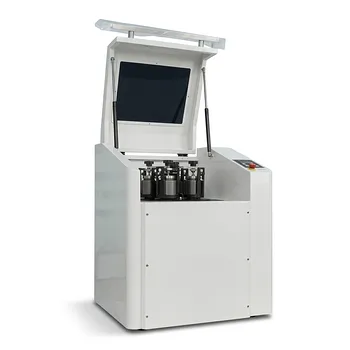
Laboratory Planetary Ball Mill Cabinet Planetary Ball Milling Machine
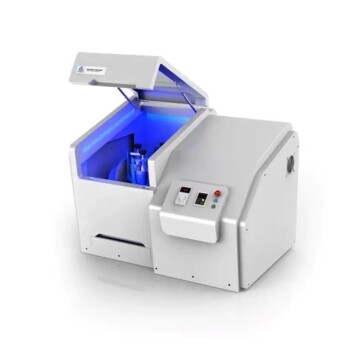
High-Energy Omnidirectional Planetary Ball Mill Machine for Laboratory