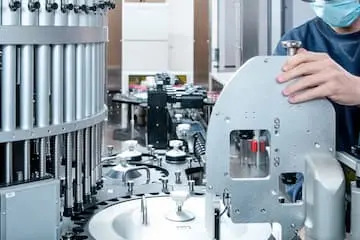
Vacuum Arc Melting Furnace is a metallurgical process used to melt and refine metals under vacuum or protective atmosphere. This process is commonly used in the aerospace, energy, and nuclear industries to manufacture high-value metal parts. It is designed to purify reactive titanium or zirconium alloys, which it refines under vacuum without contact with casting refractories. Additionally, the process can be used to improve inclusion cleanliness in steels and superalloys.
Toggle Categories
Get Instant Support
Choose your preferred way to connect with our team
-
Get Free Quote Fill out form for detailed pricing
-
Send Email Detailed inquiry support
-
WhatsApp Quick mobile chat
Response Time
Within 8 hours on working days, 24 hours on holidays
vacuum arc melting furnace

Lab-Scale Vacuum Induction Melting Furnace
Item Number : KT-VI

Vacuum Heat Treat and Molybdenum Wire Sintering Furnace for Vacuum Sintering
Item Number : KT-VMW
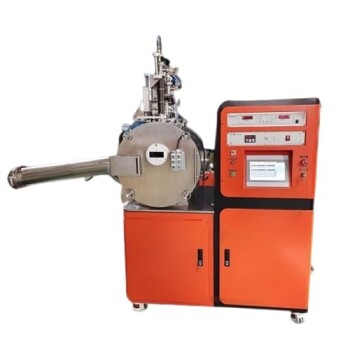
Vacuum Induction Melting Spinning System Arc Melting Furnace
Item Number : KT-VIS

Vacuum Arc Induction Melting Furnace
Item Number : KT-VA
We have the best Vacuum Arc Melting Furnace solutions that meet the needs of the aerospace, energy, and nuclear industries for manufacturing high-value metal parts. Our extensive portfolio offers appropriate standard solutions for most applications, and our bespoke design service enables us to meet any customer requirement. Our Vacuum Arc Melting Furnaces purify titanium or zirconium alloys under vacuum without contact with casting refractories, and improve inclusion cleanliness for steels and superalloys.
Applications of Vacuum Arc Melting Furnace
- Manufacturing high-value metal parts for the aerospace, energy, and nuclear industries.
- Refining liquid metal to improve inclusion cleanliness in steels and superalloys.
- Purifying reactive titanium or zirconium alloys under vacuum without contact with casting refractories.
- Developing new materials for melting metal alloys, glasses, silica, refractory materials, and oxidizing materials requiring high-temperature ranges.
- Improving the quality of raw materials used in complex alloys of complex devices of aerospace engineering.
- Melting and elaborating materials with high added value under controlled atmosphere.
- Treating cold electric insulating materials (ceramic, glass, enamel, silicon) within induction furnaces.
- Improving the hot workability and mechanical properties of nickel base, cobalt-based, and iron-based superalloys.
Advantages of Vacuum Arc Melting Furnace
- High purity: Vacuum arc melting furnace produces high-purity materials with low levels of impurities.
- Homogeneity: This furnace ensures the homogeneity of the material, which is important in applications where uniformity is necessary.
- Reduced porosity: This furnace is effective in reducing the porosity of the material, which is important in applications where strength is required.
- Improved mechanical properties: Vacuum arc melting furnace can improve the mechanical properties of materials such as strength, toughness, and ductility.
- Enhanced corrosion resistance: This furnace is effective in enhancing the corrosion resistance of materials, which is important in applications where the material is exposed to harsh environments.
- Efficient production: Vacuum arc melting furnace has a fast melting rate, which makes it an efficient method of production.
- Cost-effective: This furnace is a cost-effective method of producing high-quality materials, as it reduces the need for additional processing steps.
Our Vacuum Arc Melting Furnace is a cost-effective solution that provides the flexibility of customisation to meet the specific needs of our clients. The furnace is designed to produce high-value metal parts for aerospace, energy, and nuclear industries. The refining process is conducted under vacuum, which purifies the metal without contact with casting refractories. Our melting applications cover the needs of laboratories and R&D centers to industries and small foundries with scalable and modular solutions.
FAQ
What Is Vacuum Arc Melting Process?
Vacuum arc melting (VAR) is a secondary melting process used to produce metal ingots with high chemical and mechanical homogeneity for critical applications in industries like aerospace, energy, and nuclear. The process involves refining liquid metal under vacuum and controlling its solidification rate. It is used for the purification of reactive titanium or zirconium alloys, without any contact with casting refractories, as well as for improving inclusion cleanliness in steels and superalloys. The remelted cylindrical ingots can weigh several tons, and VAR has revolutionized the specialty metallurgical techniques industry.
What Is VAR Vacuum Arc Remelting (VAR)Furnace?
VAR or Vacuum Arc Remelting is a process used to refine and improve the cleanliness of ingots made from standard air-melted, vacuum induction melted, or ESR remelted alloys. It is used for steels, superalloys, titanium, zirconium, and their alloys in industries such as aerospace, power generation, defense, medical, and nuclear. VAR is a continuous remelting process of a consumable electrode under vacuum, with DC power used to strike an arc between the electrode and a copper mold. The process removes dissolved gases, reduces undesired trace elements, improves oxide cleanliness, and achieves directional solidification of the ingot from bottom to top.
How Does Vacuum Arc Melting Furnace Work?
A vacuum arc melting furnace works by melting materials under a vacuum or low-pressure atmosphere using electric arcs. The furnace uses two electrodes, one of which is the material to be melted. The electrodes are brought close together and an electric arc is struck between them, causing the material to melt. The furnace is then evacuated to remove any impurities and the molten material is cast into a desired shape. This process is used for the production of high-purity metals, alloys, and intermetallics used in industries such as aerospace, electronics, and biomedical engineering.
What Are The Applications Of Vacuum Arc Melting Furnaces?
Vacuum arc melting furnaces are commonly used in the production of high-performance materials, such as superalloys, special steels, and reactive metals. These materials often require high-purity and controlled composition, which can be achieved through vacuum arc melting. The process is particularly suited for the production of critical components in aerospace, automotive, and energy industries, where high strength, corrosion resistance, and temperature stability are vital. Vacuum arc melting is also used in research and development settings to produce small quantities of specialized alloys for testing and characterization purposes.
What Are The Advantages Of Using Vacuum Arc Melting Furnaces?
Vacuum arc melting furnaces offer several advantages. Firstly, the high vacuum environment prevents oxidation and contamination, resulting in high-purity melted metals. This is especially important for producing materials with stringent quality requirements. Secondly, the electric arc generates intense heat, allowing for rapid and efficient melting of the metal. The process can be precisely controlled to achieve specific melting parameters, such as temperature, pressure, and cooling rate, facilitating the production of alloys with desired properties. Vacuum arc melting furnaces also offer flexibility in terms of the size and shape of the melted metal, as the consumable electrode can be easily replaced or modified. Additionally, the process allows for the selective removal of impurities, such as gases and non-metallic inclusions, further enhancing the purity and quality of the final melted metal.
What Safety Precautions Should Be Followed When Using A Vacuum Arc Melting Furnace?
When using a vacuum arc melting furnace, several safety precautions should be followed to ensure safe operation. Firstly, the furnace should be operated by trained personnel who are familiar with the equipment, its operation, and safety protocols. Adequate personal protective equipment, such as heat-resistant gloves, safety goggles, and fire-resistant clothing, should be worn when handling hot materials or operating the furnace. The vacuum system should be regularly inspected and maintained to ensure proper functionality and prevent safety risks. It is important to follow the manufacturer's guidelines and instructions for safe operation and maintenance of the vacuum arc melting furnace. Additionally, proper handling and disposal of consumable electrodes and melted materials should be carried out according to established safety guidelines and regulations. Regular inspections and maintenance of the furnace, including electrical systems, cooling systems, and gas handling components, should be performed to ensure safe and reliable operation.
REQUEST A QUOTE
Our professional team will reply to you within one business day. Please feel free to contact us!
Related Articles

Why Your Induction Furnace Melts Are Failing: The Critical Mistake Most Labs Make
Frustrated with inconsistent metal quality from your induction furnace? Discover the root cause and learn how to choose the right equipment.
Read more
Why Your High-Temperature Furnace Fails: It’s Not About the Max Temp
Struggling with inconsistent results from your vacuum furnace? Discover why chasing the highest temperature is a costly mistake and how to fix it.
Read more
The Quiet Physics of Purity: Mastering Heat in a Vacuum
Vacuum furnaces don't just heat; they fundamentally alter physics by replacing convection with radiation. Explore how removing air unlocks material perfection.
Read more
The Engineering of Nothingness: Why Absolute Purity Requires a Vacuum
Discover why vacuum furnaces are indispensable for high-stakes thermal processing. We explore the balance between material integrity and oxidation control.
Read more
Why Your Furnace-Brazed Parts Fail—And Why It's Not the Furnace's Fault
Discover the real reason your furnace brazing results are inconsistent and costly. It's not the equipment; it's a misunderstanding of physics.
Read more
The Architecture of Emptiness: Why High-Stakes Engineering Demands a Vacuum
Vacuum furnaces are not just hotter ovens; they are tools of subtraction. Discover how removing the atmosphere unlocks material perfection in aerospace and medicine.
Read more
Your Furnace Hit the Right Temperature. So Why Are Your Parts Failing?
Your vacuum furnace reaches temperature but ruins your parts? Learn the hidden cause of failure and how choosing the right hot zone material ensures perfect results.
Read more
The Art of Nothingness: Precision and Purity in Vacuum Heat Treatment
Discover the engineering logic behind vacuum furnaces. Learn how eliminating air prevents oxidation, ensures purity, and enables advanced metallurgy.
Read more
Why Your Brazed Joints Are Inconsistent—And the Fix Isn't in the Furnace
Frustrated by inconsistent brazed joints? Discover the hidden cause of failure that isn't heat or filler, and learn how to fix it for good.
Read more
The Thermal Divide: Navigating the Choice Between Tube and Chamber Furnaces
A guide to the trade-offs in vacuum heating. We explore how physical scale and maximum temperature dictate the choice between tube precision and chamber capacity.
Read more
Why Your Heat Treatment Fails: Beyond the Maximum Temperature of Your Vacuum Furnace
Discover why focusing on max temperature leads to failed heat treatments. Learn to match your vacuum furnace to your process for consistent, high-quality results.
Read more
The Engineering of Nothingness: Why Vacuum Furnaces Define Material Integrity
Discover why the absence of air is the key to metallurgical perfection. We explore the physics, the trade-offs, and the precision of vacuum heat treatment.
Read more
The Architecture of Isolation: Anatomy of a Tube Furnace
Explore the layered engineering of a tube furnace. From alumina insulation to quartz reactors, understand how this "thermal sleeve" achieves precise isolation.
Read more
The Architecture of Emptiness: Controlling Pressure in Vacuum Furnaces
Precision in vacuum furnaces isn't about heat—it's about the absence of air. Explore how controlling pressure ranges defines material integrity.
Read more
The Geometry of Heat: A Choice Between Control and Capacity
Discover the critical engineering differences between tube and muffle furnaces. Learn why atmosphere control and geometry dictate your laboratory success.
Read more
Why Your Heat-Treated Parts Are Failing: The Hidden Enemy in Your Furnace
Seeing inconsistent results from your furnace? Learn why air is the real culprit in heat treatment and how to get perfect, oxide-free parts every time.
Read more
The Architecture of Isolation: Why Control Beats Volume in Material Science
Discover why the tube furnace is the engineer's choice for precision. We explore the critical role of atmospheric isolation and thermal uniformity in advanced material synthesis.
Read more
Beyond the Scale: Why Your Furnace Is Ruining Your Parts—And the Simple Fix
Tired of oxidized, inconsistent heat-treated parts? Discover why the air in your furnace is the real problem and how a vacuum furnace provides the definitive solution.
Read more
The Silent Boundary: Engineering the Heart of the Tube Furnace
The furnace tube is not just a component; it is the limit of your experiment. A deep dive into Quartz, Alumina, and Metal selection strategies.
Read more
Why Your Brazed Joints Fail: The Truth About Furnace Temperature and How to Master It
Discover the root cause of inconsistent brazing results. It's not the furnace, but a misunderstanding of how temperature relates to filler metals.
Read more