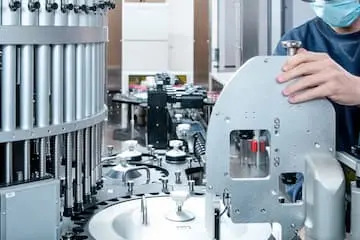
Vacuum induction furnaces are essential in industries requiring high-purity metal melting and alloy production. Our range includes the Vacuum Induction Melting Furnace, ideal for aerospace and electronic applications, and the Vacuum Levitation Melting Furnace, perfect for high melting point metals. For research, the Vacuum Melt Spinning System is designed for metastable materials. Additionally, our Vacuum Arc Furnace excels in melting refractory metals, while the 600T Vacuum Induction Hot Press Furnace is tailored for high-temperature sintering. Each product ensures precise temperature control, contamination-free processing, and superior material quality.
Toggle Categories
Get Instant Support
Choose your preferred way to connect with our team
-
Get Free Quote Fill out form for detailed pricing
-
Send Email Detailed inquiry support
-
WhatsApp Quick mobile chat
Response Time
Within 8 hours on working days, 24 hours on holidays
vacuum induction furnace

Lab-Scale Vacuum Induction Melting Furnace
Item Number : KT-VI

Vacuum Heat Treat and Molybdenum Wire Sintering Furnace for Vacuum Sintering
Item Number : KT-VMW
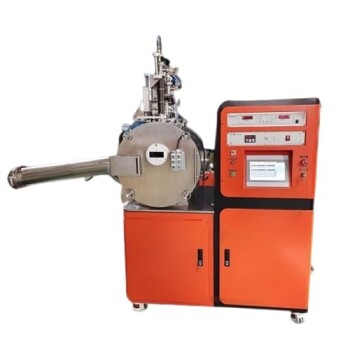
Vacuum Induction Melting Spinning System Arc Melting Furnace
Item Number : KT-VIS

Vacuum Arc Induction Melting Furnace
Item Number : KT-VA
Detailed Overview of Vacuum Induction Furnaces
Vacuum induction furnaces are at the forefront of modern metallurgy, offering unparalleled precision and purity in metal melting processes. These furnaces operate under a vacuum environment, which eliminates the presence of oxygen and other reactive gases, ensuring that the metals remain uncontaminated and of the highest quality. This is particularly crucial for industries such as aerospace, nuclear energy, and electronics, where material integrity is paramount.
Key Features and Benefits
-
High Purity Melting: The vacuum environment prevents oxidation and contamination, resulting in metals and alloys with exceptional purity. This is vital for applications requiring high-performance materials, such as in the aerospace and defense industries.
-
Precise Temperature Control: Advanced induction heating technology allows for precise control over the melting process, ensuring uniform temperature distribution and consistent material properties.
-
Versatility: Our vacuum induction furnaces are capable of melting a wide range of metals and alloys, including nickel-based, cobalt-based, and iron-based high-temperature alloys, stainless steel, tool steel, and more.
-
Environmental Benefits: The vacuum process eliminates the need for chemical deoxidizers, reducing environmental impact and enhancing workplace safety.
-
Customizable Solutions: We offer tailored furnace designs to meet specific industrial requirements, whether for research, production, or specialized applications.
Applications
- Aerospace and Defense: Producing high-strength, lightweight alloys for aircraft and missile components.
- Nuclear Energy: Melting and refining metals for reactor components and fuel rods.
- Electronics: Creating high-purity materials for semiconductors and electronic devices.
- Research and Development: Developing new alloys and materials with unique properties for various industrial applications.
Why Choose Our Vacuum Induction Furnaces?
Our vacuum induction furnaces are engineered with cutting-edge technology to deliver superior performance and reliability. With a focus on innovation and quality, we provide solutions that meet the stringent demands of modern industry. Our team of experts is dedicated to supporting you through every step, from initial consultation to installation and beyond.
Contact us today to learn more about how our vacuum induction furnaces can enhance your production processes. Leave a message to discuss your specific needs and discover the perfect solution for your application.
FAQ
What Is A Vacuum Induction Furnace And How Does It Work?
A vacuum induction furnace is a device that melts metal through electromagnetic induction heating. In a vacuum environment, electromagnetic induction heating generates eddy currents in metal through induction coils, heating the metal above its melting point. The absence of oxygen and other gases in the vacuum prevents the metal from reacting with these gases, ensuring the quality and purity of high-temperature alloys.
What Are The Main Applications Of Vacuum Induction Furnaces?
Vacuum induction furnaces are widely used in the aerospace, missile, rocket, atomic energy, and electronics industries. They are essential for producing high-quality alloys and special steels, such as nickel-based, cobalt-based, and iron-based high-temperature alloys. These furnaces are also used for casting aircraft components, complex valves for harsh conditions, refining high-purity metals and alloys, and producing electrodes for remelting.
What Are The Advantages Of Using A Vacuum Induction Furnace?
The advantages of using a vacuum induction furnace include: 1) No air or slag pollution, ensuring environmental benefits and producing relatively pure, high-performance alloys. 2) The vacuum environment allows for effective degassing, resulting in lower gas content in the melted steel and alloys. 3) Metals are not easily oxidized in a vacuum. 4) Impurities such as Pb and Bi can evaporate in the vacuum state, purifying the material. Additionally, the strong induction stirring effect ensures uniformity in temperature and chemical composition.
What Types Of Materials Can Be Processed In A Vacuum Induction Furnace?
Vacuum induction furnaces can process a variety of materials including stainless steel, heat-resistant steel, ultra-high-strength steel, tool steel, bearing steel, magnetic materials, elastic alloys, and expansion alloys. These materials are melted in the furnace to ensure their properties and quality, making it suitable for high-performance applications in various industries.
How Does The Vacuum Environment In A Vacuum Induction Furnace Improve Material Properties?
The vacuum environment in a vacuum induction furnace prevents the metal from reacting with gases such as oxygen and nitrogen, which can degrade material properties. It also allows for the removal of low melting point volatile metal impurities through evaporation, enhancing the purity and performance of the materials. Additionally, the vacuum conditions facilitate precise control over the chemical composition of the alloy, including elements with strong affinity for oxygen and nitrogen.
REQUEST A QUOTE
Our professional team will reply to you within one business day. Please feel free to contact us!
Related Articles

Why Your Induction Furnace Melts Are Failing: The Critical Mistake Most Labs Make
Frustrated with inconsistent metal quality from your induction furnace? Discover the root cause and learn how to choose the right equipment.
Read more
Why Your High-Temperature Furnace Fails: It’s Not About the Max Temp
Struggling with inconsistent results from your vacuum furnace? Discover why chasing the highest temperature is a costly mistake and how to fix it.
Read more
The Quiet Physics of Purity: Mastering Heat in a Vacuum
Vacuum furnaces don't just heat; they fundamentally alter physics by replacing convection with radiation. Explore how removing air unlocks material perfection.
Read more
The Engineering of Nothingness: Why Absolute Purity Requires a Vacuum
Discover why vacuum furnaces are indispensable for high-stakes thermal processing. We explore the balance between material integrity and oxidation control.
Read more
Why Your Furnace-Brazed Parts Fail—And Why It's Not the Furnace's Fault
Discover the real reason your furnace brazing results are inconsistent and costly. It's not the equipment; it's a misunderstanding of physics.
Read more
The Architecture of Emptiness: Why High-Stakes Engineering Demands a Vacuum
Vacuum furnaces are not just hotter ovens; they are tools of subtraction. Discover how removing the atmosphere unlocks material perfection in aerospace and medicine.
Read more
Your Furnace Hit the Right Temperature. So Why Are Your Parts Failing?
Your vacuum furnace reaches temperature but ruins your parts? Learn the hidden cause of failure and how choosing the right hot zone material ensures perfect results.
Read more
The Art of Nothingness: Precision and Purity in Vacuum Heat Treatment
Discover the engineering logic behind vacuum furnaces. Learn how eliminating air prevents oxidation, ensures purity, and enables advanced metallurgy.
Read more
Why Your Brazed Joints Are Inconsistent—And the Fix Isn't in the Furnace
Frustrated by inconsistent brazed joints? Discover the hidden cause of failure that isn't heat or filler, and learn how to fix it for good.
Read more
The Thermal Divide: Navigating the Choice Between Tube and Chamber Furnaces
A guide to the trade-offs in vacuum heating. We explore how physical scale and maximum temperature dictate the choice between tube precision and chamber capacity.
Read more
Why Your Heat Treatment Fails: Beyond the Maximum Temperature of Your Vacuum Furnace
Discover why focusing on max temperature leads to failed heat treatments. Learn to match your vacuum furnace to your process for consistent, high-quality results.
Read more
The Engineering of Nothingness: Why Vacuum Furnaces Define Material Integrity
Discover why the absence of air is the key to metallurgical perfection. We explore the physics, the trade-offs, and the precision of vacuum heat treatment.
Read more
The Architecture of Isolation: Anatomy of a Tube Furnace
Explore the layered engineering of a tube furnace. From alumina insulation to quartz reactors, understand how this "thermal sleeve" achieves precise isolation.
Read more
The Architecture of Emptiness: Controlling Pressure in Vacuum Furnaces
Precision in vacuum furnaces isn't about heat—it's about the absence of air. Explore how controlling pressure ranges defines material integrity.
Read more
The Geometry of Heat: A Choice Between Control and Capacity
Discover the critical engineering differences between tube and muffle furnaces. Learn why atmosphere control and geometry dictate your laboratory success.
Read more
Why Your Heat-Treated Parts Are Failing: The Hidden Enemy in Your Furnace
Seeing inconsistent results from your furnace? Learn why air is the real culprit in heat treatment and how to get perfect, oxide-free parts every time.
Read more
The Architecture of Isolation: Why Control Beats Volume in Material Science
Discover why the tube furnace is the engineer's choice for precision. We explore the critical role of atmospheric isolation and thermal uniformity in advanced material synthesis.
Read more
Beyond the Scale: Why Your Furnace Is Ruining Your Parts—And the Simple Fix
Tired of oxidized, inconsistent heat-treated parts? Discover why the air in your furnace is the real problem and how a vacuum furnace provides the definitive solution.
Read more
The Silent Boundary: Engineering the Heart of the Tube Furnace
The furnace tube is not just a component; it is the limit of your experiment. A deep dive into Quartz, Alumina, and Metal selection strategies.
Read more
Why Your Brazed Joints Fail: The Truth About Furnace Temperature and How to Master It
Discover the root cause of inconsistent brazing results. It's not the furnace, but a misunderstanding of how temperature relates to filler metals.
Read more