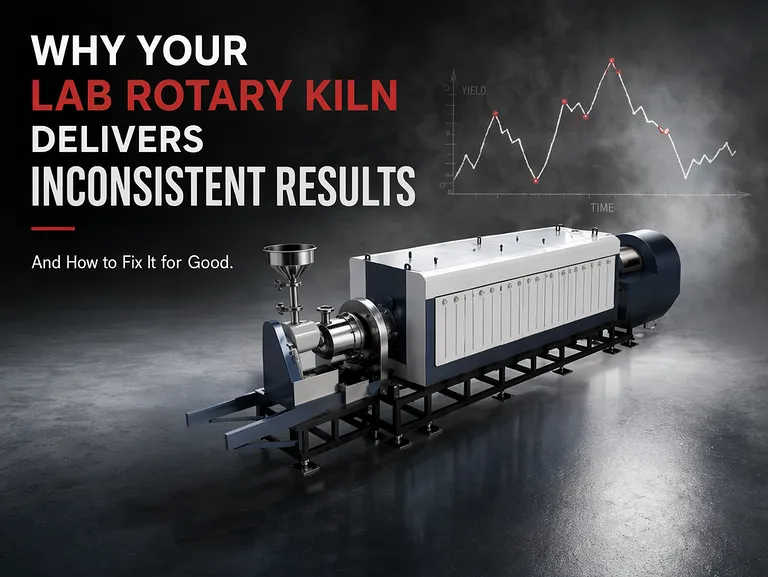
Does this sound familiar? You've spent weeks perfecting a material synthesis protocol. But when you run it in your lab’s rotary kiln, the results are a frustrating gamble. One batch yields a perfect, uniform powder. The next is a mix of unreacted material and scorched particles. Your project stalls, credibility is questioned, and you’re back to square one, chasing variables that never seem to solve the core problem.
You’re not alone. This is one of the most common—and misunderstood—challenges in laboratory thermal processing.
The Endless Cycle of "Fixes" That Don't Work
When faced with inconsistent kiln performance, most researchers follow a logical, yet ultimately flawed, troubleshooting script:
- "The temperature must be off." You recalibrate the thermocouple or simply increase the temperature setpoint, hoping more heat will solve the problem.
- "The material isn't mixing properly." You adjust the rotation speed or the kiln's angle of inclination, aiming for better material tumbling.
- "Maybe the heating element is failing." You start investigating the cost and downtime associated with replacing the furnace components.
Each of these "fixes" seems reasonable, but they rarely provide a lasting solution. The inconsistency returns, and the cycle of frustration continues.
The business consequences are significant. You waste valuable, often expensive, raw materials on failed batches. Project deadlines are missed, delaying publications or stalling the development of a pilot-scale process. Most importantly, you lose confidence in your data and your ability to create a reliable, repeatable manufacturing method.
The Real Culprit: Your Kiln Is Not Just a Heated Tube
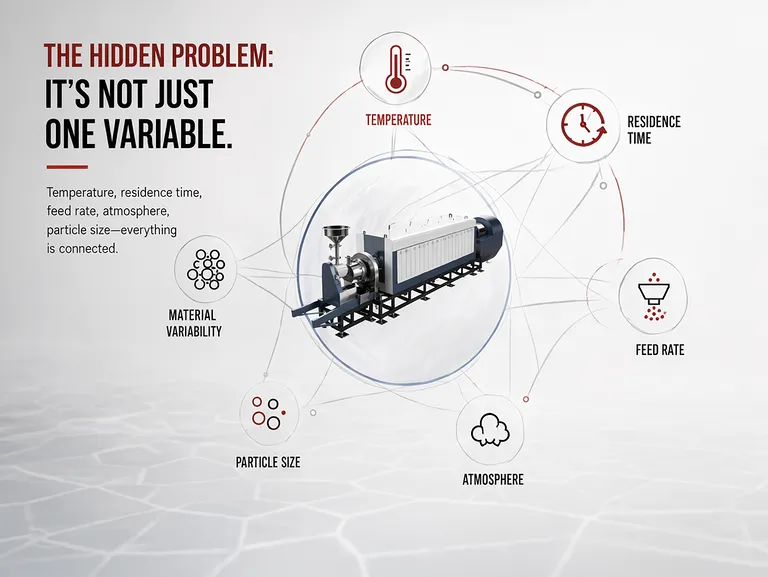
What if the temperature controller, the motor, and the heating element are not the real villains? What if they are simply symptoms of a more fundamental, hidden flaw?
The critical mistake is viewing a rotary kiln as a collection of independent parts. In reality, a rotary kiln is a dynamic, integrated system. Like an ecosystem, a failure in one area inevitably cascades and causes problems elsewhere. And the most common point of system failure is also the most overlooked: the seals.
Why Ineffective Seals Sabotage Your Process
At its core, a rotary kiln is designed to create a perfectly controlled thermal and atmospheric environment. But when the seals at the feed and discharge ends are poorly designed or worn, that control is shattered.
- Atmosphere Is Compromised: Cold ambient air leaks into the kiln. This immediately destroys any inert atmosphere (like nitrogen or argon) you've established, which is disastrous for oxygen-sensitive materials.
- Temperature Becomes Unstable: The influx of cold air creates unpredictable cold spots inside the kiln. Your thermocouple, located at a single point, reads a lower temperature and instructs the system to pump in more heat.
- Product Is Ruined: This overcompensation leads to hot spots in other areas, scorching your material. The result? A non-uniform product containing both under-processed and over-heated particles—the exact inconsistency you've been fighting.
No amount of tweaking the temperature or rotation speed can fix a problem caused by a compromised atmosphere. You are treating the symptoms (temperature fluctuations) while ignoring the disease (air leakage).
The Solution: Moving from Parts to an Integrated System
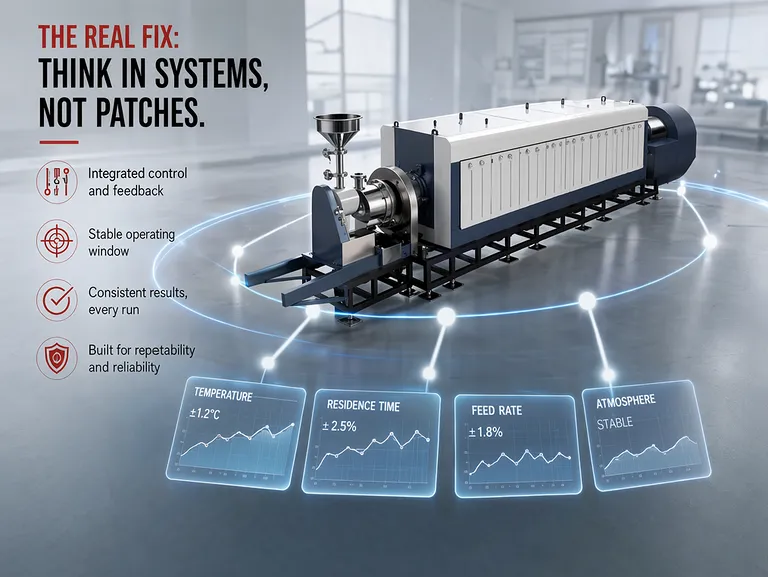
To achieve truly consistent, repeatable results, you don't just need a kiln that gets hot. You need a system engineered for total atmospheric integrity and thermal stability. This means every component is designed to support the primary goal of maintaining a perfectly sealed and stable processing environment.
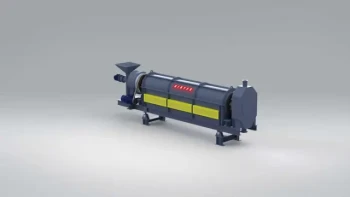
This is the engineering philosophy behind KINTEK's laboratory-scale rotary kilns. We recognized that inconsistent results in research and pilot production aren't usually caused by a single faulty component, but by a failure of the system as a whole.
Our kilns are designed as tightly integrated systems where every part serves the core function of process stability:
- Advanced Sealing Mechanisms: We use robust, multi-layer graphite sealing systems that effectively prevent air ingress and gas leakage, ensuring absolute control over your internal atmosphere.
- Efficient Refractory & Insulation: The right lining doesn't just withstand heat; it retains and distributes it evenly, minimizing the energy needed to maintain temperature and eliminating the hot and cold spots that ruin product quality.
- Smooth, Stable Drive Systems: A precision drive provides consistent, smooth rotation, ensuring all your material is exposed to the same thermal conditions without the sudden jolts that can cause clumping or uneven flow.
By focusing on the integrity of the entire system, KINTEK kilns solve the root cause of inconsistency, rather than just patching the symptoms.
Beyond Troubleshooting: Unlocking New Research Potential
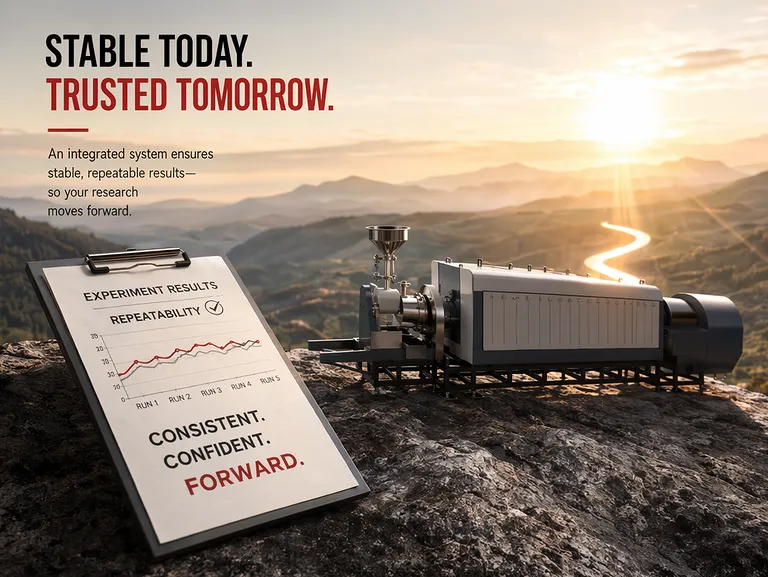
When you can finally trust your equipment, you stop wasting time as a troubleshooter and become a researcher again. What becomes possible when your kiln delivers reliable results, every single time?
- Run Long-Duration Processes: You can confidently perform calcination or pyrolysis runs for 24, 48, or even 72 hours, knowing the environment inside the kiln will remain perfectly stable from start to finish.
- Develop Truly Scalable Methods: You can scale your process from grams in the lab to kilograms for pilot production, secure in the knowledge that the results will be consistent and predictable.
- Explore New Materials: You can work with highly sensitive materials under a true inert atmosphere, opening up new avenues for discovery that were previously too challenging.
- Accelerate Your R&D Cycle: You can generate high-quality, publishable data faster because you're focused on testing your materials, not battling your equipment.
Solving a persistent kiln issue is about more than just buying a new machine; it's about diagnosing the systemic problem that is holding your research back. Our experts have helped countless labs move past the cycle of troubleshooting to achieve breakthrough results. If you are ready to achieve true process stability, let's discuss your unique project. Contact Our Experts.
Related Products
- Electric Rotary Kiln Small Rotary Furnace Biomass Pyrolysis Plant
- Electric Rotary Kiln Continuous Working Small Rotary Furnace Heating Pyrolysis Plant
- Electric Rotary Kiln Small Rotary Furnace for Activated Carbon Regeneration
- Electric Rotary Kiln Pyrolysis Furnace Plant Machine Calciner Small Rotary Kiln Rotating Furnace
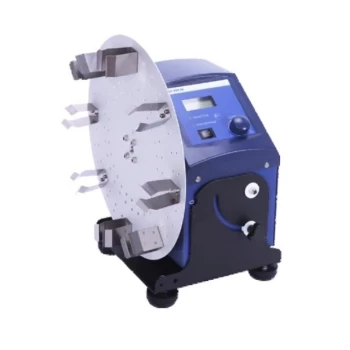
- Laboratory Disc Rotary Mixer for Efficient Sample Mixing and Homogenization
Related Articles
- Why More Fuel Isn't Fixing Your Rotary Kiln—And What Will
- Your Rotary Kiln Isn't an Oven: The Secret to Consistent Thermal Processing
- Your Rotary Kiln Process is Failing. The Problem Isn't Temperature—It's Purity.
- Mastering Rotary Kilns: A Comprehensive Guide to Operation, Applications, and Maintenance
- Optimizing Industrial Processes: Rotary Kiln and Laboratory Furnace Solutions