Blog
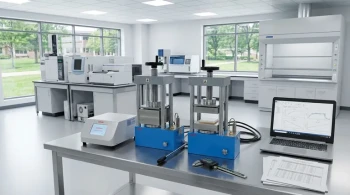
Force Without Fluid: Why Your Hydraulic Press Is a Hidden Bottleneck (And What to Do About It)
2 months agoTired of leaks, safety risks, and high energy bills from your hydraulic press? Uncover the core reason and discover modern alternatives for a safer, more efficient lab.
Learn More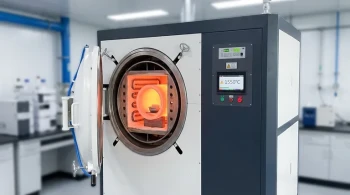
The Weakest Link: Why Your Furnace's True Max Temperature Isn't on the Spec Sheet
2 months agoThe practical max temperature of a vacuum furnace is set by its work tube, not the heating element. Understand the system's weakest link.
Learn More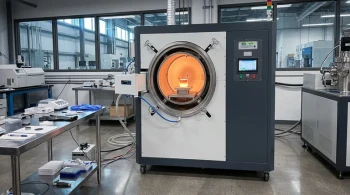
Beyond the Void: Mastering Pressure in High-Temperature Processes
2 months agoLearn why pressure in a vacuum furnace isn't about emptiness, but precise environmental control to prevent contamination and ensure process success.
Learn More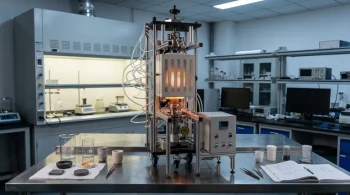
From Powder to Part: The Physics and Philosophy of Hot Pressing
2 months agoHot pressing combines heat and pressure to achieve superior material density with less force, solving the fundamental challenge of turning powder into a perfect solid.
Learn More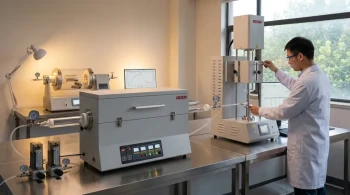
The Geometry of Precision: Why Furnace Orientation Dictates Experimental Success
2 months agoChoosing a tube furnace isn't just about temperature. Its orientation—horizontal, vertical, or rotary—is a critical decision for your process.
Learn More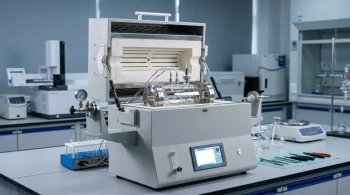
The Unsung Hinge: Why Split Tube Furnaces Are a Quiet Revolution in Lab Workflow
2 months agoSplit tube furnaces are more than a convenience; their hinged design solves a fundamental physical limitation, unlocking new experimental workflows.
Learn More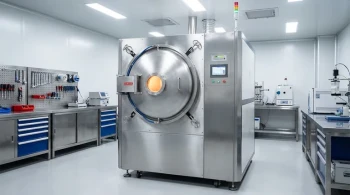
The Tyranny of the Atmosphere: Why Vacuum Furnaces Are About Control, Not Just Heat
2 months agoVacuum furnaces solve atmospheric contamination in heat treatment, ensuring material purity and superior mechanical properties for critical components.
Learn More
The Architecture of Pressure: How Cold Isostatic Pressing Builds Flawless Materials
2 months agoDiscover how Cold Isostatic Pressing (CIP) uses uniform pressure, not brute force, to create high-density material preforms with perfect consistency.
Learn More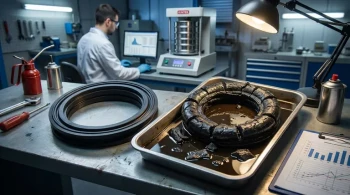
It’s Not a 'Bad Batch': Why Your High-Strength Rubber Parts Are Failing Prematurely
2 months agoFrustrated by rubber components failing? The cause is rarely a 'bad batch.' Learn the real reason and how to select the right material every time.
Learn More
The 'Machine Press' Myth: Why Your Custom Lab Furniture Is Warping—And How to Fix It for Good
2 months agoStop blaming the 'machine press.' Learn why plywood fails and discover the 3 key factors—adhesive, grade, ply count—to select durable materials for your lab.
Learn More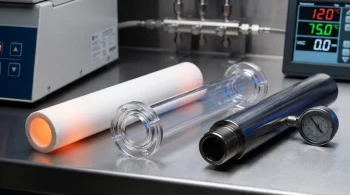
More Than a Vessel: The Physics and Psychology of Selecting a Furnace Tube
2 months agoChoosing a furnace tube isn't a material spec; it's a strategic trade-off between temperature, purity, and pressure that defines your results.
Learn More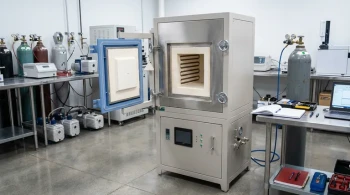
The Pursuit of Emptiness: A Systematic Guide to Vacuum Furnace Integrity
2 months agoLearn to systematically test vacuum furnace leaks, from rate-of-rise confirmation to helium detection, ensuring process integrity and repeatability.
Learn More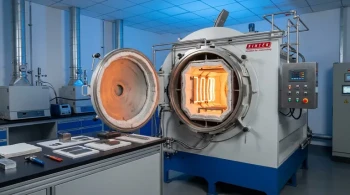
Designing for Emptiness: The Physics of Material Choice in Vacuum Furnaces
2 months agoIn a vacuum furnace, the greatest threat isn't heat but contamination from the furnace itself. Understanding material vapor pressure is key.
Learn More
Precision Under Pressure: The Physics and Psychology of the Hydraulic Hot Press
2 months agoDiscover how the synergy of heat and pressure in a hydraulic hot press transforms materials, guided by the elegant physics of Pascal's Law.
Learn More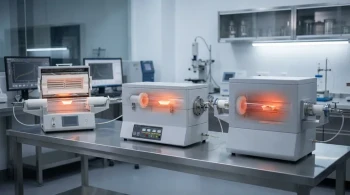
The Geometry of Control: Why the Tube Furnace Is More Than Just a Heater
2 months agoDiscover why a tube furnace's true power isn't just high heat, but its ability to create a perfectly uniform and controlled atmospheric environment.
Learn More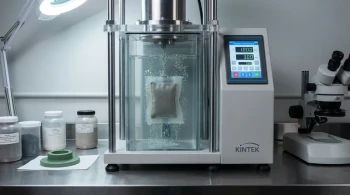
Beyond Brute Force: The Elegant Physics of Cold Isostatic Pressing Molds
2 months agoDiscover how flexible CIP molds, not rigid force, create perfectly uniform, high-density materials by mastering the principle of isostatic pressure.
Learn More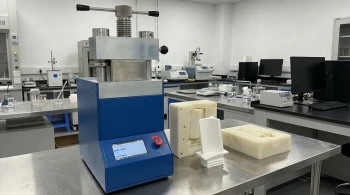
The Tyranny of Unidirectional Force: Why Perfect Parts Begin with Uniform Pressure
2 months agoExplore how Cold Isostatic Pressing (CIP) leverages Pascal's Law to eliminate hidden flaws in parts, ensuring uniform density and superior results.
Learn More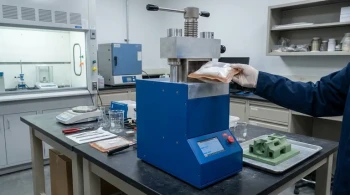
Beyond the Piston: How Isostatic Pressing Solves the Hidden Flaws in Material Science
2 months agoCold Isostatic Pressing (CIP) overcomes the hidden density flaws of traditional methods by applying uniform pressure, creating superior material integrity.
Learn More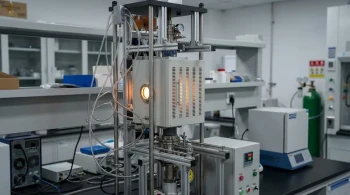
The Physics of Perfection: How Vacuum Hot Presses Overcome the Invisible Barriers in Material Science
2 months agoA vacuum hot press isn't just a furnace. It creates a controlled environment to prevent oxidation, enabling material densification and bonding.
Learn More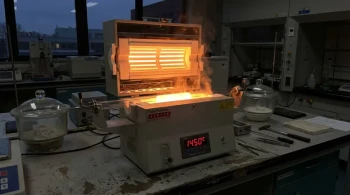
The Material Science of Limits: Navigating the 1450°C Trap in Tube Furnaces
2 months agoOperating a tube furnace at its 1450°C limit makes its core a consumable, raising costs and risking failure. Understand the engineering trade-offs.
Learn More
Why Your Lab-Scale Bonding Fails: The Hidden Physics of Heat and Pressure
2 months agoStruggling with delamination or voids in your laminates and composites? Discover the root cause and how to finally achieve perfect, repeatable results.
Learn More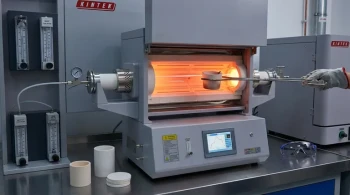
The Perfect Inferno: Mastering Heat Within a Tube Furnace
2 months agoExplore the physics of tube furnaces, from Joule heating to the psychological discipline required for precise thermal control in materials science.
Learn More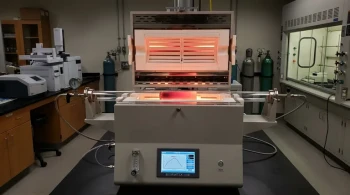
More Than Heat: The Controlled Universe of the Modern Tube Furnace
2 months agoDiscover why the tube furnace's true power isn't high heat, but its ability to create a controlled atmospheric environment for advanced materials.
Learn More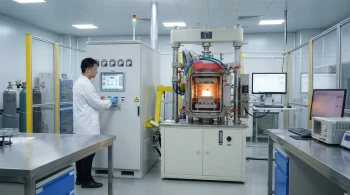
Forging Perfection in a Void: The Physics of Ultra-Dense Materials
2 months agoDiscover how vacuum hot pressing furnaces use heat, pressure, and a pure vacuum to forge ultra-dense, high-purity advanced materials.
Learn More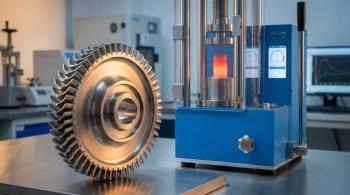
Beyond Brute Force: Why Your Complex Forgings Fail—And How to Fix Them for Good
2 months agoDiscover why more forging power fails. Learn the difference between impact and pressure to fix inconsistent results and master complex forgings.
Learn More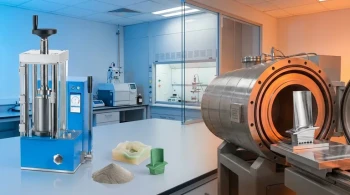
From Dust to Density: The Two Pressures That Shape Modern Materials
2 months agoExplore the crucial difference between Cold Isostatic Pressing (CIP) for forming parts and Hot Isostatic Pressing (HIP) for perfecting them.
Learn More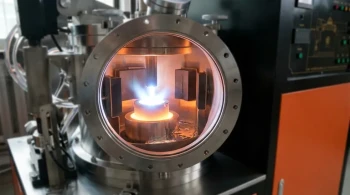
The Physics of Purity: Why Heating in a Vacuum Unlocks Material Potential
2 months agoDiscover how vacuum furnaces work by removing reactive gases, enabling pure, oxidation-free heat treatment via thermal radiation for advanced materials.
Learn More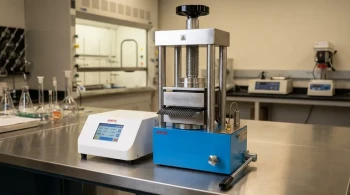
More Than a Squeeze: The Physics and Psychology of the Hydraulic Hot Press
2 months agoAn insight into the hydraulic hot press, where Pascal's Law meets thermodynamics to reshape materials. A story of force, heat, and control.
Learn More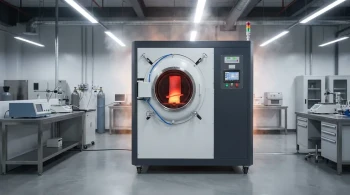
Beyond Heat: How Removing Air Redefines Material Perfection
2 months agoVacuum furnaces do more than heat materials; they purify them. By removing air, they prevent oxidation and enable superior material properties.
Learn More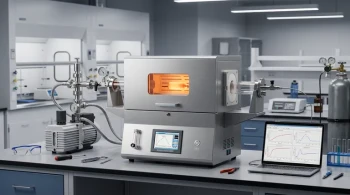
Beyond Heat: The Physics and Psychology of Purity in a Vacuum Tube Furnace
2 months agoExplore the operational physics of vacuum tube furnaces, where creating a void is as crucial as applying heat for advanced material synthesis.
Learn More