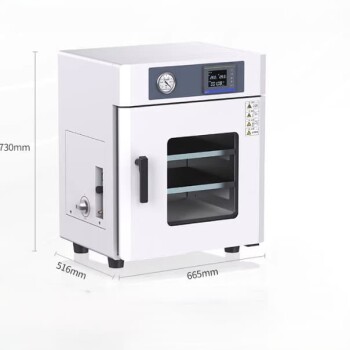
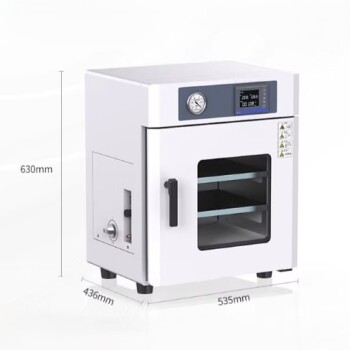
Precision ovens and laboratory heating furnaces serve as the primary catalyst for structural solidification in Polydimethylsiloxane (PDMS) substrates. These devices are utilized to maintain a rigorously stable thermal environment that drives the essential cross-linking reaction of molecular chains, transforming the liquid prepolymer into a solid elastomer with specific mechanical properties.
The core function of these heating systems is to ensure uniform cross-linking. By sustaining precise temperatures (such as 80°C or 110°C), the equipment guarantees the substrate achieves the hardness and elastic modulus required to support advanced applications like Diamond-Like Carbon (DLC) coatings.
The Mechanics of Thermal Curing
Driving the Cross-Linking Reaction
The primary role of the oven is to facilitate the cross-linking reaction (often a condensation reaction) between the PDMS prepolymers and the curing agents.
Without this controlled heat input, the molecular chains would remain in a viscous state rather than forming a cohesive solid.
Stabilizing the Thermal Environment
Laboratory furnaces are distinct from standard heating units because they minimize thermal fluctuations.
Maintaining a constant temperature is critical; even minor deviations can result in uneven curing rates across the substrate surface.
Critical Parameters and Outcomes
Time and Temperature Protocols
Specific protocols dictate the final material properties. For example, a common regimen involves maintaining 80°C for two hours.
Alternatively, higher-temperature environments, such as 110°C, may be utilized to drive the reaction more aggressively depending on the specific mixture and target application.
Enhancing Mechanical Properties
The heat treatment directly correlates to the final hardness and elastic modulus of the PDMS.
A fully cured substrate provides the mechanical stability necessary to withstand subsequent manufacturing steps, such as the deposition of high-performance coatings.
Supporting Downstream Applications
Proper curing is essential for substrates intended for Diamond-Like Carbon (DLC) coatings.
If the PDMS lacks the mechanical stability provided by the oven cure, it cannot adequately support the rigid DLC layer. Furthermore, precise curing enhances chemical resistance and structural stability for applications like pervaporation membranes.
Understanding the Trade-offs
The Risk of Thermal Gradients
While high heat accelerates curing, an oven that lacks precision can introduce thermal gradients.
If one area of the substrate heats faster than another, the material may develop internal stresses or inconsistent elasticity, compromising its performance as a base for coatings.
Balancing Speed and Quality
Accelerating the process with excessive heat can sometimes lead to surface defects or brittleness.
Adhering to a moderate, steady profile (like the 80°C/2-hour standard) is often safer for ensuring uniform physical properties than rushing the process with extreme temperatures.
Making the Right Choice for Your Goal
The specific heating protocol you select should depend heavily on the final application of the PDMS substrate.
- If your primary focus is Supporting DLC Coatings: Utilize a moderate, steady protocol (e.g., 80°C for two hours) to maximize elastic modulus and provide a stable foundation for the rigid coating.
- If your primary focus is Membrane Robustness: Consider higher temperature settings (e.g., 110°C) to drive complete condensation reactions for enhanced chemical and structural stability.
Mastering the curing stage is the difference between a usable polymer and a high-performance engineering substrate.
Summary Table:
| Parameter | Standard Protocol (Steady) | High-Performance Protocol (Aggressive) |
|---|---|---|
| Temperature | 80°C | 110°C |
| Curing Time | ~2 Hours | Variable (Shorter) |
| Core Goal | Uniform Hardness & Elastic Modulus | Enhanced Chemical & Structural Stability |
| Typical Application | DLC Coating Foundations | Pervaporation Membranes |
Elevate Your Materials Research with KINTEK Precision Solutions
Don't let thermal fluctuations compromise the integrity of your PDMS substrates. KINTEK specializes in high-precision laboratory equipment designed for the rigorous demands of material science. Our comprehensive range of high-temperature furnaces (muffle, tube, vacuum) and specialized heating systems ensures uniform cross-linking and repeatable results every time.
Whether you are preparing substrates for DLC coatings or developing advanced membranes, KINTEK provides the tools you need—from precision ovens and high-pressure reactors to hydraulic presses and crucibles.
Ready to optimize your curing process? Contact our technical experts today to find the perfect equipment solution for your laboratory.
References
- W. Kaczorowski, M. Cłapa. Impact of Plasma Pre-Treatment on the Tribological Properties of DLC Coatings on PDMS Substrates. DOI: 10.3390/ma14020433
This article is also based on technical information from Kintek Solution Knowledge Base .
Related Products
- Laboratory Scientific Electric Heating Blast Drying Oven
- 56L Vertical Laboratory Vacuum Drying Oven
- 23L Laboratory Vacuum Drying Oven
- 1200℃ Muffle Furnace Oven for Laboratory
- 1700℃ Muffle Oven Furnace for Laboratory
People Also Ask
- How does a laboratory electric drying oven contribute to the formation of the initial coating? Expert Insights
- What role does a precision laboratory drying oven play in the synthesis of GO-PANI nanocomposites? Protect Material Integrity
- What role does a laboratory drying oven play in the preparation of zinc oxide nanoparticle precursors?
- What is the necessity of using a laboratory drying oven when processing MoO3/GO composite nanopowders? Find out here.
- What is the role of a laboratory drying oven in cellulose citrate production? Ensure Material Stability & Purity