To calculate the total required kilowatt-hours (kWh) for a melting process, you must multiply the efficiency rate of the material by the total weight being processed. The formula is strictly defined as: Required kWh = Power Consumption (kWh/ton) x Number of tons.
Determining total energy requirements is a linear calculation based on efficiency and scale: simply multiply the energy required to melt a single unit (kWh/ton) by the total volume of material (tons).
Breaking Down the Calculation
To ensure accuracy in your energy estimation, you must isolate and define the two key variables in the equation.
The Standard Power Consumption
This variable represents the energy intensity of your specific process. It is defined as the number of kilowatt-hours required to melt exactly one ton of material (kWh/ton).
The Total Tonnage
This is the total mass of the material you intend to process. Ensure this figure is expressed in tons to match the unit used in your power consumption metric.
The Final Calculation
By multiplying the specific consumption rate by the total mass, you derive the aggregate energy demand. For example, if a material requires 500 kWh/ton and you represent 10 tons, your total requirement is 5,000 kWh.
From Energy to Economics
Once you have calculated the physical energy requirements, you can extrapolate the financial implications of the process.
Determining Operational Cost
To find the specific cost of the melt, take the Total Required kWh derived from the previous step.
Applying the Utility Rate
Multiply that total by your specific utility rate (Cost per kWh). The formula for the financial total is: Electricity Cost = Total Required kWh x Cost per kWh.
Common Pitfalls to Avoid
While the math is simple, the variables often fluctuate in real-world scenarios.
Theoretical vs. Actual Consumption
The "Standard Power Consumption" is often a theoretical or rated number. In practice, factors like furnace efficiency, insulation quality, and raw material conditions can increase the actual kWh/ton required.
Rate Fluctuation
When calculating costs, remember that industrial electricity rates often vary. Using an average cost per kWh may hide the financial impact of operating during peak-demand hours versus off-peak hours.
Making the Right Choice for Your Goal
Accurate calculation allows for better operational planning and budget forecasting.
- If your primary focus is Operational Budgeting: Ensure you verify the exact Cost per kWh from your utility provider, accounting for any peak-hour surcharges.
- If your primary focus is Process Efficiency: Focus on reducing the Power Consumption (kWh/ton); even small improvements in efficiency scale significantly across high tonnage.
Mastering this calculation provides the baseline data necessary to optimize both your energy usage and your bottom line.
Summary Table:
| Metric | Unit | Description |
|---|---|---|
| Power Consumption | kWh/ton | Energy required to melt one ton of material |
| Total Tonnage | tons | The total mass of material being processed |
| Required kWh | kWh | Total energy demand (Power Consumption × Tonnage) |
| Utility Rate | $/kWh | The cost per unit of electricity from your provider |
| Electricity Cost | $ (Currency) | Final financial outlay (Total kWh × Utility Rate) |
Optimize Your Melting Efficiency with KINTEK
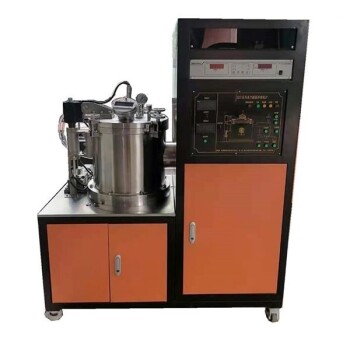
Accurate energy calculations are the foundation of a cost-effective laboratory. At KINTEK, we specialize in high-performance thermal solutions—including induction melting furnaces, muffle furnaces, and vacuum furnaces—engineered to minimize power consumption (kWh/ton) while maximizing output quality.
Whether you are refining battery materials or conducting high-temperature research, our comprehensive range of crushing and milling systems, high-pressure reactors, and specialized ceramics ensures your process remains efficient and reliable.
Ready to reduce your operational costs and enhance process precision? Contact KINTEK today to find the perfect equipment for your lab's needs.
Related Products
- Non Consumable Vacuum Arc Induction Melting Furnace
- Vacuum Heat Treat Furnace and Levitation Induction Melting Furnace
- Lab-Scale Vacuum Induction Melting Furnace
- Vacuum Arc Induction Melting Furnace
People Also Ask
- What is the use of induction melting furnace? Achieve Fast, Clean, and Precise Metal Melting
- What are the advantages of induction melting furnace? Achieve Purity, Efficiency, and Safety
- What is the temperature range of the induction melting furnace? Find the Right Heat for Your Metals
- How do specialized industrial-grade small melting furnaces address challenges in precision jewelry casting? Expert Guide
- How do vacuum induction or arc melting furnaces facilitate the synthesis of U-Al-C MAX phases? Precision Heat & Purity