In the context of laboratory bio-oil production, electric heating coils and PID controllers act as the essential thermal foundation. The coils provide the raw thermal energy required to physically crack the biomass, while the PID controller, working in tandem with thermocouples, acts as the regulatory brain to maintain absolute precision.
The success of bio-oil production hinges on thermal stability. Because the yield is extremely sensitive to temperature changes, the synchronization between heating elements and the controller is the core guarantee for optimizing product distribution and ensuring high purity.
The Mechanics of Thermal Optimization
The Role of Electric Heating Coils
Electric heating coils serve as the primary source of thermal energy.
Their function is to generate the high temperatures necessary to initiate and sustain the biomass cracking process. Without this intense heat input, the chemical breakdown required to create bio-oil cannot occur.
Precision Regulation via PID
While coils provide the power, a PID (Proportional-Integral-Derivative) controller provides the discipline.
Paired with thermocouples that sense the real-time heat, the PID controller continuously calculates and adjusts the power delivered to the coils. This feedback loop allows for precise regulation of the reaction environment.
Why Temperature Precision Matters
Sensitivity of Bio-oil Yield
Bio-oil production is not a process that tolerates rough estimates. The yield of bio-oil is extremely sensitive to temperature.
Small deviations from the target temperature can drastically alter the product distribution, shifting the output away from the desired oil and toward unwanted byproducts.
Targeting the Optimal Window
Research and laboratory standards often identify 500°C as the optimal temperature for maximizing oil production.
Reaching and maintaining this exact figure is critical. Accurate temperature control ensures you are extracting the maximum amount of product while maintaining high purity.
Risks of Thermal Instability
The Danger of Unregulated Heat
Using heating coils without a sophisticated controller introduces significant risk.
If the temperature drifts too high or drops too low, the product distribution becomes unpredictable. You risk inefficient cracking or degrading the bio-oil quality before it can be collected.
The Necessity of the "Core Guarantee"
Think of the PID-Coil system as an insurance policy for your results.
The primary reference defines accurate temperature control as the core guarantee for success. Without it, reproducibility in a laboratory setting is virtually impossible.
Optimizing Your Laboratory Setup
To maximize the efficiency of your bio-oil production, ensure your thermal control strategy aligns with your specific objectives.
- If your primary focus is Maximum Yield: Target and rigorously maintain the 500°C setpoint, as this is widely recognized as the optimal temperature for volume.
- If your primary focus is High Purity: Prioritize the tuning of your PID controller to eliminate temperature overshoot or oscillation, ensuring a stable reaction environment.
Ultimately, the quality of your bio-oil is directly proportional to the precision of your temperature control.
Summary Table:
| Component | Primary Function | Impact on Bio-oil Production |
|---|---|---|
| Electric Heating Coils | Thermal energy source | Provides heat for biomass cracking |
| PID Controller | Precision regulation | Maintains absolute thermal stability |
| Thermocouples | Real-time sensing | Provides feedback for the control loop |
| 500°C Setpoint | Optimal window | Maximizes yield and ensures product purity |
Maximize Your Bio-Oil Yield with KINTEK Precision
Precision is the core guarantee of successful biomass cracking. At KINTEK, we specialize in providing high-performance laboratory equipment designed to meet the rigorous thermal demands of modern research.
Whether you are scaling up bio-oil production or refining high-purity samples, our comprehensive range of high-temperature furnaces (muffle, tube, vacuum, CVD) and high-temperature high-pressure reactors provides the stability your results depend on. From advanced PID-controlled heating systems to essential PTFE products and ceramics, KINTEK empowers your lab with the tools for absolute accuracy.
Ready to optimize your thermal control strategy? Contact our experts today to discover how our tailored laboratory solutions can enhance your research efficiency and product purity.
References
- Tutuk Djoko Kusworo, Dani Puji Utomo. Bio-oil and Fuel Gas Production from Agricultural Waste via Pyrolysis: A Comparative Study of Oil Palm Empty Fruit Bunches (OPEFB) and Rice Husk. DOI: 10.3311/ppch.14553
This article is also based on technical information from Kintek Solution Knowledge Base .
Related Products
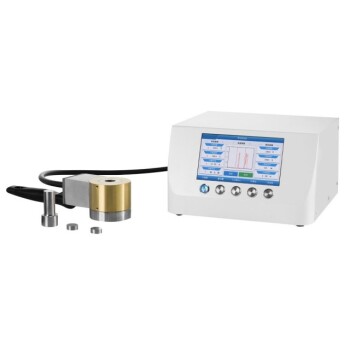
- Cylindrical Lab Electric Heating Press Mold for Laboratory Applications
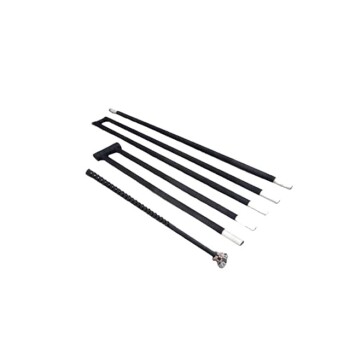
- Silicon Carbide SiC Thermal Heating Elements for Electric Furnace
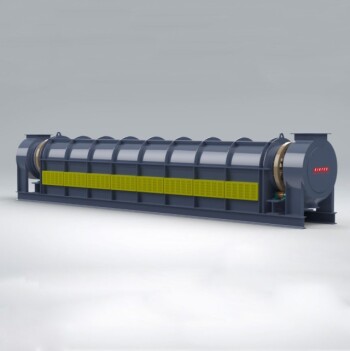
- Electric Rotary Kiln Continuous Working Small Rotary Furnace Heating Pyrolysis Plant
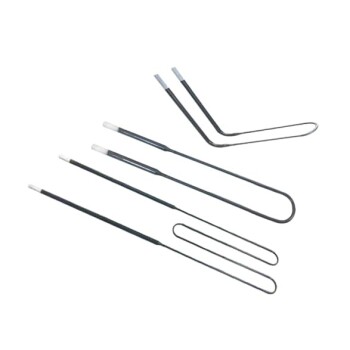
- Molybdenum Disilicide (MoSi2) Thermal Elements Electric Furnace Heating Element
- Laboratory Scientific Electric Heating Blast Drying Oven
People Also Ask
- How to use a press mold? Master the Art of Creating Consistent Ceramic Forms
- What is the press mould method? A Guide to Consistent, Detailed Ceramic Forms
- What is the function of press molds during the preparation of SiCf/Ti-43Al-9V composites? Achieve Structural Precision
- What is a press mold used for? Achieve Repeatable Precision and Efficiency
- What is the purpose of specialized pressure devices in sulfide solid-state batteries? Ensure Chemo-Mechanical Stability