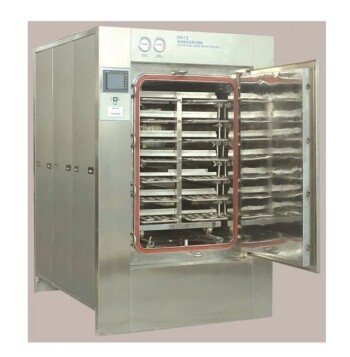
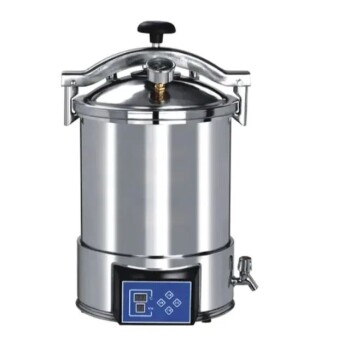
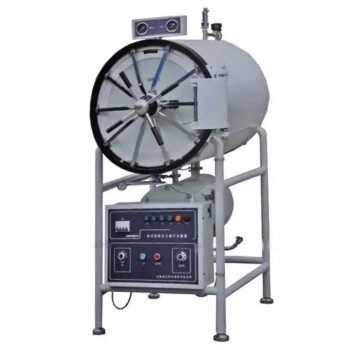
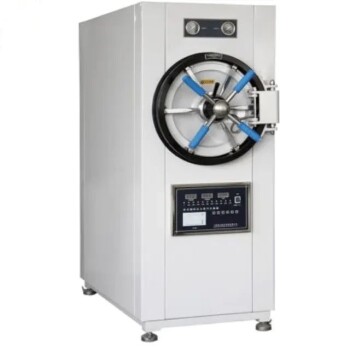
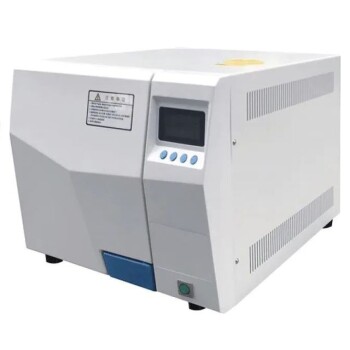
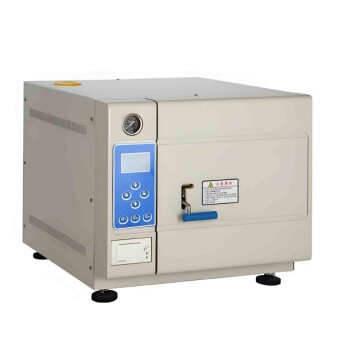
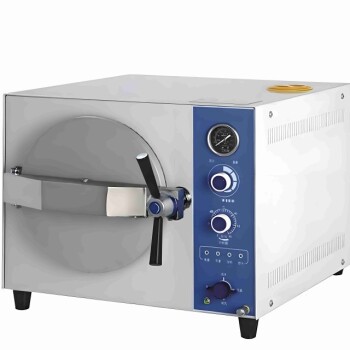
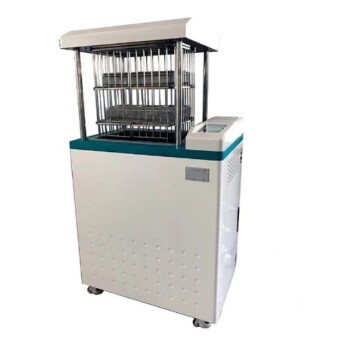
Industrial autoclaves and constant temperature drying ovens serve as critical selective filters in the bio-hydrogen production process. These devices function by applying precise thermal stress to seed sludge, such as anaerobic digestion sludge. By raising the temperature of the biomass, they systematically eliminate unwanted microorganisms while preserving the specific bacteria required for hydrogen generation.
Core Takeaway: The primary value of this thermal treatment is selective enrichment: it effectively sterilizes the sludge of hydrogen-consuming competitors while concentrating the population of robust, hydrogen-producing bacteria.
The Mechanism of Selective Enrichment
Eliminating the Competitors
The primary target of this heat treatment is methanogens. These are non-spore-forming microorganisms naturally present in anaerobic sludge.
Methanogens are detrimental to bio-hydrogen production because they are hydrogen consumers. They metabolize the hydrogen you are trying to harvest, converting it into methane.
However, methanogens are heat-sensitive. The thermal stress applied by autoclaves and drying ovens destroys their cell structures, effectively removing them from the equation.
Preserving the Producers
While the heat kills methanogens, it spares specific hydrogen-producing bacteria, most notably the Clostridium genus.
Unlike methanogens, Clostridium species possess a unique survival mechanism: the ability to form heat-resistant endospores.
When subjected to thermal stress in an autoclave or oven, these bacteria revert to a dormant spore state. Once the heat is removed and fermentation conditions are established, they germinate and dominate the culture.
Impact on Fermentation Efficiency
Blocking the Methanogenic Pathway
The successful application of heat treatment creates a metabolic blockade. By killing the methanogens, the methanogenic pathway is effectively shut down.
This ensures that the metabolic chain stops at hydrogen production rather than continuing to methane generation.
Increasing Yield and Purity
The direct result of this microbial selection is a measurable increase in hydrogen yield. The hydrogen produced is captured rather than consumed.
Furthermore, this process significantly improves gas purity. By preventing methane production, the final gas mixture is far richer in hydrogen, simplifying downstream processing.
Understanding the Necessity of Thermal Stress
The Cost of Omission
It is critical to understand that without this thermal intervention, hydrogen production in mixed cultures is often negligible.
If the sludge is not treated in an autoclave or drying oven, methanogens will naturally outcompete hydrogen producers. This results in a system that produces methane (biogas) rather than hydrogen.
The Biological Limit
While robust, the process relies entirely on the presence of spore-forming bacteria in the initial seed sludge.
If the initial sludge lacks a population of bacteria capable of forming endospores (like Clostridium), the heat treatment will sterilize the entire culture, leaving no active agents for fermentation.
Optimizing Your Bio-Hydrogen Strategy
To effectively utilize heat treatment for seed sludge, consider your specific production goals:
- If your primary focus is Gas Purity: Ensure your thermal equipment achieves temperatures sufficient to fully eliminate non-spore-forming methanogens to prevent contamination.
- If your primary focus is Process Stability: Verify that your seed sludge source contains a healthy population of the Clostridium genus to ensure rapid reactivation after the heating cycle.
By using thermal stress to fundamentally alter the microbial landscape, you convert a potential methane generator into a specialized hydrogen factory.
Summary Table:
| Feature | Methanogens (Competitors) | Hydrogen-Producing Bacteria (e.g., Clostridium) |
|---|---|---|
| Heat Sensitivity | High (Heat-sensitive) | Low (Heat-resistant) |
| Survival Mechanism | None | Form endospores |
| Effect of Treatment | Cell destruction/Death | Germinate post-treatment |
| Role in Production | Consumes Hydrogen | Generates Hydrogen |
| Impact on Yield | Decreases Yield/Purity | Increases Yield/Purity |
Elevate your bio-hydrogen research with KINTEK’s precision thermal solutions. Whether you require high-temperature high-pressure autoclaves to sterilize competitors or constant temperature ovens for selective enrichment, our equipment ensures the process stability needed for maximum yield. KINTEK specializes in laboratory equipment including advanced crushing and milling systems, high-temperature furnaces, and specialized reactors tailored for energy research. Optimize your microbial fermentation and achieve superior gas purity today—contact our technical experts now!
References
- Vinayak Laxman Pachapur, Gerardo Buelna. Seed Pretreatment for Increased Hydrogen Production Using Mixed-Culture Systems with Advantages over Pure-Culture Systems. DOI: 10.3390/en12030530
This article is also based on technical information from Kintek Solution Knowledge Base .
Related Products
- Customizable High Pressure Reactors for Advanced Scientific and Industrial Applications
- Laboratory Sterilizer Lab Autoclave Herbal Powder Sterilization Machine for Plant
- Portable Digital Display Automatic Laboratory Sterilizer Lab Autoclave for Sterilization Pressure
- Desktop Fast High Pressure Laboratory Autoclave Sterilizer 16L 24L for Lab Use
- Laboratory High Pressure Horizontal Autoclave Steam Sterilizer for Lab Use
People Also Ask
- What is the function of high-pressure reactors in the synthesis of MFI-type zeolites? Master Dry Gel Conversion.
- Graphene Fiber Synthesis: Key High-Pressure Reactor Processing Conditions Explained
- What reactor is used for high pressure reactions? Select the Right Autoclave for Your Lab
- What is the primary function of a high-pressure reactor in NiMoO4 preparation? Optimize Hydrothermal Catalyst Synthesis
- What are the hazards of high pressure reactors? A Guide to Managing Explosive Risks