Real-time thermal monitoring is the critical link between testing environmental stress and verifying material survival. Infrared thermal imagers and thermocouple systems contribute to evaluating Silicon Carbide (SiC) coatings by providing immediate, high-resolution data on temperature distribution during extreme performance testing, such as exposure to 1700°C high-speed airflow. By detecting localized overheating, these tools allow researchers to infer the structural integrity and continuity of the coating, ensuring it provides the necessary airtight protection against oxidation.
Core Insight Thermal monitoring tools do not measure oxidation directly; instead, they act as diagnostic proxies for coating failure. By identifying thermal anomalies—specifically "hotspots"—engineers can pinpoint where the airtight seal has been compromised, validating the coating's ability to protect the substrate in harsh environments.
The Mechanism of Thermal Evaluation
Simulating Extreme Operating Conditions
To truly evaluate a Silicon Carbide coating, it must be subjected to environments that mimic actual use cases.
This involves exposing the sample to high-speed airflow heated to approximately 1700°C. Under these conditions, standard visual inspection is impossible, making thermal instrumentation the primary eyes on the experiment.
Mapping Temperature Distribution
Infrared thermal imagers are used to record thermograms—visual maps of heat across the sample's surface.
Simultaneously, thermocouples provide precise point-data verification. Together, these tools create a comprehensive thermal profile of the coating as it endures the heat load.
Diagnosing Structural Integrity
Detecting Localized Overheating
The primary indicator of a coating failure is localized overheating.
If the SiC coating is uniform and airtight, the temperature distribution should remain relatively consistent. However, if the coating has defects, cracks, or thin spots, heat will concentrate in those specific areas.
Verifying Continuity
Continuity refers to the unbroken nature of the coating layer.
Thermal imagers excel at revealing discontinuities. A break in the coating allows the high-temperature airflow to interact directly with the substrate or the sub-layers, creating a distinct thermal signature that differs from the surrounding intact coating.
Confirming Airtight Protection
The ultimate goal of the SiC coating is to provide an airtight barrier against oxidation.
By monitoring for thermal anomalies, researchers verify that the coating produced by the equipment meets these protection standards. A uniform thermal response confirms the coating is successfully sealing the material from the oxidative environment.
Understanding the Trade-offs
Indirect vs. Direct Observation
It is important to recognize that thermal imagers measure temperature, not chemical oxidation.
While a hotspot strongly correlates with a breach and subsequent oxidation, it is an indirect measurement. It requires expert interpretation to distinguish between a coating failure and a simple variation in surface emissivity.
Resolution Limitations
While effective for macroscopic evaluation, thermal imaging has resolution limits.
Extremely microscopic defects that have not yet caused significant thermal bleed-through might be missed during a standard test. This method is best for identifying structural integrity failures rather than nano-scale surface imperfections.
Assessing Your Validation Strategy
To ensure your Silicon Carbide coatings meet the required performance standards, consider the following approach:
- If your primary focus is Structural Integrity: Look for high-contrast "hotspots" in the thermograms, which indicate a breach in the coating's continuity.
- If your primary focus is Thermal Endurance: Use thermocouple data to verify that the coating maintains stable surface temperatures over the duration of the 1700°C test cycle.
By leveraging real-time thermal data, you move beyond theoretical performance and ensure your coatings deliver verifiable protection.
Summary Table:
| Monitoring Tool | Data Type | Key Evaluation Metric | Primary Benefit for SiC Testing |
|---|---|---|---|
| Infrared Thermal Imagers | Visual Thermograms | Temperature Distribution Mapping | Identifies localized hotspots and coating discontinuities. |
| Thermocouple Systems | Point-Data Sensors | Precise Local Temperature | Provides verified thermal stability data for long-duration tests. |
| Combined Analysis | Integrated Profile | Thermal Anomalies & Integrity | Validates airtight seal efficiency and material survival at 1700°C. |
Maximize Your Material Resilience with KINTEK
Ensure your high-performance coatings withstand the most extreme oxidative environments. KINTEK specializes in advanced laboratory equipment, including high-temperature furnaces (CVD, PECVD, vacuum, and atmosphere), precision crushing and milling systems, and hydraulic presses, designed to support the rigorous development of Silicon Carbide coatings and advanced ceramics.
From aerospace-grade thermal testing to battery research and high-pressure reactor applications, our comprehensive range of tools provides the accuracy your lab demands. Let our experts help you select the right equipment to verify your material's structural integrity.
Ready to elevate your research standards?
→ Contact KINTEK Today for a Tailored Solution
References
- S. L. Shikunov, В. Н. Курлов. Novel Method for Deposition of Gas-Tight SiC Coatings. DOI: 10.3390/coatings13020354
This article is also based on technical information from Kintek Solution Knowledge Base .
Related Products
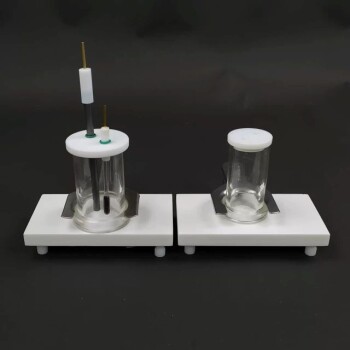
- Electrolytic Electrochemical Cell for Coating Evaluation
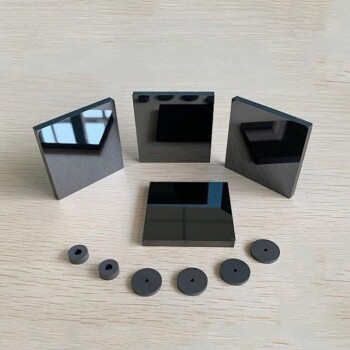
- Silicon Carbide (SIC) Ceramic Sheet Wear-Resistant Engineering Advanced Fine Ceramics
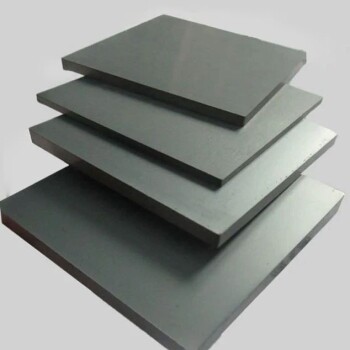
- Silicon Carbide (SIC) Ceramic Plate for Engineering Advanced Fine Ceramics
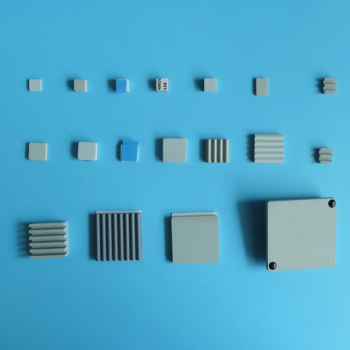
- Silicon Carbide (SIC) Ceramic Sheet Flat Corrugated Heat Sink for Engineering Advanced Fine Ceramics
- Silicon Carbide SiC Thermal Heating Elements for Electric Furnace
People Also Ask
- What is the volume range of the coating evaluation electrolytic cell? A Guide to Choosing the Right Size
- How does the design of an electrochemical electrolytic cell influence the coating uniformity? Optimize Your Catalysts
- What is the correct shutdown and disassembly procedure after an experiment? Ensure Safety and Protect Your Equipment
- How do the electrochemical cell and three-electrode testing system collaborate? Optimize Zinc Anode Deposition Control
- What is the difference between a voltaic cell and an electrochemical cell? Understand the Two Types of Energy Conversion