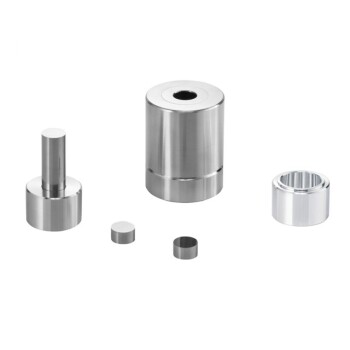
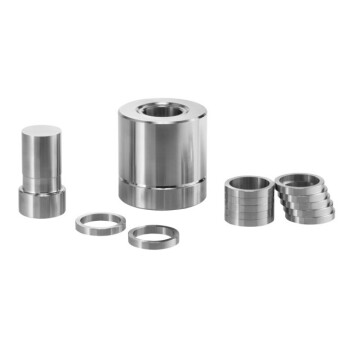
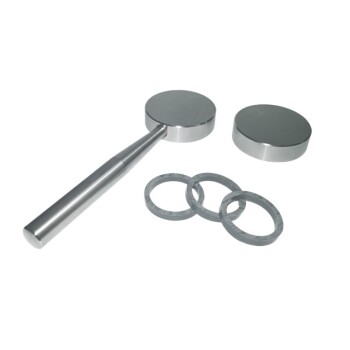
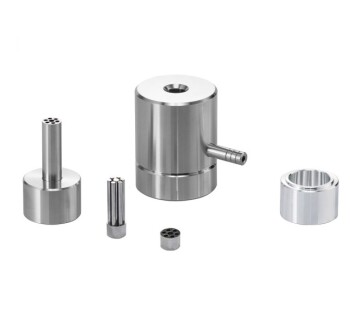
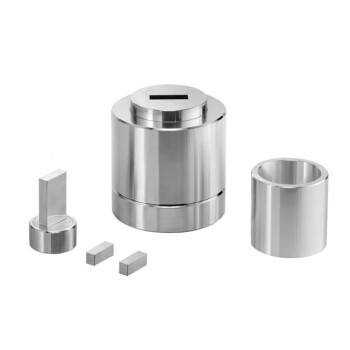
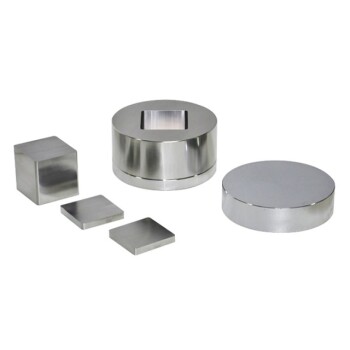
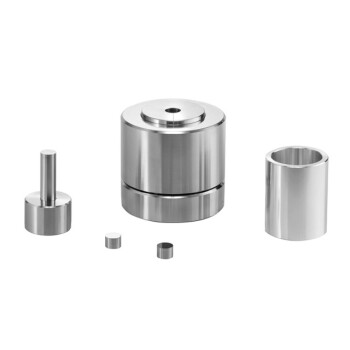
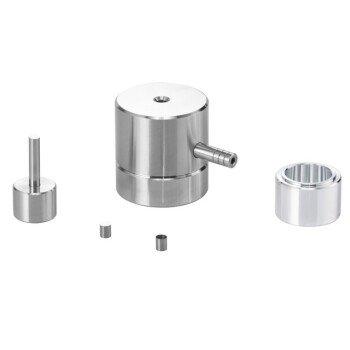
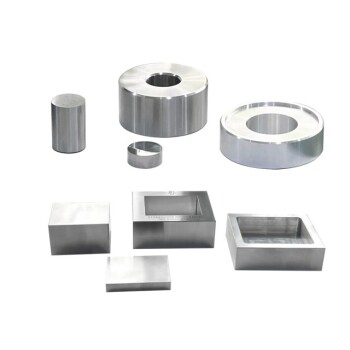
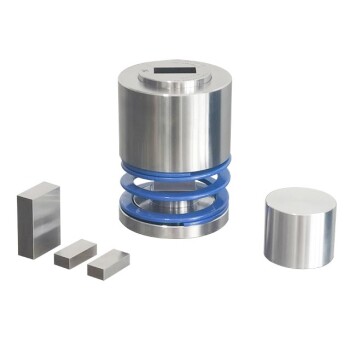
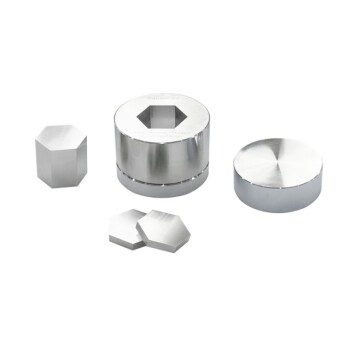
Steel molds serve two fundamental functions in cold pressing: they provide rigid confinement and transmit hydraulic force. By constraining the loose boron carbide mixture within a defined geometry, the mold converts external pressure into internal compaction, transforming the powder into a solid shape known as a "green body."
The steel mold acts as the primary determinant of the ceramic's initial quality, ensuring the loose powder achieves the dimensional precision and structural integrity necessary to survive subsequent processing.
The Mechanics of Confinement and Force
To understand the role of the mold, one must look at the transition from loose particles to a solid mass.
Defining Geometric Boundaries
The primary reference establishes that the mold acts to confine the ceramic powder within a specific boundary.
Before entering the mold, the boron carbide is mechanically ground and mixed with additives (such as carbon or silicon carbide) in a ball mill. The steel mold must effectively contain this refined, loose mixture without leakage.
By restricting the powder in a defined space, the mold dictates the exact shape of the final component.
Transmitting Hydraulic Force
The mold is the vessel through which the hydraulic press operates.
It acts to transmit the force from the press directly to the powder. This transmission is critical for compressing the spaces between particles.
Without the rigid constraint of the steel mold, the applied force would simply displace the powder rather than compacting it.
Ensuring Quality in "Green Bodies"
The output of the cold pressing process is a "green body"—an unfired ceramic part. The mold is responsible for the physical properties of this intermediate stage.
Achieving Dimensional Accuracy
Because the mold constrains the powder within a fixed space, it ensures precise dimensional accuracy.
The internal dimensions of the steel mold directly correlate to the external dimensions of the pressed part. This consistency is vital for minimizing variations between different batches of ceramic parts.
Establishing Structural Integrity
The primary goal of cold pressing is to create a part that can be handled without falling apart.
The steel mold ensures the resulting green bodies have the structural integrity required for further processing. This allows the part to be moved from the press to the sintering furnace without crumbling.
Understanding the Trade-offs
While steel molds are essential for defining shape and density, the process relies heavily on the interaction between the mold and the powder.
The Limits of Confinement
If the mold does not perfectly confine the powder, or if the geometric boundary is flawed, the pressure transmission will be compromised.
Material Compatibility
The supplementary data notes that the powder contains abrasive materials like boron carbide and silicon carbide.
While the steel mold provides the necessary rigidity, the interface between the steel and the abrasive powder is a critical point of stress during the transmission of force.
Making the Right Choice for Your Goal
To maximize the effectiveness of steel molds in your boron carbide processing, consider your specific production objectives:
- If your primary focus is Dimensional Precision: Ensure your steel molds are machined to exact tolerances, as they define the geometric boundary of the final green body.
- If your primary focus is Process Yield: Prioritize the structural integrity of the mold to ensure consistent force transmission, preventing cracks or defects in the delicate green bodies.
The steel mold is not just a container; it is the tool that imposes order and stability onto the chaotic mixture of raw ceramic powders.
Summary Table:
| Function | Description | Impact on Ceramic Product |
|---|---|---|
| Rigid Confinement | Defines geometric boundaries and contains loose powder. | Ensures high dimensional accuracy and shape consistency. |
| Force Transmission | Converts hydraulic press force into internal compaction. | Eliminates voids and increases green body density. |
| Structural Support | Maintains part shape during the transition to a solid mass. | Provides integrity needed for handling and sintering. |
| Quality Control | Minimizes variations between production batches. | Increases process yield and reduces material waste. |
Elevate Your Ceramic Manufacturing with KINTEK Precision Solutions
High-quality ceramic components start with the right tools. KINTEK specializes in providing the laboratory equipment and consumables necessary for advanced material research and production. Whether you are working with abrasive boron carbide or silicon carbide powders, our crushing and milling systems, high-precision hydraulic presses (pellet, hot, isostatic), and durable steel mold solutions ensure your green bodies achieve maximum structural integrity and dimensional accuracy.
From high-temperature furnaces and high-pressure reactors to essential PTFE and ceramic consumables, KINTEK is your partner in achieving superior material performance.
Ready to optimize your cold pressing process? Contact our technical experts today to find the perfect equipment for your lab's needs!
Related Products
- Carbide Lab Press Mold for Laboratory Applications
- XRF & KBR steel ring lab Powder Pellet Pressing Mold for FTIR
- XRF Boric Acid Lab Powder Pellet Pressing Mold for Laboratory Use
- Isostatic Molding Pressing Molds for Lab
- Anti-Cracking Press Mold for Lab Use
People Also Ask
- How to use a press mold? Master the Art of Creating Consistent Ceramic Forms
- What is the press mould method? A Guide to Consistent, Detailed Ceramic Forms
- What is the function of press molds during the preparation of SiCf/Ti-43Al-9V composites? Achieve Structural Precision
- What is a press mold used for? Achieve Repeatable Precision and Efficiency
- What is the purpose of specialized pressure devices in sulfide solid-state batteries? Ensure Chemo-Mechanical Stability