The manufacturing of Silicon Carbide (SiC) heat exchangers relies on a dual-process approach to ensure survival in the harsh environment of sulfuric acid decomposition: sintering and precision grinding. Sintering transforms raw powder into a dense, thermally resistant ceramic body, while precision grinding ensures the microscopic surface flatness required for leak-free assembly and efficient thermal transfer.
The reliability of a SiC heat exchanger is defined by the synergy of these two steps: sintering establishes the material's fundamental resistance to heat and corrosion, while grinding enables the geometric precision necessary for successful ceramic brazing.
Establishing Material Integrity Through Sintering
Transforming Powder to Solid
The sintering process is the foundational step in creating a viable heat exchanger component. By subjecting Silicon Carbide powder to high-temperature heat treatment, the material is transformed into a dense ceramic body.
Achieving Thermal and Mechanical Resilience
This densification process is what provides the final hardness and thermal resistance of the component. Without proper sintering, the material would lack the structural integrity to survive the extreme conditions of sulfuric acid decomposition.
Withstanding Extreme Environments
Properly sintered SiC (specifically Siliconized Silicon Carbide) demonstrates exceptional stability. It is capable of maintaining integrity despite exposure to concentrated sulfuric acid and temperatures exceeding 850 °C.
Ensuring Geometric Accuracy Via Grinding
The Need for Precision Flatness
While sintering creates the material properties, it does not guarantee the necessary shape. Precision grinding follows sintering to achieve high surface flatness on the ceramic plates.
Enabling Ceramic Brazing
This geometric accuracy is not merely for aesthetics; it is a functional requirement. Extremely flat surfaces are essential for successful ceramic brazing.
Optimizing Heat Exchange
In plate-type reactors, the efficiency of the system depends on the contact interface. Precision grinding creates a reliable contact surface, facilitating efficient heat exchange between the chemically reactive fluids and the heat source.
Understanding the Operational Trade-offs
rigidity vs. Flexibility
The sintering process creates a material that is incredibly hard and chemically inert, but also brittle. While this ensures long-term operational reliability (proven over 5000 hours of exposure), it means the components have zero compliance or flexibility.
The Cost of Precision
Achieving the specific surface flatness required for brazing adds significant manufacturing complexity. Skipping or reducing the quality of the grinding phase is a common pitfall; imperfect flatness leads to weak braze joints, which are the primary failure points in high-pressure, corrosive reactors.
Making the Right Choice for Your Project
When selecting SiC heat exchangers for sulfuric acid decomposition, evaluate the manufacturing pedigree based on your specific operational goals:
- If your primary focus is System Longevity: Prioritize components with verified high-density sintering to ensure maximum corrosion resistance against concentrated sulfuric acid.
- If your primary focus is Thermal Efficiency: Prioritize units with high-precision surface grinding, as superior flatness ensures tighter brazing and better heat transfer interfaces.
The ultimate performance of your reactor depends not just on the material chosen, but on the precision with which it was processed.
Summary Table:
| Process Phase | Core Function | Impact on Performance | Key Outcome |
|---|---|---|---|
| Sintering | High-temp densification | Establishes hardness & chemical inertness | Resistance to >850°C & concentrated H2SO4 |
| Grinding | Precision surface finishing | Ensures microscopic flatness for brazing | Leak-free assembly & optimized heat transfer |
| Material Integrity | SiC Powder transformation | Eliminates porosity | Long-term operational reliability (>5000 hours) |
Optimize Your Chemical Processes with KINTEK Precision Engineering
Don't compromise on the integrity of your high-pressure, corrosive reactors. KINTEK specializes in advanced laboratory equipment, providing the material science expertise required for extreme environments.
Whether you need high-temperature furnaces for superior sintering, precision crushing and milling systems for material preparation, or high-temperature high-pressure reactors and autoclaves for sulfuric acid decomposition, we deliver the precision your project demands. From vacuum and atmosphere furnaces to specialized ceramics and crucibles, our solutions ensure your systems withstand the most rigorous thermal and mechanical stresses.
Ready to enhance your thermal efficiency and system longevity? Contact KINTEK today to discuss your specific requirements with our experts!
References
- Martin Roeb, Marc Ferrato. Sulphur based thermochemical cycles: Development and assessment of key components of the process. DOI: 10.1016/j.ijhydene.2013.01.068
This article is also based on technical information from Kintek Solution Knowledge Base .
Related Products
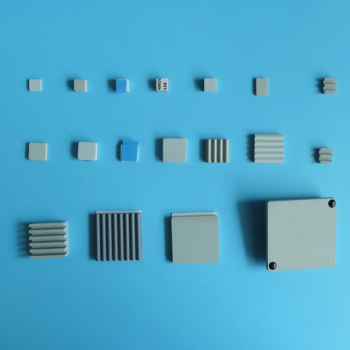
- Silicon Carbide (SIC) Ceramic Sheet Flat Corrugated Heat Sink for Engineering Advanced Fine Ceramics
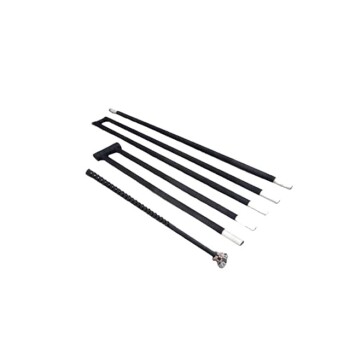
- Silicon Carbide SiC Thermal Heating Elements for Electric Furnace
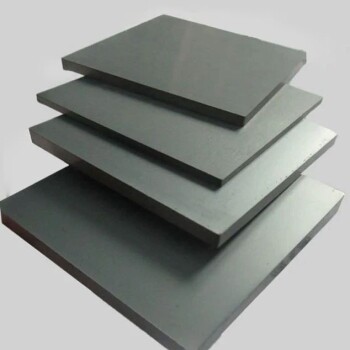
- Silicon Carbide (SIC) Ceramic Plate for Engineering Advanced Fine Ceramics
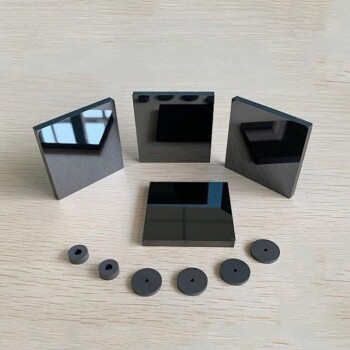
- Silicon Carbide (SIC) Ceramic Sheet Wear-Resistant Engineering Advanced Fine Ceramics
People Also Ask
- What are the properties and applications of silicon carbide ceramics? Solve Extreme Engineering Challenges
- What is the strongest ceramics? Silicon Carbide Leads in Hardness & Thermal Strength
- What are the uses of silicon carbide ceramics in different industries? Master Extreme Performance in Aerospace, Semiconductors & More
- What are the properties of SiC? Unlock High-Temperature, High-Frequency Performance
- Why is silicon carbide more efficient? Unlock Higher Power Density with SiC's Superior Material Properties