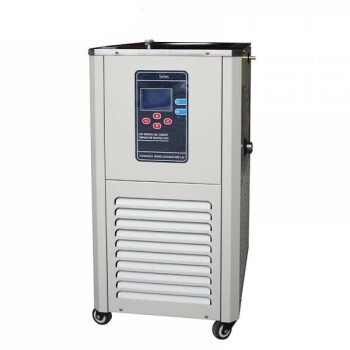
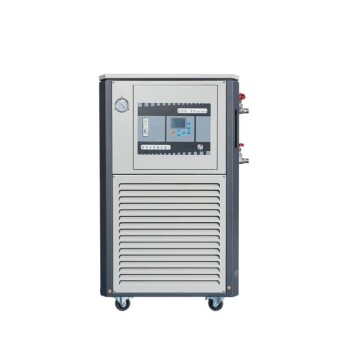
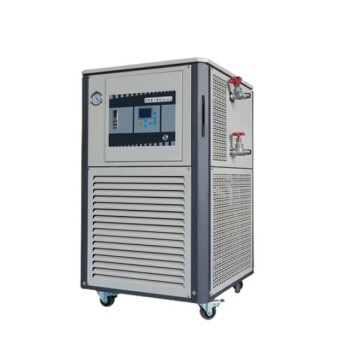
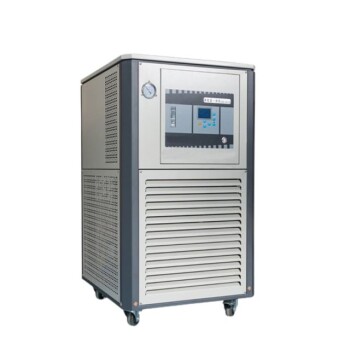
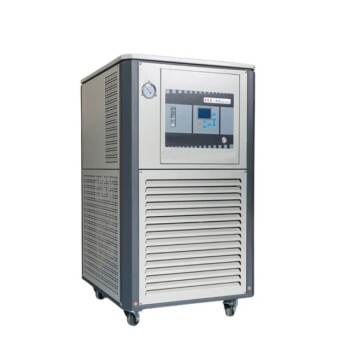
A constant temperature drying oven acts as the essential curing mechanism for Bismuth Oxide/Graphene Oxide (Bi2O3/GO) thin films following electrodeposition. By creating a stable thermal environment, the oven accelerates solvent evaporation while simultaneously promoting a robust mechanical bond between the graphene oxide and the oxide layers.
Core Takeaway The oven does more than simply dry the material; it stabilizes the composite structure. By gently eliminating internal stresses through controlled heating, the process prevents the coating from peeling, ensuring the film survives subsequent performance evaluations.
The Curing Process Explained
Accelerating Solvent Evaporation
After the electrodeposition process, the film retains residual solvents and electrolytes. The drying oven uses controlled warm air to expedite the removal of these liquids.
This is distinct from uncontrolled air drying, which can be uneven. The constant temperature ensures the solvents evaporate at a consistent rate across the entire surface of the electrode.
Strengthening Interfacial Bonding
The most critical function of the oven is enhancing the interaction between layers. The thermal treatment promotes tight bonding between the Graphene Oxide (GO) layer and the Bismuth Oxide layer.
Without this thermal step, the two materials may remain as loosely associated distinct layers rather than a unified composite. The heat effectively cures the assembly into a cohesive unit.
Ensuring Structural Integrity
Eliminating Internal Stress
Thin films created via electrodeposition often harbor significant internal mechanical stresses. If these stresses are not relieved, they can cause the film to crack or warp.
The "gentle" nature of the constant temperature post-treatment allows the film to settle and relax. This effectively eliminates internal stresses without introducing thermal shock, which could occur with rapid, high-heat methods.
Preventing Delamination
A common failure mode for thin films is peeling off the substrate during testing. This is often a result of poor adhesion or unreleased stress.
By curing the film in the oven, you significantly increase its durability. This prevents the coating from peeling off when the electrode is subjected to the physical and chemical demands of performance evaluation.
Understanding the Trade-offs
The Importance of Stability Over Speed
While the oven accelerates evaporation compared to room temperature drying, it is not an instant process. The primary goal is quality, not speed.
Attempting to rush this process with excessive heat can backfire. While supplementary contexts suggest higher temperatures (e.g., 120°C) for drying bulk powders, thin films generally require a more moderate approach to maintain flexibility and uniformity.
Uniformity vs. Agglomeration
A controlled environment is crucial for uniformity. Inconsistent heating can lead to "hot spots" where solvents evaporate too quickly.
This rapid evaporation can lead to particle agglomeration or uneven thickness, compromising the electronic properties of the Bi2O3/GO film. The constant temperature aspect is the safeguard against these irregularities.
Making the Right Choice for Your Goal
To maximize the quality of your Bi2O3/GO thin films, consider your specific processing objectives:
- If your primary focus is Film Adhesion: Prioritize a gentle, longer curing duration to fully relieve internal stress and prevent peeling.
- If your primary focus is Structural Homogeneity: Ensure the airflow within the oven is regulated to prevent uneven evaporation rates across the electrode surface.
Controlled thermal curing is the difference between a loose coating and a high-performance composite electrode.
Summary Table:
| Process Phase | Function of Drying Oven | Key Benefit for Bi2O3/GO |
|---|---|---|
| Post-Electrodeposition | Controlled Solvent Evaporation | Removes residual electrolytes without uneven drying. |
| Interfacial Curing | Strengthening Layer Bonds | Ensures a robust mechanical bond between GO and Bi2O3 layers. |
| Stress Relief | Eliminating Internal Stress | Prevents the composite film from cracking or warping. |
| Quality Assurance | Preventing Delamination | Increases durability to stop the coating from peeling during testing. |
Elevate Your Thin Film Research with KINTEK Precision
Achieving the perfect Bi2O3/GO composite electrode requires more than just chemistry; it requires precise thermal control. KINTEK specializes in high-performance laboratory equipment designed to meet the rigorous demands of material science. From our stable constant temperature drying ovens that ensure uniform film curing to our advanced crushing systems, hydraulic presses, and electrolytic cells, we provide the tools you need for structural homogeneity and superior adhesion.
Why choose KINTEK?
- Comprehensive Portfolio: Explore our range of muffle furnaces, vacuum systems, and essential consumables like PTFE and ceramics.
- Precision Engineering: Our cooling solutions (ULT freezers) and heating tools are built for consistent, repeatable results.
- Expert Support: We help target customers in battery research and chemical engineering optimize their workflows.
Ready to stabilize your composite structures and prevent delamination? Contact KINTEK today for a tailored solution!
References
- Fatma Bayrakçeken Nişancı. Controllable Electrochemical Synthesis and Photovoltaic Performance of Bismuth Oxide/Graphene Oxide Nanostructure Arrays. DOI: 10.28979/jarnas.1039429
This article is also based on technical information from Kintek Solution Knowledge Base .
Related Products
- 23L Laboratory Vacuum Drying Oven
- Laboratory Scientific Electric Heating Blast Drying Oven
- 56L Vertical Laboratory Vacuum Drying Oven
- High Temperature Muffle Oven Furnace for Laboratory Debinding and Pre Sintering
- 10L Chilling Circulator Cooling Water Bath Low Temperature Constant Temperature Reaction Bath
People Also Ask
- Why is a laboratory vacuum drying oven recommended for rice straw residues? Protect Your Biomass Integrity
- What role does a laboratory vacuum drying oven play in the preparation of modified multi-walled carbon nanotubes?
- What is the importance of using a laboratory vacuum drying oven? Preserving Slow-Release Microcapsule Integrity
- Why is a Laboratory Vacuum Drying Oven recommended for PBAT microspheres? Protect Sensitive Polymer Integrity
- What role does a laboratory vacuum drying oven play in processing nanoparticle powder samples? Protect Sample Integrity