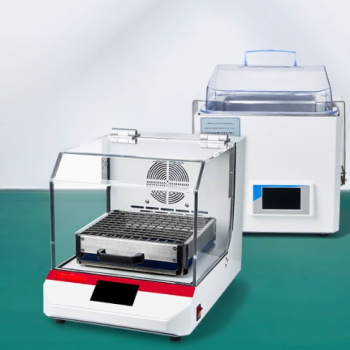
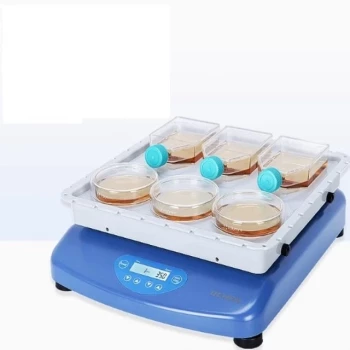
A constant-temperature laboratory shaker serves as the critical control center for reproducible toxicity data. It creates a strictly regulated environment that simultaneously stabilizes bacterial metabolism and ensures the physical suspension of test materials. By locking in precise parameters—such as a temperature of 37°C and a rotation speed of 140 rpm—the device eliminates environmental variables that could otherwise distort the assessment of silver-silica nanocomposites.
In microbial toxicity testing, validity depends on distinguishing the material's actual effects from environmental noise. The laboratory shaker standardizes the interaction between bacteria and nanocomposites, ensuring that resulting toxicity values reflect true biological impact rather than experimental error.
Regulating Biological Stability
Maintaining the Logarithmic Growth Phase
For toxicity tests to be valid, the test organisms—specifically bacteria like Escherichia coli and Bacillus subtilis—must be in a predictable metabolic state.
The shaker creates an optimal thermal environment (typically 37°C) that keeps these bacteria in their logarithmic growth phase.
This ensures that the bacterial population is healthy and dividing at a constant rate, providing a stable baseline against which the toxicity of the nanocomposites can be measured.
Ensuring Physical Homogeneity
Preventing Nanocomposite Sedimentation
Silver-silica nanocomposites are particulate matter; without constant agitation, they will naturally settle to the bottom of the culture vessel.
This settling creates uneven concentrations, where some bacteria are overwhelmed by the material while others are barely exposed.
Guaranteeing Uniform Exposure
The shaker’s rotation (e.g., at 140 rpm) exerts a continuous physical force that keeps the nanocomposites uniformly distributed throughout the liquid culture medium.
This suspension ensures that every bacterial cell interacts with the same concentration of the nanocomposite, a requirement for scientifically valid dosage testing.
Validating Key Toxicity Metrics
Accurate Calculation of MBC and IC50
The ultimate goal of this testing is to derive specific quantitative values, such as the Minimum Bactericidal Concentration (MBC) and the Half Maximal Inhibitory Concentration (IC50).
These values define the exact concentration required to kill bacteria or inhibit their growth by 50%.
Because the shaker guarantees both metabolic stability and uniform exposure, researchers can trust that these calculated values are accurate and reproducible.
Understanding the Trade-offs
The Risks of Static Incubation
It is critical to understand why a standard incubator (without shaking) is insufficient for this specific application.
In a static environment, the lack of agitation leads to concentration gradients as nanocomposites clump or sink.
This often results in "false negatives," where the material appears less toxic simply because the bacteria were not adequately exposed to it in the solution.
Sensitivity to Parameter Fluctuations
While the shaker provides control, the experiment becomes highly sensitive to the machine's calibration.
Even minor deviations in temperature or RPM can shift the bacteria out of the log phase or allow partial settling.
Therefore, the equipment requires rigorous maintenance to ensure the "constant" in "constant-temperature" is strictly upheld.
Ensuring Data Integrity in Your Experiments
To maximize the reliability of your silver-silica toxicity testing, align your equipment settings with your specific experimental goals:
- If your primary focus is biological consistency: Ensure the temperature is calibrated to the specific optimal growth point of your bacterial strain (e.g., 37°C for E. coli) to maintain the log phase.
- If your primary focus is dosage accuracy: Prioritize the rotation speed (e.g., 140 rpm) to prevent sedimentation and ensure the nanocomposites remain in a homogeneous suspension.
By strictly controlling these environmental and physical variables, you transform variable biological responses into reliable, quantifiable data.
Summary Table:
| Feature | Role in Toxicity Testing | Impact on Data Integrity |
|---|---|---|
| Temperature Control | Maintains bacteria in Logarithmic Growth Phase | Ensures stable baseline and biological reproducibility |
| Rotational Agitation | Prevents sedimentation of nanocomposites | Guarantees uniform dosage and prevents false negatives |
| Parameter Stability | Eliminates environmental fluctuations | Enables accurate calculation of MBC and IC50 values |
| Homogeneous Mixing | Facilitates continuous cell-material interaction | Distinguishes actual material effects from experimental noise |
Precision Equipment for Reliable Microbial Research
Maintaining the integrity of your toxicity data requires the highest standards of environmental control. KINTEK specializes in advanced laboratory solutions designed to stabilize your experimental variables. Beyond our high-precision shakers and homogenizers, we offer a comprehensive range of equipment including ULT freezers, high-temperature furnaces, and specialized electrolytic cells to support every stage of your material research.
From battery research tools to essential PTFE and ceramic consumables, KINTEK provides the reliability your lab needs to achieve reproducible results. Let us help you eliminate experimental error—contact KINTEK today for a customized solution!
References
- Aleksandra Strach, Sylwia Golba. Microwave Irradiation vs. Structural, Physicochemical, and Biological Features of Porous Environmentally Active Silver–Silica Nanocomposites. DOI: 10.3390/ijms24076632
This article is also based on technical information from Kintek Solution Knowledge Base .
Related Products
- Laboratory Small Constant Temperature Heated Magnetic Stirrer Heater and Stirrer
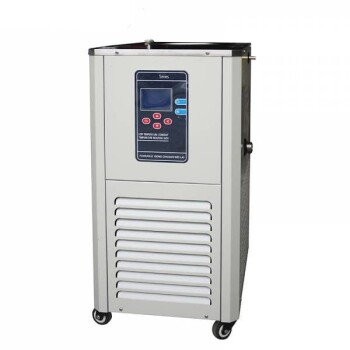
- High Temperature Constant Temperature Heating Circulator Water Bath Chiller Circulator for Reaction Bath
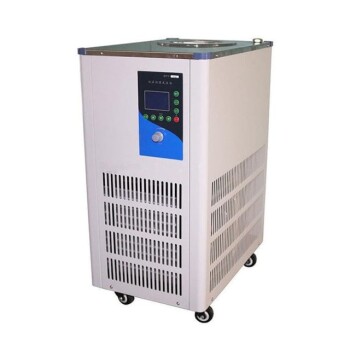
- 5L Chilling Circulator Cooling Water Bath Circulator for Low Temperature Constant Temperature Reaction Bath
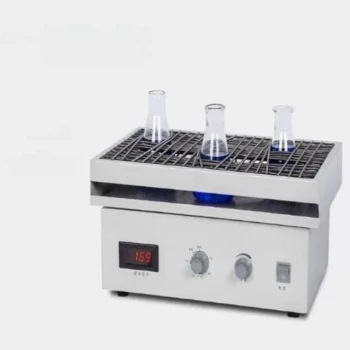
- Laboratory Multifunctional Small Speed-Adjustable Horizontal Mechanical Shaker for Lab
- 100L Chilling Circulator Cooling Water Circulator for Low Temperature Constant Temperature Reaction Bath Water Bath Cooling
People Also Ask
- What role does a magnetic stirrer with heating play in ZnO nanoparticle synthesis? Precision Control for Quality Results
- What role does a constant temperature heating magnetic stirrer play in MFC-HAp synthesis? Achieve Material Homogeneity
- What is the function of a laboratory magnetic stirrer in Ni–Cr–P electrodeposition? Optimize Ion Transport & Coating
- Why is a laboratory magnetic stirrer required for benzoic acid esters? Boost Reaction Speed & Yield with High RPM
- What role does a laboratory magnetic stirrer play in TiO2 and TiO2-Ag sol preparation? Master Chemical Kinetics