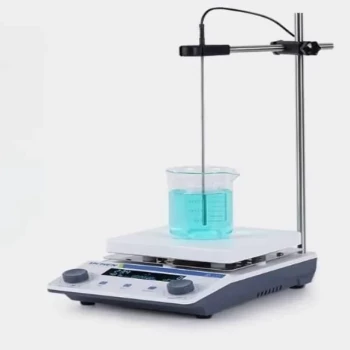
A constant-temperature magnetic stirrer acts as the critical control unit for the wet impregnation of zeolite-supported nanocatalysts. It facilitates the process by providing continuous mechanical agitation and a stable thermal environment, often for extended durations such as 8 hours. This ensures that metal nitrate solutions and zeolite particles remain in thorough contact, driving metal ions deep into the zeolite pores for uniform dispersion and precise loading.
The Core Takeaway Achieving a high-performance catalyst requires more than just mixing ingredients; it demands a uniform kinetic environment. The constant-temperature magnetic stirrer eliminates local concentration gradients, ensuring that metal ions diffuse evenly into the carrier’s porous structure to form a homogeneous, stable catalyst.
The Mechanics of Uniform Dispersion
Continuous Mechanical Agitation
In wet impregnation, the interaction between the liquid metal precursor and the solid support is paramount. A magnetic stirrer provides continuous motion, preventing the zeolite particles from settling.
According to standard protocols, this agitation may need to be sustained for extended periods, such as 8 hours. This duration guarantees that the metal nitrate solutions have sufficient time to interact thoroughly with the carrier.
Penetrating the Zeolite Pores
Zeolites are defined by their porous structure, which presents a challenge for diffusion. Static soaking often results in metal ions remaining only on the exterior surface.
Continuous stirring forces the solution to circulate, promoting the molecular-level diffusion of metal ions into the internal pore channels. This results in uniform dispersion both on the surface and within the internal architecture of the zeolite.
The Role of the "Constant Temperature"
Creating a Uniform Kinetic Environment
Temperature fluctuations can alter the solubility of metal precursors and the rate of adsorption. By maintaining a constant temperature, the device ensures the reaction kinetics remain stable throughout the impregnation process.
Preventing Concentration Gradients
Without constant motion and thermal stability, "hotspots" or dead zones can form in the solution. These local variances lead to uneven metal loading.
The stirrer creates a uniform kinetic environment that prevents these concentration gradients. This allows for the formation of homogeneous structures, which is particularly vital when attempting to create complex bimetallic alloy or core-shell structures.
Understanding the Trade-offs
The Risk of Particle Attrition
While agitation is necessary, it introduces physical shear forces. Excessive stirring speed can grind the zeolite particles against the vessel walls or the stir bar.
This physical stress may alter the particle size distribution or damage the crystalline structure of the zeolite support. It is essential to find a stirring speed that maintains suspension without pulverizing the support.
Thermal Equilibration Time
A constant-temperature bath creates a stable environment, but it does not heat instantaneously. There is often a lag between the set temperature and the actual temperature within the liquid mixture.
If the reaction is sensitive to temperature ramps, users must account for this equilibration period to ensure the impregnation occurs strictly at the target temperature.
Optimizing Your Impregnation Protocol
To ensure the highest quality zeolite-supported nanocatalysts, align your stirring parameters with your specific structural goals.
- If your primary focus is precise metal loading: Ensure the stirring duration is sufficient (e.g., 8 hours) to allow complete equilibrium between the solution and the zeolite pores.
- If your primary focus is complex alloy formation: Prioritize steady, uninterrupted agitation to prevent concentration gradients that could lead to phase separation.
- If your primary focus is preserving particle integrity: Use the minimum stirring speed required to keep particles suspended, preventing mechanical attrition of the zeolite.
Consistency in your mixing environment is the single most controllable factor in predicting catalyst performance.
Summary Table:
| Feature | Function in Wet Impregnation | Benefit for Nanocatalysts |
|---|---|---|
| Mechanical Agitation | Prevents particle settling; promotes solution circulation | Uniform dispersion of metal ions within zeolite pores |
| Thermal Stability | Maintains constant reaction kinetics and precursor solubility | Prevents concentration gradients and uneven loading |
| 8-Hour Duration | Allows for complete molecular-level diffusion | Ensures precise metal loading and deep pore penetration |
| Speed Control | Adjustable RPM to minimize physical shear forces | Preserves the crystalline structure of the zeolite support |
Elevate Your Catalyst Research with KINTEK Precision
Consistency in your mixing environment is the most critical factor in predicting nanocatalyst performance. At KINTEK, we specialize in high-performance laboratory equipment designed for the rigorous demands of material science and chemical synthesis.
Whether you require constant-temperature magnetic stirrers, high-precision homogenizers, or specialized high-temperature reactors and autoclaves, our comprehensive portfolio supports every stage of your research. From zeolite impregnation to battery research tools and cooling solutions like ULT freezers, KINTEK provides the reliability your lab deserves.
Ready to optimize your synthesis protocol? Contact us today to find the perfect equipment solution for your laboratory!
References
- Elena David, A. Armeanu. Cr/13X Zeolite and Zn/13X Zeolite Nanocatalysts Used in Pyrolysis of Pretreated Residual Biomass to Produce Bio-Oil with Improved Quality. DOI: 10.3390/nano12121960
This article is also based on technical information from Kintek Solution Knowledge Base .
Related Products
- Laboratory Small Constant Temperature Heated Magnetic Stirrer Heater and Stirrer
- Custom PTFE Teflon Parts Manufacturer for Magnetic Stirring Bar
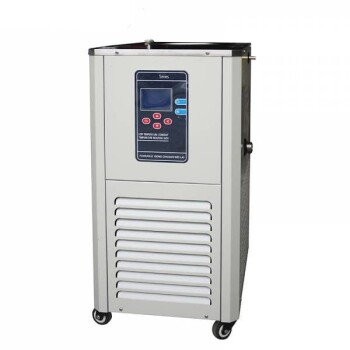
- High Temperature Constant Temperature Heating Circulator Water Bath Chiller Circulator for Reaction Bath
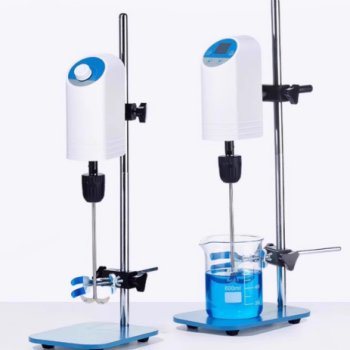
- High Performance Laboratory Stirrers for Diverse Applications
- 50L Chiller Water Bath Cooling Circulator Low Temperature Constant Temperature Reaction Bath
People Also Ask
- What role does a magnetic stirrer with heating play in ZnO nanoparticle synthesis? Precision Control for Quality Results
- What role does a constant temperature heating magnetic stirrer play in MFC-HAp synthesis? Achieve Material Homogeneity
- What is the function of a laboratory magnetic stirrer in Ni–Cr–P electrodeposition? Optimize Ion Transport & Coating
- Why is a laboratory magnetic stirrer required for benzoic acid esters? Boost Reaction Speed & Yield with High RPM
- What role does a laboratory magnetic stirrer play in TiO2 and TiO2-Ag sol preparation? Master Chemical Kinetics