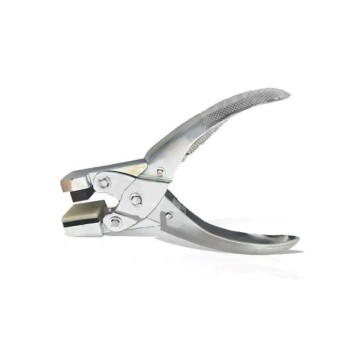
The precision of an electrode cutter is the foundation of reliable battery data. High-precision laboratory punchers ensure that electrode discs have exact diameters and burr-free edges. This accuracy directly influences the calculation of active material mass loading and prevents internal short circuits, both of which are critical for obtaining valid specific capacity and cycle life measurements.
A high-precision electrode cutter ensures experimental integrity by providing exact surface area measurements for mass loading calculations and eliminating edge defects that cause micro-short circuits. Without this precision, electrochemical data becomes inconsistent, making it impossible to accurately evaluate the performance of new battery materials.
The Link Between Dimensional Precision and Data Accuracy
Calculating Active Material Loading
The specific capacity of a battery is measured in milliampere-hours per gram (mAh/g). To calculate this, researchers must know the exact mass loading of the active material on the electrode disc.
If a puncher produces a disc even slightly larger or smaller than its nominal diameter (e.g., 14.1 mm instead of 14.0 mm), the calculated mass based on the assumed area will be incorrect. This error propagates through all subsequent data, leading to inaccurate specific capacity reporting.
Standardizing Current Density
Electrochemical tests often apply specific current densities, such as 200 mA/g. These calculations rely on the uniformity of the electrode area to ensure the current is distributed as intended.
Precision cutting ensures that every disc in a test series is identical. This standardization is vital for the reproducibility of results, allowing researchers to confidently compare different materials or cycling conditions.
Protecting Cell Integrity Through Edge Quality
Preventing Micro-Short Circuits
Standard cutters or manual scissors often leave microscopic burrs or jagged edges on the copper or aluminum foil. These metallic burrs can pierce the thin separator during cell assembly or cycling.
When the separator is compromised, it creates a micro-short circuit. This leads to high self-discharge rates and erratic voltage data, which can be easily mistaken for material instability rather than a mechanical failure.
Ensuring Uniform Ion Transport
A clean, "neat" edge ensures that the electrode sits perfectly flat against the separator and current collector. High-precision tools prevent the edge deformation or "curling" that occurs with dull or low-quality punches.
Proper edge quality maintains consistent ion transport paths across the entire surface of the electrode. This uniformity is essential for achieving stable Coulombic efficiency and long-term cycle life data.
Understanding Common Pitfalls and Trade-offs
Mechanical Stress and Foil Deformation
Even with high-precision tools, the mechanical action of punching can cause slight compression at the edges of the electrode. This can alter the local porosity of the active material layer at the periphery of the disc.
While high-precision punchers minimize this effect, researchers must ensure the tool is properly calibrated. Excessive force or improper clearance can cause the electrode coating to delaminate or peel from the current collector.
Tool Wear and Maintenance
Precision is not a permanent state; punchers and dies wear down over time, especially when cutting abrasive materials like hard carbon or ceramics. A dull blade increases the likelihood of burr formation and dimensional drift.
Regularly inspecting the edges of punched discs under a microscope is a technical best practice. Failing to maintain the cutting hardware eventually leads to increased experimental noise and "failed" cells that waste expensive materials.
How to Apply This to Your Project
Recommendations for Equipment Selection
- If your primary focus is fundamental material research: Invest in a high-precision automatic or manual disc cutter with interchangeable dies to ensure mass loading calculations are beyond reproach.
- If your primary focus is high-throughput screening: Prioritize a puncher that offers rapid, repeatable action without sacrificing edge quality to maintain data consistency across large sample sets.
- If your primary focus is reducing experimental "noise": Use high-precision cutters in conjunction with a glove box environment and standardized consumables like high-purity lithium to isolate the material's true performance.
By treating the electrode cutting process as a critical analytical step rather than a simple preparation task, you ensure that your battery testing data is both accurate and scientifically defensible.
Summary Table:
| Key Factor | Impact of Low Precision | Benefit of High-Precision Cutting |
|---|---|---|
| Mass Loading | Incorrect mAh/g calculations due to diameter drift. | Precise active material measurement for accurate capacity. |
| Edge Quality | Metallic burrs causing micro-short circuits. | Clean edges that protect the separator and cell integrity. |
| Current Density | Non-uniform distribution across the electrode. | Standardized surface area for reproducible electrochemical data. |
| Ion Transport | Localized deformation hindering ion flow. | Flat electrodes ensure consistent paths and stable cycling. |
Precision Equipment for Superior Battery Research
Don't let mechanical inconsistencies compromise your electrochemical data. KINTEK specializes in high-precision laboratory equipment designed to meet the rigorous demands of battery material science. Whether you need advanced electrode cutters and punchers, hydraulic presses for pelletizing, or specialized battery research tools and consumables, our solutions ensure the repeatability and accuracy your research deserves.
Our portfolio also features:
- High-temperature furnaces (Muffle, Vacuum, CVD/PECVD) for material synthesis.
- Electrolytic cells and electrodes for fundamental studies.
- Crushing, milling, and sieving systems for precursor preparation.
- High-pressure reactors and autoclaves for hydrothermal synthesis.
Ready to enhance your lab’s efficiency and data reliability? Contact KINTEK today to find the perfect equipment for your research goals!
References
- Yi-Xuan Guo, Wei‐Ren Liu. Synthesis and Electrochemical Properties of Co3O4@Reduced Graphene Oxides Derived from MOF as Anodes for Lithium-Ion Battery Applications. DOI: 10.3390/su15064988
This article is also based on technical information from Kintek Solution Knowledge Base .
Related Products
- High Precision Diamond Wire Cutting Machine Laboratory Saw Precision Wire EDM Cutting Machine
- 12 Inch 24 Inch High Precision Automatic Diamond Wire Cutting Machine Laboratory Saw Precision Wire EDM Cutting Machine
- Precision Wire Saw Laboratory Cutting Machine with 800mm x 800mm Workbench for Diamond Single Wire Circular Small Cutting
- Three-dimensional electromagnetic sieving instrument
- Electrode Polishing Material for Electrochemical Experiments
People Also Ask
- Are diamonds used in machines? Unlock Superior Performance with Diamond Tools
- What machines make lab diamonds? Discover the HPHT and CVD Technologies Behind Lab-Grown Gems
- What machine is used for cutting diamond? Discover the Laser Technology That Shapes Gems
- Can you chemically make diamonds? Yes, CVD & HPHT Create Real Diamonds
- Can I buy lab diamonds? Your Guide to Modern, Ethical, and Affordable Diamonds