Precision in laboratory synthesis relies on strictly eliminating variables. A reaction apparatus equipped with a temperature controller and stirrer ensures accuracy by rigorously maintaining a constant thermal environment and uniform mechanical shear force. By locking in specific parameters—such as 60 °C and 200 min⁻¹—the system prevents environmental inconsistencies that would otherwise compromise the integrity of the transesterification process.
Core Takeaway: The apparatus guarantees data reliability by actively eliminating concentration gradients and local overheating. This precise control facilitates high-quality mass transfer between the oil, methanol, and solid catalyst phases, which is the absolute prerequisite for deriving accurate kinetic data.
The Mechanics of Consistency
Stabilizing Thermal Conditions
The temperature controller serves a critical function beyond simple heating: it prevents local overheating.
By maintaining a constant reaction temperature, such as 60 °C, the system eliminates thermal spikes.
This stability ensures that reaction rates are driven by chemical kinetics rather than unpredictable temperature fluctuations within the vessel.
Uniform Mechanical Shear
The stirrer provides a consistent mechanical shear force, often standardized at speeds like 200 min⁻¹.
This constant motion ensures that mechanical energy is distributed evenly throughout the fluid.
Uniform shear prevents the formation of stagnant zones where the reaction might slow down or stop completely.
Solving the Multi-Phase Challenge
Eliminating Concentration Gradients
Transesterification involves distinct components that naturally resist mixing.
Without precise agitation, reactants separate, leading to concentration gradients—pockets where one reactant is too dense or too sparse.
The apparatus eradicates these gradients, ensuring the mixture remains chemically homogenous for the duration of the experiment.
Optimizing Mass Transfer
The reaction relies on the interaction of three distinct phases: liquid oil, liquid methanol, and the solid dolomite catalyst.
The stirrer ensures sufficient contact between these phases.
This contact drives high-quality mass transfer, which is the physical movement of molecules from one phase to another, allowing the chemical reaction to occur efficiently.
Understanding the Trade-offs
Equipment Calibration Dependencies
The accuracy of your data is entirely dependent on the calibration of your sensors.
A temperature controller with a slow response time can allow brief thermal drifts, subtly skewing kinetic data.
The Risk of Over-Agitation
While stirring is essential, excessive shear force can sometimes damage fragile catalysts or create emulsions that are difficult to separate.
The goal is sufficient contact, not maximum turbulence.
Making the Right Choice for Your Goal
To maximize the utility of your reaction apparatus, tailor your approach to your specific objective:
- If your primary focus is Kinetic Modeling: Prioritize the stirrer speed stability to prove that mass transfer limitations have been eliminated, ensuring the data reflects true reaction kinetics.
- If your primary focus is Process Safety: Prioritize the temperature controller's response time to prevent thermal runaway in exothermic reactions.
By controlling the physical environment, the apparatus transforms a chaotic multi-phase mixture into a stable system where reliable scientific data can be harvested.
Summary Table:
| Feature | Function in Biodiesel Synthesis | Impact on Accuracy |
|---|---|---|
| Temperature Controller | Maintains constant thermal environment (e.g., 60 °C) | Prevents local overheating and ensures kinetic-driven reaction rates. |
| Stirrer / Shear Force | Provides uniform mechanical shear (e.g., 200 min⁻¹) | Eliminates stagnant zones and ensures even distribution of mechanical energy. |
| Phase Mixing | Facilitates contact between oil, methanol, and solid catalyst | Eradicates concentration gradients and optimizes high-quality mass transfer. |
| Sensor Calibration | Monitors real-time system parameters | Reduces thermal drift and ensures the integrity of the collected kinetic data. |
Elevate Your Chemical Synthesis with KINTEK Precision
Achieving reliable kinetic data in biodiesel synthesis requires equipment that eliminates every variable. KINTEK specializes in high-performance laboratory solutions designed for rigorous research environments. Whether you are conducting complex transesterification or high-pressure experiments, our comprehensive range of high-temperature high-pressure reactors, autoclaves, and stirring systems provides the stability and control your data deserves.
From advanced crushing and milling systems for catalyst preparation to precision cooling solutions and electrolytic cells, KINTEK supports every stage of your laboratory workflow. Our target customers—from renewable energy researchers to industrial material scientists—rely on us for durable, high-precision equipment and essential consumables like PTFE products and ceramics.
Ready to optimize your mass transfer and ensure reaction consistency? Contact KINTEK experts today to find the perfect reactor system for your lab.
References
- Eglė Sendžikienė, Kiril Kazancev. APPLICATION OF DOLOMITE AS A HETEROGENEOUS CATALYST OF BIODIESEL SYNTHESIS. DOI: 10.3846/transport.2018.6723
This article is also based on technical information from Kintek Solution Knowledge Base .
Related Products
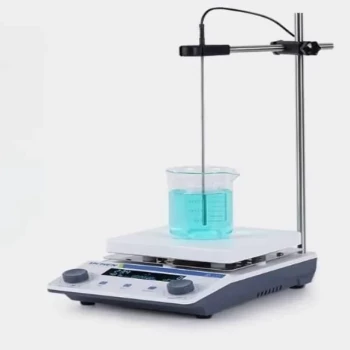
- Laboratory Small Constant Temperature Heated Magnetic Stirrer Heater and Stirrer
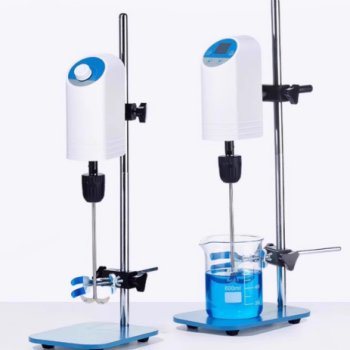
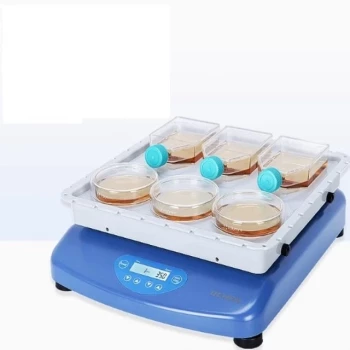
- High Performance Laboratory Stirrers for Diverse Applications
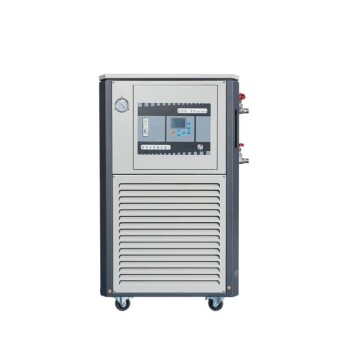
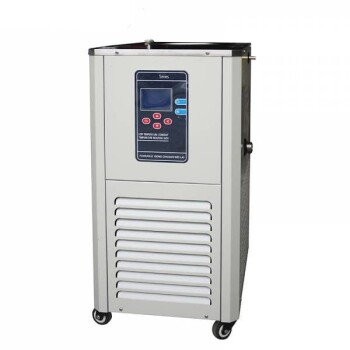
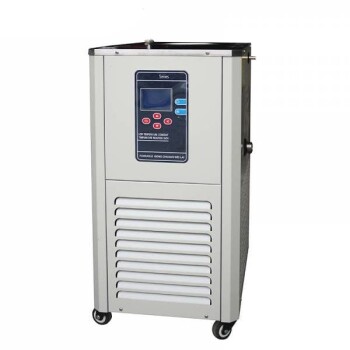
- High Temperature Constant Temperature Heating Circulator Water Bath Chiller Circulator for Reaction Bath
- Customizable Laboratory High Temperature High Pressure Reactors for Diverse Scientific Applications
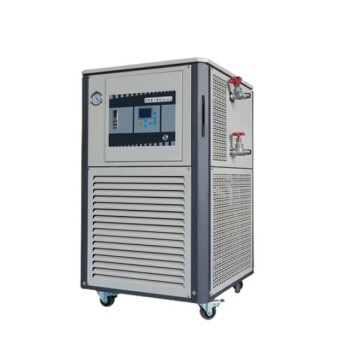
- 5L Heating Chilling Circulator Cooling Water Bath Circulator for High and Low Temperature Constant Temperature Reaction
People Also Ask
- What role does a magnetic stirrer with heating play in ZnO nanoparticle synthesis? Precision Control for Quality Results
- What role does a constant temperature heating magnetic stirrer play in MFC-HAp synthesis? Achieve Material Homogeneity
- What is the function of a laboratory magnetic stirrer in Ni–Cr–P electrodeposition? Optimize Ion Transport & Coating
- Why is a laboratory magnetic stirrer required for benzoic acid esters? Boost Reaction Speed & Yield with High RPM
- What role does a laboratory magnetic stirrer play in TiO2 and TiO2-Ag sol preparation? Master Chemical Kinetics