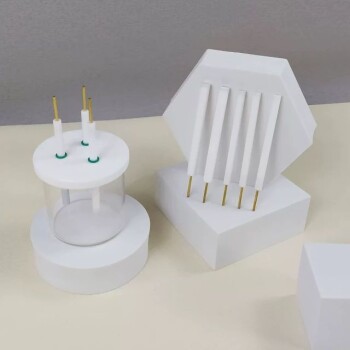
Integrating a three-electrode system within a dynamic reactor establishes a sophisticated testing environment capable of real-time corrosion monitoring under high-temperature and high-pressure conditions. By utilizing the coated sample as the working electrode alongside a counter and reference electrode, this setup captures continuous kinetic data without interrupting the reaction process.
Core Takeaway The distinct value of this integration is the ability to maintain a pristine, pressurized environment while measuring corrosion. It eliminates the need to depressurize or remove samples for inspection, ensuring that the data reflects the authentic evolution of the coating's protective state over time.
The Architecture of the System
The Three Critical Components
To function correctly, the system employs a specific trio of electrodes. This typically consists of the coated sample acting as the working electrode, a high-purity graphite (or platinum) counter electrode, and a saturated calomel reference electrode.
Closed-Loop Circuit Design
This configuration creates a precise electrochemical circuit within the reactor. By separating the current-carrying auxiliary electrode from the potential-measuring reference electrode, the system eliminates polarization interference.
Signal Isolation
This isolation ensures that the electrochemical signals recorded originate solely from the interface between the test coating and the electrolyte. This guarantees that the data represents the material's actual behavior, rather than artifacts from the testing equipment.
Achieving True In-Situ Monitoring
Continuous Data Stream
In a standard magnetic drive reactor, this integration allows for the collection of corrosion kinetic data in real-time. Researchers can observe the degradation of a coating as it happens, rather than relying on "before and after" snapshots.
Preserving Environmental Conditions
The primary advantage over ex-situ methods is the preservation of the test environment. There is no need to depressurize the vessel or remove the sample to conduct measurements.
Ensuring Data Authenticity
By avoiding the physical and chemical shocks associated with removing a sample (such as rapid cooling or exposure to air), the continuity of the data is maintained. The measurements reflect the sample's state exactly as it exists under operating conditions.
Quantitative Evaluation Capabilities
Advanced Diagnostic Metrics
The precise circuit enables the use of sensitive techniques like Electrochemical Impedance Spectroscopy (EIS). This allows for the non-destructive calculation of complex parameters.
Measuring Protection Efficiency
Researchers can accurately measure polarization resistance (Rp) and charge transfer resistance. These metrics provide a quantitative value for the integrity of the protective layer and its remaining anti-corrosion lifespan.
Understanding the Trade-offs
Mechanical Complexity
Integrating delicate electrochemical sensors into a high-pressure, magnetic drive reactor significantly increases mechanical complexity. Ensuring proper sealing and electrical insulation at high temperatures is far more difficult than in standard laboratory beakers.
Electrode Stability
While the focus is on the working electrode (the sample), the reference and counter electrodes are also exposed to the harsh reactor environment. Under extreme heat or pressure, standard reference electrodes (like saturated calomel) may experience drift or degradation, potentially skewing long-term data.
Making the Right Choice for Your Goal
To maximize the value of this setup, align your approach with your specific testing objectives:
- If your primary focus is Process Fidelity: Prioritize the in-situ capability to avoid depressurization cycles, which can artificially alter the corrosion mechanism.
- If your primary focus is Quantitative Accuracy: Rely on the three-electrode geometry to isolate the working electrode's signal, ensuring charge transfer resistance readings are free from auxiliary polarization errors.
By embedding the measurement system directly into the reaction environment, you move beyond testing the sample's history and start monitoring its active reality.
Summary Table:
| Feature | Role in In-Situ Monitoring | Benefit |
|---|---|---|
| Working Electrode | Represents the coated sample material | Measures authentic material degradation |
| Reference Electrode | Provides a stable potential baseline | Ensures precise, drift-free measurements |
| Counter Electrode | Completes the circuit with the working electrode | Eliminates polarization interference |
| Dynamic Reactor | Maintains HPHT environment | Simulates real-world operating conditions |
| EIS Technique | Non-destructive diagnostic | Calculates polarization and transfer resistance |
Elevate Your Corrosion Research with KINTEK Precision
Transition from static snapshots to real-time kinetic insights. KINTEK specializes in advanced laboratory solutions, offering high-temperature high-pressure reactors and autoclaves perfectly suited for complex electrochemical integration.
Whether you are analyzing protective coatings or studying material degradation, our comprehensive range—including electrolytic cells, electrodes, and high-performance crushing and milling systems—ensures your data reflects reality.
Ready to optimize your in-situ monitoring capabilities? Contact KINTEK today to consult with our experts on the ideal equipment configuration for your specific research goals.
References
- Shanshan Si, Bingying Wang. The Corrosion Performance of Hybrid Polyurea Coatings Modified with TiO2 Nanoparticles in a CO2 Environment. DOI: 10.3390/coatings14121562
This article is also based on technical information from Kintek Solution Knowledge Base .
Related Products
- Customizable Laboratory High Temperature High Pressure Reactors for Diverse Scientific Applications
- H Type Electrolytic Cell Triple Electrochemical Cell
- Customizable High Pressure Reactors for Advanced Scientific and Industrial Applications
- Visual High-Pressure Reactor for In-Situ Observation
- Mini SS High Pressure Autoclave Reactor for Laboratory Use
People Also Ask
- How do high-pressure and high-temperature reactors ensure the effective treatment of lignocellulosic wastewater in WAO?
- What equipment is required for high-pressure high-temperature reactions? Master Extreme Chemistry Safely
- How do you control high pressure in a reactor? A Guide to Safe & Stable Operation
- How does initial oxygen pressure affect the wet oxidation of pharmaceutical sludge? Master Your Oxidation Depth
- Why is argon better than nitrogen for inert atmosphere? Ensure Absolute Reactivity & Stability