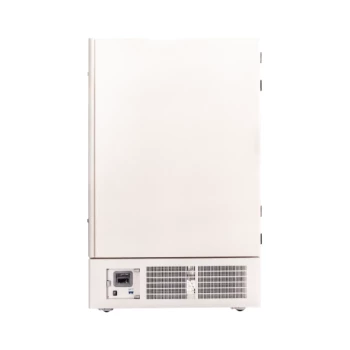
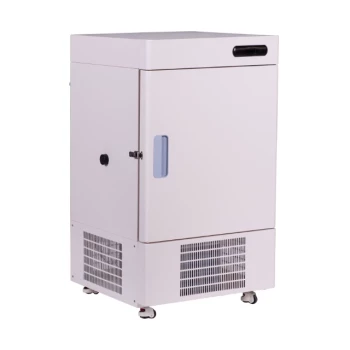
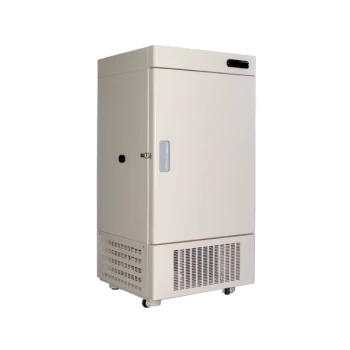
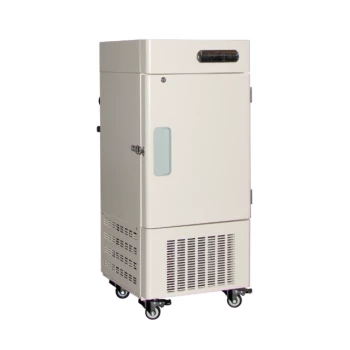
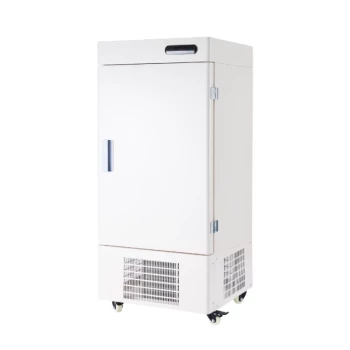
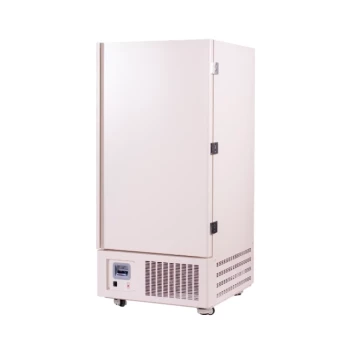
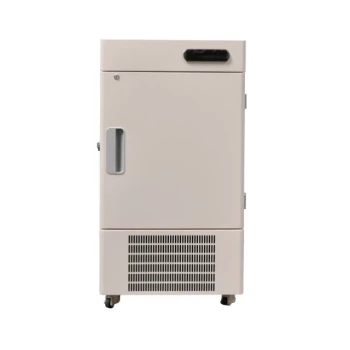
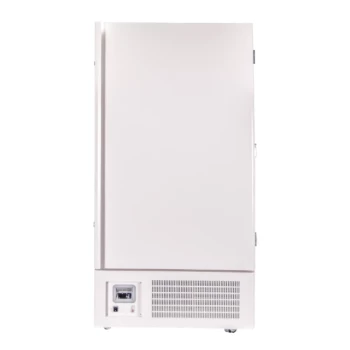
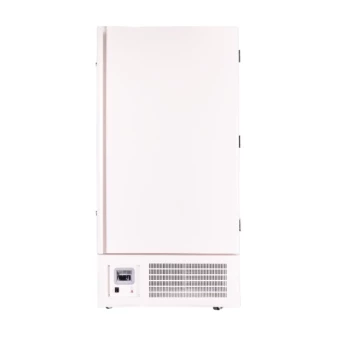
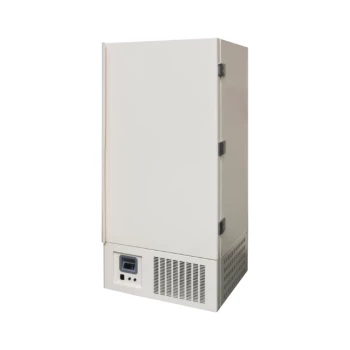
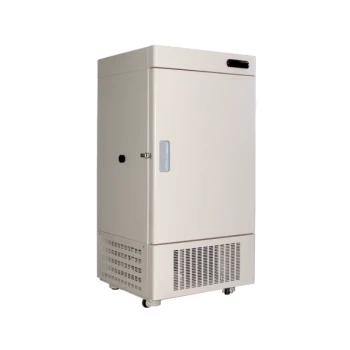
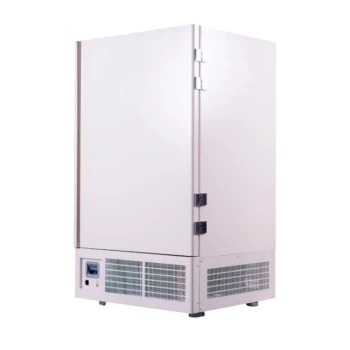
An ultra-low temperature (ULT) freezer ensures data reliability in sulfate reduction research by maintaining samples at a critical -80°C threshold, effectively halting all biological time. By completely stopping enzymatic activity, the freezer preserves extracted genomic DNA and sludge granules in their original state, ensuring that the microbial community structure analyzed months later is identical to the moment of collection.
The Core Reality: In longitudinal studies, sample degradation is a silent variable that can invalidate data. A ULT freezer eliminates this variable, allowing you to confidently attribute observed changes in microbial communities to your experimental conditions rather than storage artifacts.
Preserving Microbial Community Structure
Arresting Enzymatic Activity
The primary threat to genomic data is the natural breakdown of nucleic acids by enzymes. At standard freezer temperatures (-20°C), some enzymatic activity can persist, slowly degrading sample quality.
A ULT freezer operating at -80°C creates an environment where enzymatic activity is completely halted. This prevents the fragmentation of DNA, which is critical for accurate sequencing.
Protecting Sludge Granules
Sulfate reduction research often relies on the analysis of sludge granules. These complex aggregates contain the specific microbial communities driving the reduction process.
Storing these granules at -80°C maintains their physical and chemical integrity. This ensures that the microbial community structure information remains original, accurately reflecting the population dynamics at the time of sampling.
Enabling Consistent Batch Analysis
Facilitating Batch Sequencing
Research often involves collecting samples across different operational cycles or loading stages over long periods. Analyzing these samples one by one introduces "batch effects"—variations caused by processing samples at different times.
ULT freezers allow researchers to store samples indefinitely without degradation. This enables batch sequencing analysis, where samples collected weeks or months apart are processed simultaneously, ensuring data consistency.
Eliminating Temporal Bias
Without ultra-low temperature storage, early samples might degrade while waiting for later samples to be collected. This would skew the data, making older samples appear to have lower diversity or different compositions solely due to age.
By freezing the "state" of the sample, the ULT freezer ensures that a sample from Day 1 and a sample from Day 60 are comparable on an equal footing.
The Hardware Behind the Reliability
Temperature Stability and Recovery
Reliability is not just about reaching -80°C; it is about staying there. High-quality ULT freezers utilize instantaneous temperature recovery systems to quickly restore optimal conditions after the door is opened.
Physical Integrity via Sealing
To maintain this extreme environment, these units often employ advanced sealing mechanisms, such as seven-point contact silicon gaskets.
These gaskets are critical for preventing temperature leaks and maintaining internal stability. They also provide a layer of protection during brief power outages, ensuring specimens remain well-preserved until power is restored or backup systems engage.
Understanding the Risks and Trade-offs
The Danger of Fluctuations
While ULT freezers are powerful, they are not magic. The reliability of your data depends heavily on minimizing temperature fluctuations. Frequent door openings can stress the recovery system, potentially exposing sensitive samples to transient warming.
Dependency on Infrastructure
ULT freezers require a constant, robust power supply. A hardware failure or extended power outage without backup generation poses a catastrophic risk to the entire dataset. Data reliability is therefore only as strong as your facility’s disaster recovery plan.
Ensuring Integrity for Your Specific Goals
- If your primary focus is longitudinal comparison: Ensure all samples from different operational cycles are stored in the same freezer zone to minimize environmental variables between batches.
- If your primary focus is distinct batch sequencing: Accumulate your genomic DNA and sludge samples at -80°C until the entire dataset is ready, processing them in a single run to eliminate processing artifacts.
- If your primary focus is sample security: Invest in units with advanced gasket systems and strictly limit door openings to maintain the "biological time capsule" effect.
The ULT freezer is not merely a storage unit; it is the control mechanism that validates the timeline of your research.
Summary Table:
| Feature | Impact on Data Reliability | Research Benefit |
|---|---|---|
| -80°C Storage | Halts all enzymatic & biological activity | Prevents DNA fragmentation & degradation |
| Structural Integrity | Preserves physical state of sludge granules | Ensures accurate microbial community mapping |
| Batch Processing | Allows simultaneous analysis of samples | Eliminates temporal bias and processing artifacts |
| Rapid Recovery | Minimizes temperature fluctuations | Maintains stable "biological time capsule" state |
| Advanced Sealing | Prevents thermal leaks & air ingress | Protects specimens during brief power outages |
Secure Your Research Data with KINTEK Precision
Don't let sample degradation compromise months of critical research. KINTEK specializes in advanced laboratory solutions designed for the most demanding scientific environments. Our high-performance ultra-low temperature (ULT) freezers provide the thermal stability and rapid recovery your genomic DNA and sludge granules require to stay preserved in their original state.
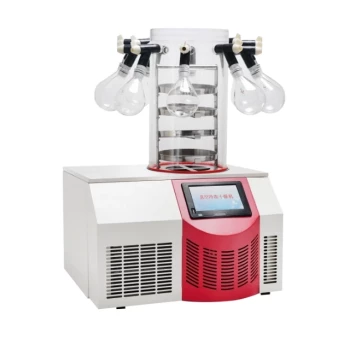
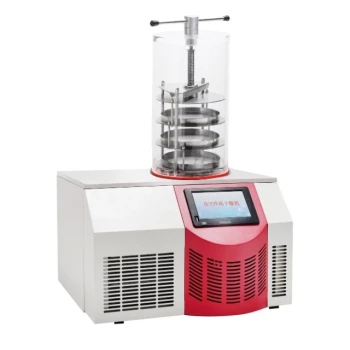
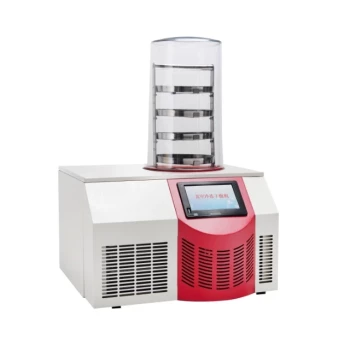
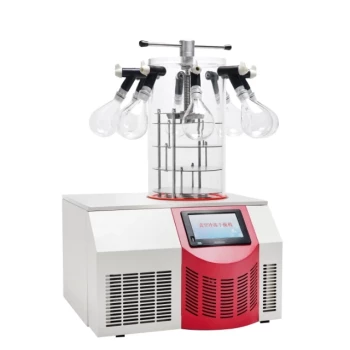
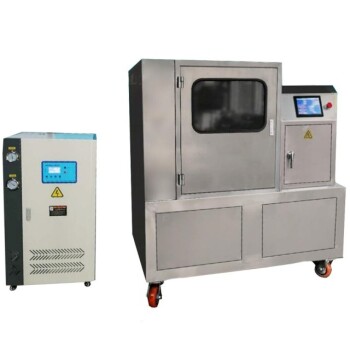
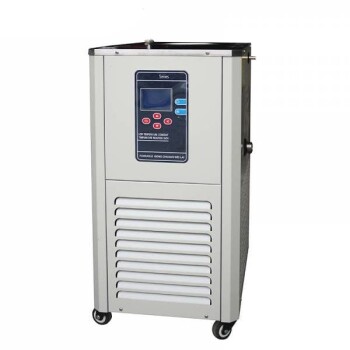
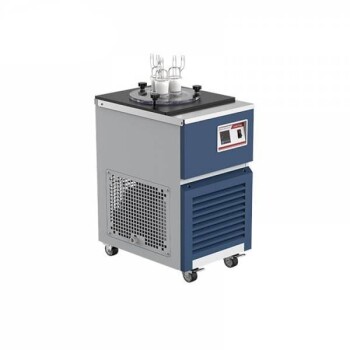
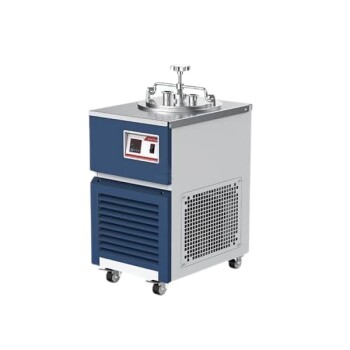
From high-temperature furnaces to specialized cooling solutions like cold traps and freeze dryers, KINTEK offers a comprehensive range of equipment tailored for microbial research and material science.
Ready to upgrade your lab's storage reliability? Contact us today to discover how KINTEK's cooling systems and laboratory consumables can enhance your data consistency and experimental accuracy.
References
- Aracely Zambrano-Romero, Valeria Ochoa‐Herrera. Dynamics of Microbial Communities during the Removal of Copper and Zinc in a Sulfate-Reducing Bioreactor with a Limestone Pre-Column System. DOI: 10.3390/ijerph19031484
This article is also based on technical information from Kintek Solution Knowledge Base .
Related Products
- 938L Vertical Ultra Low Temperature Freezer for Advanced Laboratory Storage
- 108L Vertical Ultra Low Temperature ULT Freezer
- 208L Advanced Precision Laboratory Ultra Low Temperature Freezer for Cold Storage
- 28L Compact Upright Ultra Low Temperature Freezer for Laboratory
- 158L Precision Vertical Ultra Low Freezer for Laboratory Applications
People Also Ask
- What features should be considered when choosing an ultra low temperature freezer? Secure Your Samples with Precision
- How is the interior of an ultra low temperature freezer designed for optimal storage? Maximize Sample Integrity with Smart Design
- How is temperature controlled in ultra low temperature freezers? A Guide to Stable -80°C Storage
- What is an ultra-low temperature freezer? Protect Your Most Valuable Biological Samples
- What is cryopreservation and how do ultra low temperature freezers facilitate this process? Preserve Your Samples for the Long Term