Applying an amorphous carbon layer via Chemical Vapor Deposition (CVD) fundamentally alters catalyst behavior to increase hydrogen peroxide selectivity. By forming an ultra-thin, uniform coating on active metals like platinum, CVD modifies the surface geometry. This process shifts the reaction pathway toward a two-electron transfer, optimizing the catalyst specifically for electro-Fenton applications.
The amorphous carbon layer functions as a geometric regulator, using "partial poisoning" to isolate active sites. This physical restriction forces oxygen molecules to bind in an "end-on" configuration, which is the critical requirement for maximizing hydrogen peroxide production.
Mechanisms of Enhanced Selectivity
Geometric Isolation of Active Sites
The primary function of the CVD-applied carbon layer is to disrupt the continuity of the metal surface.
By coating active metals such as platinum nanoparticles, the carbon creates physical spacing between surface atoms. This geometric isolation prevents large clusters of active sites from interacting simultaneously with reactants in undesirable ways.
The Role of Partial Poisoning
While "poisoning" is typically viewed negatively in catalysis, here it is a deliberate and beneficial feature.
The carbon layer induces a partial poisoning effect, effectively blocking specific surface areas. This controlled inhibition stops the metal from triggering the full four-electron reduction pathway, which would produce water instead of the desired hydrogen peroxide.
Altering the Reaction Pathway
Shifting from Side-on to End-on Adsorption
The geometry of the catalyst surface dictates how oxygen molecules land and attach.
Without the carbon layer, oxygen typically adopts a "side-on" adsorption mode, where the molecule lays flat across multiple metal atoms. The CVD carbon coating forces the oxygen to stand vertically in an "end-on" mode because the neighboring sites are blocked (isolated) by the carbon.
Promoting Two-Electron Transfer
The orientation of the oxygen molecule determines the chemical outcome.
The end-on adsorption mode naturally favors the two-electron transfer pathway. By structurally enforcing this orientation, the catalyst achieves significantly higher selectivity for hydrogen peroxide ($H_2O_2$), the essential reagent for electro-Fenton processes.
Understanding the Trade-offs
Selectivity vs. Site Availability
It is important to recognize that this method relies on reducing the availability of the metal surface.
The partial poisoning mechanism improves selectivity by deliberately limiting access to the active metal. While this creates the desired reaction product ($H_2O_2$), it fundamentally relies on restricting the catalyst's geometric freedom.
Strategic Application for Catalyst Design
When engineering cathodes for electro-Fenton systems, the application of CVD carbon allows for precise control over reaction mechanics.
- If your primary focus is H2O2 Selectivity: Utilize CVD carbon coating to enforce end-on oxygen adsorption and suppress water formation.
- If your primary focus is Site Isolation: Rely on the uniformity of the CVD process to create consistent geometric separation between active metal atoms.
By leveraging the geometric constraints of amorphous carbon, you transform standard active metals into highly specific tools for hydrogen peroxide generation.
Summary Table:
| Feature | Impact of CVD Amorphous Carbon Layer | Benefit for Electro-Fenton |
|---|---|---|
| Surface Geometry | Creates geometric isolation of active sites | Prevents undesirable multi-site reactions |
| Adsorption Mode | Shifts from 'side-on' to 'end-on' oxygen binding | Essential for H2O2 production pathway |
| Reaction Pathway | Promotes 2-electron transfer over 4-electron | Maximizes hydrogen peroxide yield |
| Catalyst Effect | Deliberate 'partial poisoning' of metal sites | Suppresses water formation for high selectivity |
Elevate Your Catalyst Research with KINTEK
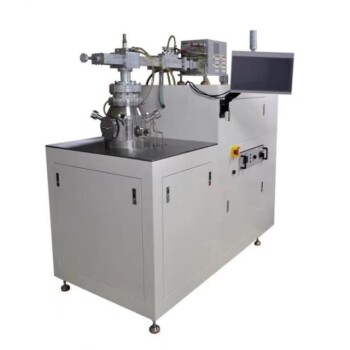
Precision is paramount in electro-Fenton applications. At KINTEK, we specialize in the advanced laboratory equipment necessary to master these complex chemical processes. From state-of-the-art CVD and PECVD systems for uniform carbon coating to high-performance electrolytic cells and electrodes for electrochemical testing, we provide the tools researchers need for breakthrough results.
Why choose KINTEK?
- Comprehensive CVD Solutions: Achieve ultra-thin, uniform amorphous carbon layers with our precision-controlled furnaces.
- Specialized Lab Ware: Access a full range of PTFE products, ceramics, and crucibles designed for high-temperature stability.
- Expert Support: Our team understands the needs of battery research and catalyst development, ensuring you get the right configuration for your specific H2O2 selectivity goals.
Optimize your catalyst performance with industry-leading technology. Contact KINTEK today to discuss your laboratory requirements!
References
- Edgar Fajardo-Puerto, Francisco Carrasco‐Marín. From Fenton and ORR 2e−-Type Catalysts to Bifunctional Electrodes for Environmental Remediation Using the Electro-Fenton Process. DOI: 10.3390/catal13040674
This article is also based on technical information from Kintek Solution Knowledge Base .
Related Products
- Chemical Vapor Deposition CVD Equipment System Chamber Slide PECVD Tube Furnace with Liquid Gasifier PECVD Machine
- Microwave Plasma Chemical Vapor Deposition MPCVD Machine System Reactor for Lab and Diamond Growth
- 915MHz MPCVD Diamond Machine Microwave Plasma Chemical Vapor Deposition System Reactor
- Customer Made Versatile CVD Tube Furnace Chemical Vapor Deposition Chamber System Equipment
- Split Chamber CVD Tube Furnace with Vacuum Station Chemical Vapor Deposition System Equipment Machine
People Also Ask
- What are the advantages of chemical vapor deposition? Achieve Superior Thin Films for Your Lab
- What types of substrates are used in CVD to facilitate graphene films? Optimize Graphene Growth with the Right Catalyst
- What is the chemical vapor deposition growth process? Build Superior Thin Films from the Atom Up
- How expensive is chemical vapor deposition? Understanding the True Cost of High-Performance Coating
- Why is Chemical Vapor Deposition (CVD) equipment uniquely suited for constructing hierarchical superhydrophobic structures?