Knowledge How does compression molding affect the environment? A Guide to Sustainable Manufacturing
Author avatar

Tech Team · Kintek Solution

Updated 1 week ago

How does compression molding affect the environment? A Guide to Sustainable Manufacturing


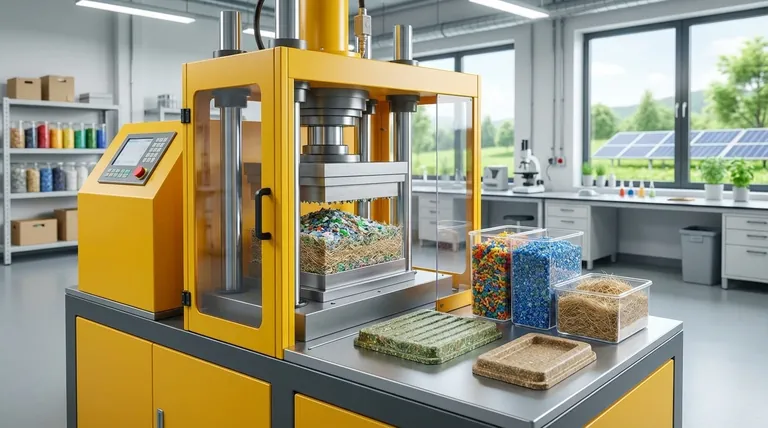
In the landscape of plastics manufacturing, compression molding is frequently positioned as a more environmentally considerate option compared to alternatives like injection molding. Its core benefits stem from high material efficiency and lower energy demands during production. The process minimizes plastic scrap and is particularly effective for forming parts from recycled materials and natural fiber composites.

While no industrial process is entirely free of environmental impact, compression molding's primary advantage is its direct, low-waste design. By precisely placing material into a mold and avoiding the high-pressure channel systems of other methods, it fundamentally reduces both material scrap and energy consumption per part.
How does compression molding affect the environment? A Guide to Sustainable Manufacturing

The Core Environmental Advantages

The environmental case for compression molding is built on two key pillars: efficiency in materials and efficiency in energy. These factors directly reduce the footprint of the manufacturing stage.

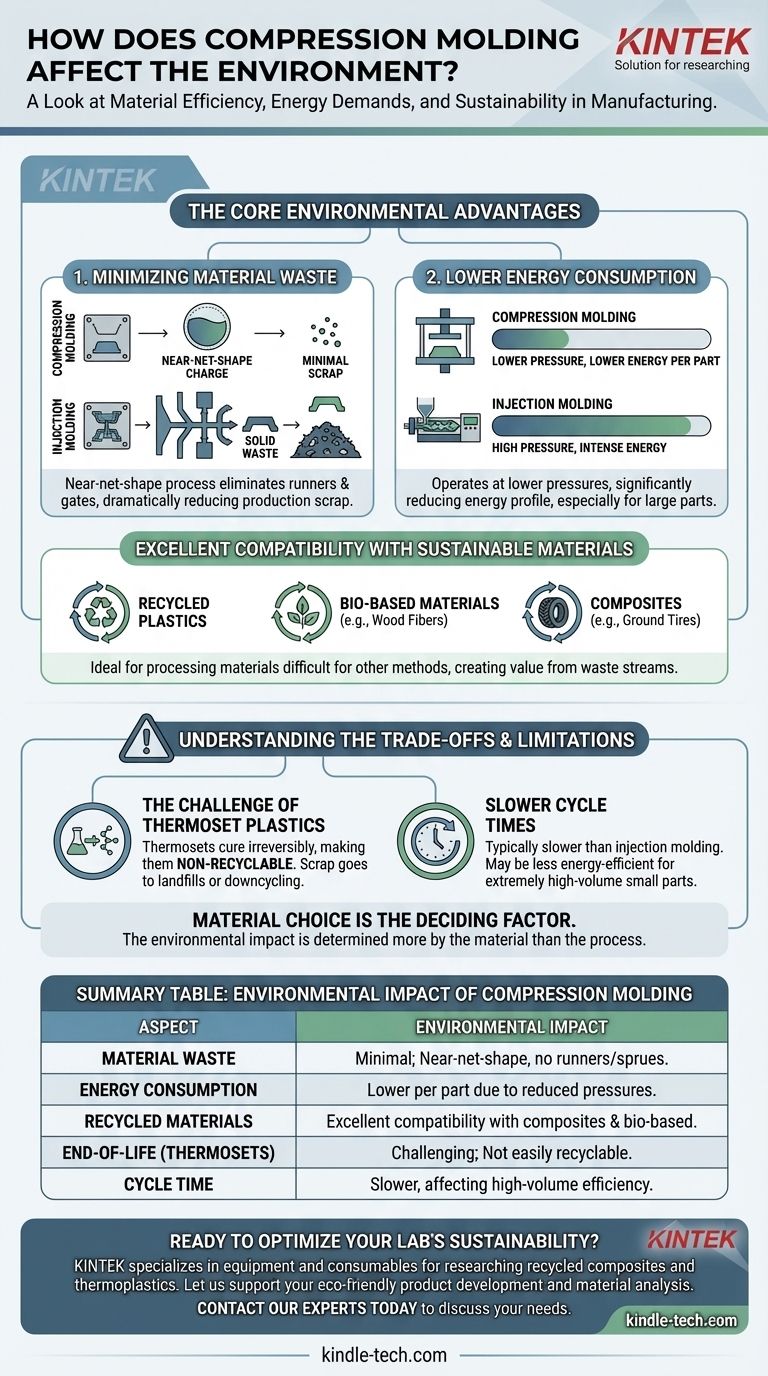
Minimizing Material Waste

Compression molding is a near-net-shape process. This means the initial amount of material, called the "charge," is weighed to be very close to the final part's required mass.

There are no runners, sprues, or gates—the channel systems used in injection molding to guide molten plastic into the cavity. These channels become solid plastic waste with every cycle, which is almost entirely eliminated in compression molding.

This dramatic reduction in production scrap means less wasted material, lower disposal costs, and a more efficient use of raw resources.

Lower Energy Consumption

The process generally operates at lower pressures than high-speed injection molding. It doesn't require the intense energy needed to force molten plastic through a complex network of narrow channels.

While heating is required to cure the material, the overall energy profile per part can be significantly lower. This is especially true for large, thick-walled components where injection molding would demand extremely high and sustained pressure.

Excellent Compatibility with Recycled & Bio-based Materials

Compression molding is exceptionally well-suited for working with materials that are difficult to process in other ways. This includes thermoset plastics, composites, and materials with a high percentage of fillers.

The process can easily incorporate recycled plastics, ground-up tires, wood fibers, and other bio-composites. This provides a valuable manufacturing outlet for waste streams, reducing landfill burden and decreasing the demand for virgin petroleum-based polymers.

Understanding the Trade-offs and Limitations

True objectivity requires acknowledging where the process falls short. The environmental benefits of compression molding are not absolute and come with critical trade-offs.

The Challenge of Thermoset Plastics

A significant portion of materials used in compression molding are thermosets (like epoxy, phenolic, or silicone). These materials undergo an irreversible chemical reaction (curing) when heated.

Once a thermoset part is cured, it cannot be re-melted and recycled in the same way as thermoplastics (like PET or Polypropylene). This creates a major end-of-life challenge, as scrap or post-consumer parts are destined for landfills or, at best, downcycling into low-grade filler.

Slower Cycle Times Can Add Up

Compression molding is typically a slower process than injection molding, with longer cycle times. For extremely high-volume production of millions of small parts, the faster cycles of injection molding might lead to greater overall energy efficiency at scale.

The energy savings of compression molding are most pronounced for medium-volume runs and for large, thick parts that are inefficient to produce with other methods.

Material Choice is the Deciding Factor

The environmental impact is ultimately dictated more by the material than by the process itself.

Using compression molding to form a part from a virgin, petroleum-based thermoset has a very different environmental profile than using the same process to create a part from a thermoplastic composite filled with recycled wood fiber. The process enables sustainable choices, but it does not guarantee them.

Making the Right Choice for Your Sustainability Goals

To apply this knowledge effectively, you must align the process capabilities with your specific environmental priorities.

  • If your primary focus is minimizing production scrap: Compression molding is an exceptional choice due to its near-net-shape process that virtually eliminates runner and gate waste.
  • If your primary focus is end-of-life recyclability: You must prioritize using thermoplastic materials rather than traditional thermosets, which are not recyclable.
  • If your primary focus is incorporating recycled or bio-based content: The process excels at handling composites and filled materials, making it ideal for creating value from diverse waste streams.

Ultimately, leveraging compression molding for environmental benefit depends on a holistic strategy that aligns your material selection with the process's inherent efficiencies.

Summary Table:

Aspect Environmental Impact
Material Waste Minimal; near-net-shape process eliminates runners and sprues.
Energy Consumption Lower per part due to lower operating pressures.
Recycled Materials Excellent compatibility with recycled plastics and bio-composites.
End-of-Life (Thermosets) Challenging; thermoset parts are not easily recyclable.
Cycle Time Slower than injection molding, affecting high-volume efficiency.

Ready to optimize your lab's manufacturing processes for sustainability? KINTEK specializes in providing the right lab equipment and consumables to support your research into materials like recycled composites and thermoplastics. Whether you're developing new, eco-friendly products or need to analyze material properties, we have the solutions to help you achieve your sustainability goals. Contact our experts today to discuss how we can support your laboratory's needs.

Visual Guide
How does compression molding affect the environment? A Guide to Sustainable Manufacturing Visual Guide

Related Products

People Also Ask

Related Products

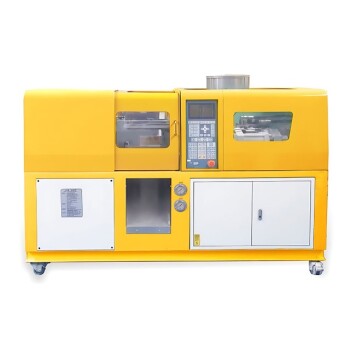
Small Injection Molding Machine for Lab Use

Small Injection Molding Machine for Lab Use

The small injection molding machinehas fast and stable movements; good controllability and repeatability, super energy saving; the product can be automatically dropped and formed; the machine body is low, convenient for feeding, easy to maintain, and no height restrictions on the installation site.

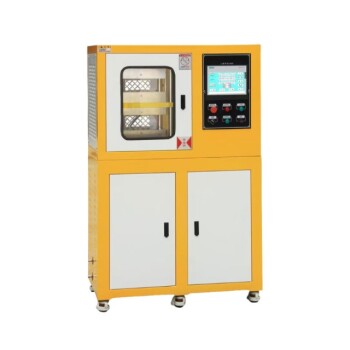
Rubber Vulcanizer Vulcanizing Machine Plate Vulcanizing Press for Lab

Rubber Vulcanizer Vulcanizing Machine Plate Vulcanizing Press for Lab

The Plate vulcanizing press is a kind of equipment used in the production of rubber products, mainly used for the vulcanization of rubber products. Vulcanization is a key step in rubber processing.

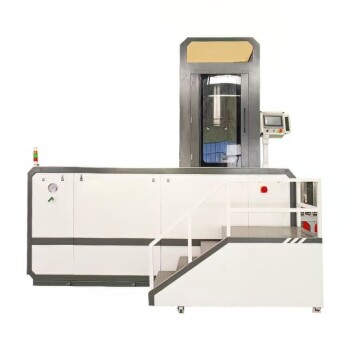
Warm Isostatic Press WIP Workstation 300Mpa for High Pressure Applications

Warm Isostatic Press WIP Workstation 300Mpa for High Pressure Applications

Discover Warm Isostatic Pressing (WIP) - A cutting-edge technology that enables uniform pressure to shape and press powdered products at a precise temperature. Ideal for complex parts and components in manufacturing.

Electric Lab Cold Isostatic Press CIP Machine for Cold Isostatic Pressing

Electric Lab Cold Isostatic Press CIP Machine for Cold Isostatic Pressing

Produce dense, uniform parts with improved mechanical properties with our Electric Lab Cold Isostatic Press. Widely used in material research, pharmacy, and electronic industries. Efficient, compact, and vacuum-compatible.

Automatic Laboratory Heat Press Machine

Automatic Laboratory Heat Press Machine

Precision automatic heat press machines for labs—ideal for material testing, composites, and R&D. Customizable, safe, and efficient. Contact KINTEK today!

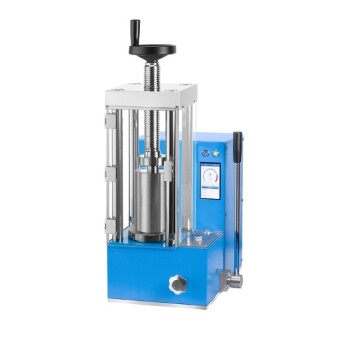
Manual Cold Isostatic Pressing Machine CIP Pellet Press

Manual Cold Isostatic Pressing Machine CIP Pellet Press

Lab Manual Isostatic Press is a high-efficient equipment for sample preparation widely used in material research, pharmacy, ceramics, and electronic industries. It allows for precision control of the pressing process and can work in a vacuum environment.

Automatic Lab Cold Isostatic Press CIP Machine Cold Isostatic Pressing

Automatic Lab Cold Isostatic Press CIP Machine Cold Isostatic Pressing

Efficiently prepare samples with our Automatic Lab Cold Isostatic Press. Widely used in material research, pharmacy, and electronic industries. Provides greater flexibility and control compared to electric CIPs.

Single Punch Electric Tablet Press Machine Laboratory Powder Tablet Punching TDP Tablet Press

Single Punch Electric Tablet Press Machine Laboratory Powder Tablet Punching TDP Tablet Press

The single-punch electric tablet press is a laboratory-scale tablet press suitable for corporate laboratories in pharmaceutical, chemical, food, metallurgical and other industries.

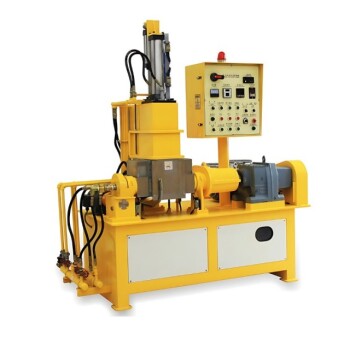
Lab Internal Rubber Mixer Rubber Kneader Machine for Mixing and Kneading

Lab Internal Rubber Mixer Rubber Kneader Machine for Mixing and Kneading

Lab internal rubber mixer is suitable for mixing, kneading and dispersing various chemical raw materials such as plastics, rubber, synthetic rubber, hot melt adhesive and various low-viscosity materials.

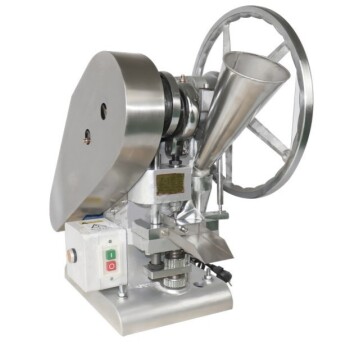
Single Punch Electric Tablet Press Machine TDP Tablet Punching Machine

Single Punch Electric Tablet Press Machine TDP Tablet Punching Machine

The electric tablet punching machine is a laboratory equipment designed for pressing various granular and powdery raw materials into discs and other geometric shapes. It is commonly used in pharmaceutical, healthcare products, food, and other industries for small batch production and processing. The machine is compact, lightweight, and easy to operate, making it suitable for use in clinics, schools, laboratories, and research units.

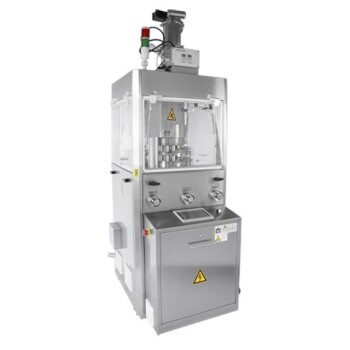
Single Punch Tablet Press Machine and Mass Production Rotary Tablet Punching Machine for TDP

Single Punch Tablet Press Machine and Mass Production Rotary Tablet Punching Machine for TDP

Rotary tablet punching machine is an automatic rotating and continuous tableting machine. It is mainly used for tablet manufacturing in the pharmaceutical industry, and is also suitable for industrial sectors such as food, chemicals, batteries, electronics, ceramics, etc. to compress granular raw materials into tablets.

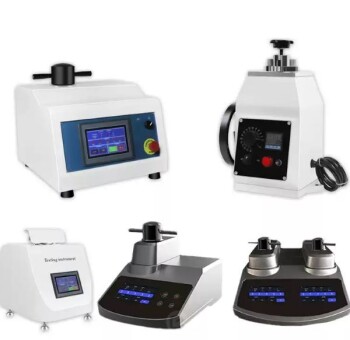
Metallographic Specimen Mounting Machine for Laboratory Materials and Analysis

Metallographic Specimen Mounting Machine for Laboratory Materials and Analysis

Precision metallographic mounting machines for labs—automated, versatile, and efficient. Ideal for sample prep in research and quality control. Contact KINTEK today!

Powerful Plastic Crusher Machine

Powerful Plastic Crusher Machine

KINTEK's powerful plastic crusher machines process 60-1350 KG/H of diverse plastics, ideal for labs and recycling. Durable, efficient, and customizable.

Single Punch Manual Tablet Press Machine TDP Tablet Punching Machine

Single Punch Manual Tablet Press Machine TDP Tablet Punching Machine

Single punch manual tablet punching machine can press various granular, crystal or powdery raw materials with good fluidity into disc-shaped, cylindrical, spherical, convex, concave and other various geometric shapes (such as square, triangle, ellipse, capsule shape, etc.), and can also press products with text and patterns.

Laboratory Vortex Mixer Orbital Shaker Multifunctional Rotation Oscillation Mixer

Laboratory Vortex Mixer Orbital Shaker Multifunctional Rotation Oscillation Mixer

The inching mixer is small in size, mixes quickly and thoroughly, and the liquid is in a vortex shape, which can mix all the test solutions attached to the tube wall.

Laboratory High Throughput Tissue Grinding Mill Grinder

Laboratory High Throughput Tissue Grinding Mill Grinder

KT-MT is a high-quality, small, and versatile tissue grinder used for crushing, grinding, mixing, and cell wall breaking in various fields, including food, medical, and environmental protection. It is equipped with 24 or 48 2ml adapters and ball grinding tanks and is widely employed for DNA, RNA, and protein extraction.

High Performance Laboratory Freeze Dryer

High Performance Laboratory Freeze Dryer

Advanced lab freeze dryer for lyophilization, preserving biological & chemical samples efficiently. Ideal for biopharma, food, and research.

Inclined Rotary Plasma Enhanced Chemical Vapor Deposition PECVD Equipment Tube Furnace Machine

Inclined Rotary Plasma Enhanced Chemical Vapor Deposition PECVD Equipment Tube Furnace Machine

Upgrade your coating process with PECVD coating equipment. Ideal for LED, power semiconductors, MEMS and more. Deposits high-quality solid films at low temps.

Laboratory Test Sieves and Vibratory Sieve Shaker Machine

Laboratory Test Sieves and Vibratory Sieve Shaker Machine

Efficiently process powders, granules, and small blocks with a high-frequency vibration sieve. Control vibration frequency, screen continuously or intermittently, and achieve accurate particle size determination, separation, and classification.

Laboratory Hybrid Tissue Grinding Mill

Laboratory Hybrid Tissue Grinding Mill

KT-MT20 is a versatile laboratory device used for rapid grinding or mixing of small samples, whether dry, wet, or frozen. It comes with two 50ml ball mill jars and various cell wall breaking adapters for biological applications such as DNA/RNA and protein extraction.


Leave Your Message