Current density functions as the primary architectural control mechanism in the electrochemical synthesis of magnesium oxide. By manipulating this specific setting within an electrolytic cell, you directly dictate the final physical structure of the material, determining whether the precursor assembles into plate-like nanosheets or complex, porous nano-flower structures.
The specific micromorphology of magnesium oxide is not random; it is a programmable outcome of the current density applied. Because different shapes yield different catalytic behaviors, controlling current density is effectively controlling the final performance of the catalyst.
The Mechanics of Morphological Control
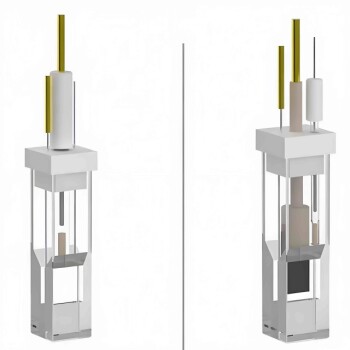
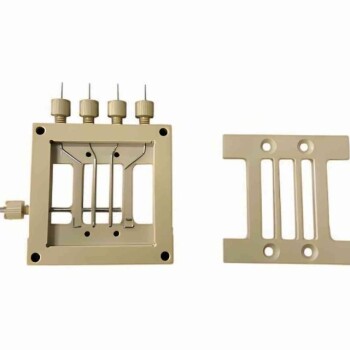
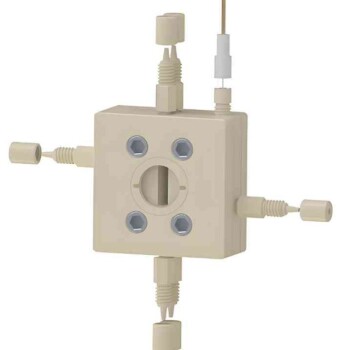
The electrolytic cell serves as the vessel for this precise engineering, providing a stable environment to regulate the electrodeposition process.
By maintaining a constant current density, the cell forces the magnesium oxide precursor to grow according to specific kinetic constraints.
Low Current Density: The Nanosheet Regime
When the electrolytic cell is set to a low current density, specifically around 3 mA/cm², the deposition process changes.
Under these conditions, the energy input favors a specific growth pattern. The precursor material organizes itself into plate-like nanosheets.
This morphology typically offers a more planar surface structure, which is distinct from the complex 3D structures formed at higher energies.
High Current Density: The Nano-flower Regime
In contrast, increasing the current density significantly alters the growth kinetics.
When the setting is raised to the range of 20–30 mA/cm², the precursor forms porous nano-flower structures.
This "flower-like" morphology is characterized by higher complexity and porosity, which fundamentally changes how reactants interact with the surface of the material.
Understanding the Trade-offs
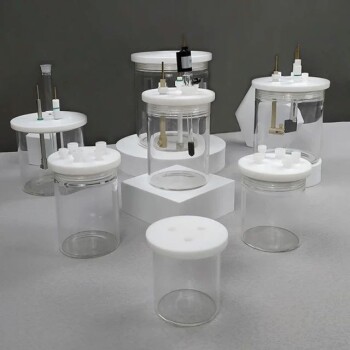
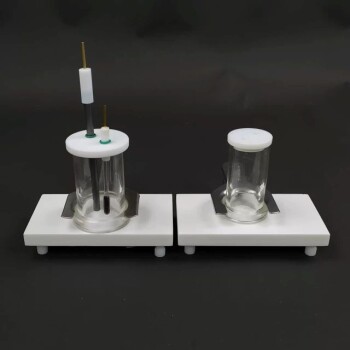
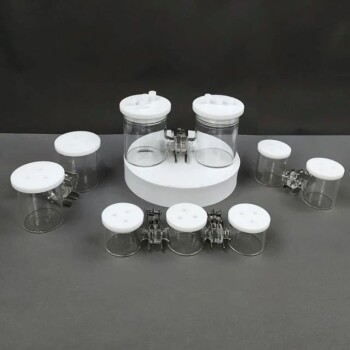
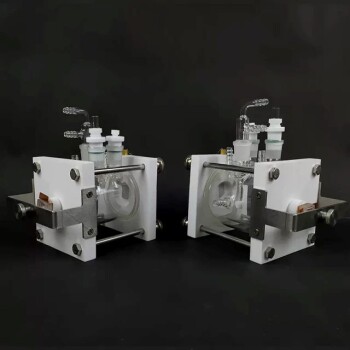
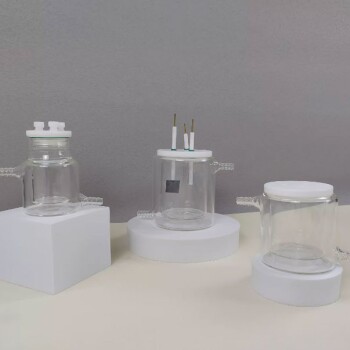
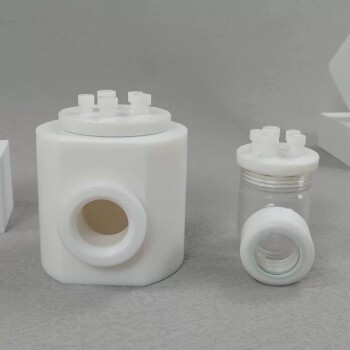
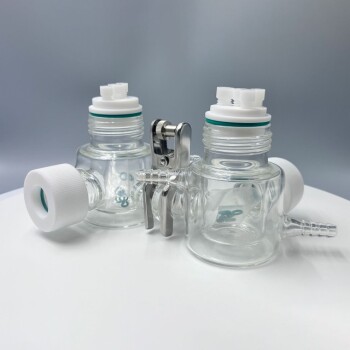
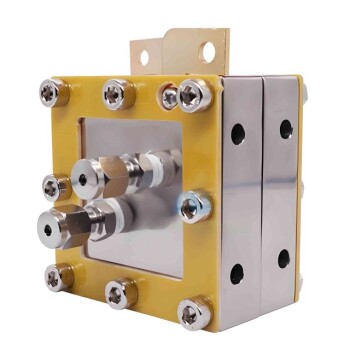
While the electrolytic cell—often designed with high-transparency glass or corrosion-resistant plastic—allows for clear observation, the choice of current density involves a functional trade-off.
Morphology Dictates Activity
You cannot simply select a current density for speed; you must select it for the desired chemical activity.
The transition from nanosheets to nano-flowers is not just cosmetic. These distinct morphologies significantly influence the final catalytic activity of the synthesized magnesium oxide.
The Necessity of Stability
To achieve these specific shapes reliably, the electrolytic cell must maintain a stable three-electrode environment.
Fluctuations in current would result in a hybrid or inconsistent morphology, potentially ruining the specific catalytic properties you are trying to engineer.
Making the Right Choice for Your Goal
The "best" current density depends entirely on the catalytic application you are targeting.
- If your primary focus is high porosity and complex 3D structure: Target a current density of 20–30 mA/cm² to synthesize porous nano-flowers.
- If your primary focus is planar, sheet-like architecture: Maintain a lower current density of 3 mA/cm² to produce plate-like nanosheets.
Ultimately, precision in setting your current density is the single most critical factor in defining the geometry and success of your magnesium oxide catalyst.
Summary Table:
| Current Density | Resulting Morphology | Structural Characteristics | Best For |
|---|---|---|---|
| Low (~3 mA/cm²) | Nanosheets | Planar, plate-like architecture | Surface-specific reactions |
| High (20–30 mA/cm²) | Nano-flowers | Complex, porous 3D structures | High porosity & surface area applications |
| Variable/Unstable | Inconsistent Hybrid | Unpredictable catalytic behavior | Not recommended for precision research |
Precision Engineering for Advanced Material Synthesis
At KINTEK, we understand that the success of your nanomaterial research depends on the stability and precision of your equipment. Whether you are synthesizing complex magnesium oxide nano-flowers or planar nanosheets, our high-performance electrolytic cells and electrodes provide the stable environment needed to maintain exact current densities.
Beyond electrochemistry, KINTEK offers a comprehensive suite of laboratory solutions tailored for researchers and industrial manufacturers:
- Battery Research Tools: Specialized consumables and equipment for energy storage innovation.
- High-Temperature Systems: Muffle, vacuum, and CVD furnaces for advanced thermal processing.
- Processing Equipment: High-pressure reactors, autoclaves, and hydraulic pellet presses.
- Sample Preparation: Crushing, milling, and sieving systems for consistent material grading.
Ready to elevate your lab's output? Our experts are here to help you select the right tools for your specific catalytic and material science applications. Contact KINTEK today to discuss your project requirements!
Related Products
- Electrolytic Electrochemical Cell with Five-Port
- PTFE Electrolytic Cell Electrochemical Cell Corrosion-Resistant Sealed and Non-Sealed
- Super Sealed Electrolytic Electrochemical Cell
- Electrolytic Electrochemical Cell Gas Diffusion Liquid Flow Reaction Cell
- Electrolytic Electrochemical Cell for Coating Evaluation
People Also Ask
- How does the design of an electrochemical electrolytic cell influence the coating uniformity? Optimize Your Catalysts
- What is the correct shutdown and disassembly procedure after an experiment? Ensure Safety and Protect Your Equipment
- What are the three essential components that comprise an electrolytic cell? Key Elements of Chemical Synthesis
- How does the design of an electrolytic cell affect the production yield of ferrate(VI)? Optimize Efficiency & Purity
- What is galvanic cell or electrolytic cell? Unlock the Secrets of Electrochemical Power