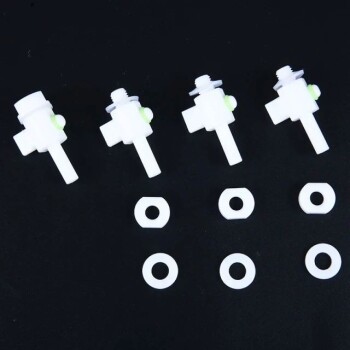
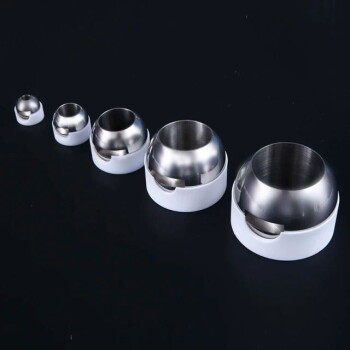
The performance of a throttle valve is the critical variable that stabilizes the reactor pressure, directly determining the consistency of the Tantalum Carbide deposition environment. By working in tandem with the vacuum pump to maintain a precise pressure setpoint (such as 6.7 kPa), the valve ensures that reacting gas molecules behave predictably, resulting in coatings with superior thickness uniformity, higher density, and repeatable microstructure.
Core Insight: The throttle valve does not just regulate airflow; it regulates the mean free path of the gas molecules. By locking in a stable pressure, the valve ensures that the distance molecules travel before colliding remains constant, which is the physical requirement for uniform and dense coating growth.
The Mechanism of Pressure Control
The Valve and Pump Synergy
In a Tantalum Carbide deposition reactor, the throttle valve and the vacuum pump operate as a synchronized unit.
While the pump provides the raw vacuum potential, the throttle valve actively modulates the conductance to counteract fluctuations.
This precise modulation allows the system to maintain a specific target pressure, such as 6.7 kPa, regardless of minor variations in gas flow or pump performance.
Stabilizing the Mean Free Path
The deepest impact of the throttle valve is on the mean free path of the reacting gas molecules.
The mean free path is the average distance a molecule travels before colliding with another molecule. This distance is inversely proportional to pressure.
If the throttle valve performs poorly and pressure fluctuates, the mean free path changes constantly. This causes chaotic variations in how gas molecules arrive at the substrate, leading to uneven growth.
Direct Impacts on Coating Quality
Achieving Thickness Uniformity
A high-performance throttle valve eliminates pressure gradients that cause uneven coating layers.
When the pressure is held constant, the distribution of gas across the chamber remains stable.
This ensures that the Tantalum Carbide layer grows at the same rate across the entire surface of the substrate, preventing "hills and valleys" in the coating thickness.
Enhancing Density and Microstructure
Pressure stability is directly linked to the density of the final coating.
Stable pressure ensures a consistent bombardment rate of the substrate. This steady deposition helps pack the atoms more tightly, reducing porosity.
Consequently, the microstructure becomes denser and more robust, significantly improving the material's mechanical properties.
Repeatability Across Batches
For industrial applications, the goal is not just one good coating, but identical coatings on every part.
A precise throttle valve ensures that the microstructural properties of the Tantalum Carbide are repeatable across different parts of the substrate and between different production runs.
Understanding the Trade-offs
Pressure vs. Temperature
While the throttle valve controls the physical behavior of the gas (pressure), it does not control the energy of the atoms upon arrival; that is the domain of substrate heating.
As noted in broader deposition contexts, thermal energy drives surface mobility and adhesion. A perfect throttle valve cannot compensate for an improper thermal profile.
The Limits of Pressure Control
You must distinguish between gas behavior and film growth mechanics.
The throttle valve ensures the gas arrives uniformly (uniformity and density). However, factors like residual stress distribution and phase selectivity are more heavily influenced by temperature control and thermal energy.
Investing in a high-end throttle valve solves uniformity and density issues, but it will not fix adhesion issues caused by poor thermal management.
Making the Right Choice for Your Goal
To optimize your Tantalum Carbide process, align your equipment focus with your specific defect patterns:
- If your primary focus is Thickness Uniformity: Prioritize a fast-response throttle valve to lock in the mean free path and eliminate pressure drift.
- If your primary focus is Film Adhesion: While maintaining pressure is necessary, you must focus your optimization efforts on substrate heating and thermal energy controls.
Ultimate Success: A high-performance throttle valve provides the stable pressure foundation required for density and uniformity, allowing your thermal controls to effectively manage adhesion and structure.
Summary Table:
| Feature Controlled | Impact on Coating Quality | Physical Mechanism |
|---|---|---|
| Pressure Stability | Thickness Uniformity | Eliminates pressure gradients and gas flow fluctuations. |
| Mean Free Path | Microstructure Consistency | Stabilizes the distance molecules travel before collision. |
| Conductance Modulation | Enhanced Density | Ensures consistent bombardment rates to reduce porosity. |
| Process Repeatability | Batch-to-Batch Reliability | Maintains identical environments across production runs. |
Elevate Your Coating Precision with KINTEK
Achieving the perfect Tantalum Carbide coating requires a synergy of precise pressure control and thermal management. At KINTEK, we specialize in providing high-performance laboratory equipment and consumables designed for the most demanding research and industrial applications.
Whether you are refining your CVD process or scaling up production, our comprehensive portfolio offers the tools you need for success:
- Advanced Thermal Solutions: High-temperature furnaces (tube, vacuum, and atmosphere) for perfect substrate heating.
- Reaction Control: High-temperature high-pressure reactors and specialized electrolytic cells.
- Sample Preparation: Precision crushing, milling, and hydraulic pellet presses for substrate readiness.
- Laboratory Essentials: High-quality ceramics, crucibles, and PTFE products to maintain purity.
Ready to eliminate thickness gradients and enhance film density? Our technical experts are here to help you select the ideal equipment for your specific deposition needs. Contact KINTEK today to optimize your lab's performance!
References
- Daejong Kim, Weon-Ju Kim. Chemical Vapor Deposition of Tantalum Carbide from TaCl5-C3H6-Ar-H2 System. DOI: 10.4191/kcers.2016.53.6.597
This article is also based on technical information from Kintek Solution Knowledge Base .
Related Products
- 304 316 Stainless Steel Vacuum Ball Valve Stop Valve for High Vacuum Systems
- Custom PTFE Teflon Parts Manufacturer for Air Valve Applications
- Custom PTFE Teflon Parts Manufacturer for PTFE Ball Valve Seat
People Also Ask
- What is high vacuum used for? Essential for Particle Beams and Advanced Lab Instruments
- Why is a high vacuum system necessary when measuring the hydrogen solubility of aluminum? Ensure Data Purity
- Why is a high vacuum system essential during the monitoring of volatiles in the graphite expansion process? Ensure Precision
- Why are Viton O-rings utilized for sealing in carbochlorination experimental setups? Ensure Safety and Seal Integrity
- Why must a laboratory vacuum pump be used to evacuate a PM-HIP capsule before it is sealed? Ensure Material Integrity