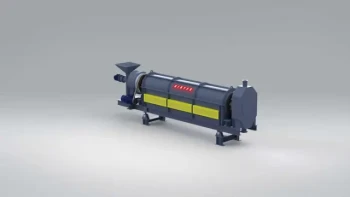
The physical environment within a hydrothermal carbonization reactor acts as a catalyst for deep thermochemical transformation. By maintaining a high temperature of approximately 180°C and generating autogenous pressure between 2 and 10 MPa, the reactor creates a subcritical water environment. This combination accelerates the carbonization process, directly modifying the biomass to synthesize functional hydrochar.
The reactor's extreme environment does not merely dry the biomass; it fundamentally re-engineers its microstructure, creating a material with a rich pore network and abundant active functional groups optimized for heavy metal adsorption.
The Critical Physical Parameters
High Temperature and Autogenous Pressure
The core mechanism of the reactor relies on sustaining a specific thermal and baric window. The process operates effectively at 180°C, a temperature sufficient to initiate chemical breakdown without complete gasification.
Simultaneously, the reactor utilizes autogenous pressure—pressure generated by the reaction itself—ranging from 2 to 10 MPa. This high-pressure environment is essential for forcing the reaction kinetics beyond what is possible at atmospheric conditions.
The Role of Subcritical Water
Unlike dry pyrolysis, this process occurs in an aqueous medium (liquid phase). The reactor keeps water in a subcritical state, where it acts as both a solvent and a reactant.
This liquid-phase environment facilitates deep conversion, allowing for uniform heat transfer and chemical interaction throughout the biomass substrate.
Engineering the Hydrochar Microstructure
Increasing Surface Functionality
The harsh physical conditions within the reactor actively modify the surface chemistry of the material. The process significantly increases the number of active functional groups on the hydrochar's surface.
These oxygen-containing groups are chemically reactive sites. They are the primary mechanism by which the material interacts with other substances in subsequent applications.
Inducing Rich Pore Structures
The combination of high pressure and temperature physically alters the morphology of the carbon. The reaction induces the formation of a rich, complex pore structure within the hydrochar.
This porosity drastically increases the specific surface area of the material. It transforms a dense biomass feedstock into a highly porous framework capable of trapping microscopic particles.
Translating Structure to Function
Enhanced Adsorption Capacity
The synthesis of functional groups and pore structures directly correlates to performance. The resulting hydrochar exhibits a significantly enhanced adsorption capacity, particularly for heavy metals.
Specific contaminants, such as cadmium ions, are effectively trapped by the material. The porous network captures the ions physically, while the surface functional groups bind them chemically.
Combustion Properties
Beyond adsorption, the deep carbonization facilitates changes in energy density. The structural characteristics imparted by the reactor also determine the hydrochar's combustion kinetic properties, making it a viable solid fuel precursor.
Understanding the Trade-offs
Equipment and Safety Demands
Operating at autogenous pressures of up to 10 MPa requires robust reactor design. The equipment must be rated to withstand significant internal stress, which increases capital and safety compliance costs compared to atmospheric processes.
Process Control Sensitivity
The quality of the hydrochar is tightly coupled to maintaining the 180°C threshold. Deviations in temperature or pressure can lead to incomplete carbonization or an underdeveloped pore structure, compromising the final adsorption performance.
Making the Right Choice for Your Goal
To maximize the utility of hydrochar, you must align the reactor's capabilities with your specific end-use requirements:
- If your primary focus is Environmental Remediation: Prioritize the development of active functional groups and porosity to maximize the adsorption of heavy metals like cadmium.
- If your primary focus is Solid Fuel Production: Focus on the depth of carbonization and combustion kinetics to ensure stable energy release.
The hydrothermal carbonization reactor is not simply a heating vessel; it is a precision instrument for tuning the chemical and physical architecture of carbon materials.
Summary Table:
| Parameter | Operating Condition | Impact on Hydrochar Synthesis |
|---|---|---|
| Temperature | ~180°C | Initiates chemical breakdown and deep thermochemical conversion. |
| Pressure | 2 - 10 MPa (Autogenous) | Accelerates reaction kinetics and forces phase transformations. |
| Medium | Subcritical Water | Acts as a solvent and reactant for uniform heat transfer. |
| Structural Change | Micro-pore Induction | Increases specific surface area for enhanced adsorption. |
| Surface Chemistry | Functional Group Enrichment | Creates active sites for heavy metal (e.g., Cadmium) binding. |
Unlock Precision Carbon Engineering with KINTEK
Transform your biomass research with high-performance hydrothermal carbonization solutions. KINTEK specializes in advanced laboratory equipment, offering the high-temperature high-pressure reactors and autoclaves necessary to sustain the critical 2-10 MPa environments required for superior hydrochar synthesis.
Whether you are focusing on environmental remediation via heavy metal adsorption or developing solid fuel precursors with optimized combustion kinetics, our robust reactor systems provide the precise thermal and baric control your projects demand. Beyond reactors, KINTEK supports your entire workflow with crushing systems, sieving equipment, and specialized consumables like PTFE products and ceramics.
Ready to re-engineer your materials? Contact our laboratory specialists today to find the perfect reactor configuration for your research goals!
References
- R.E. Panzer, Konstantinos Kavallieratos. o-Sulfonamidophenols and analogs as extractants for integrated actinide and cesium removal from alkaline high-level waste. DOI: 10.21175/rad.abstr.book.2023.45.10
This article is also based on technical information from Kintek Solution Knowledge Base .
Related Products
- High Pressure Laboratory Autoclave Reactor for Hydrothermal Synthesis
- Customizable Laboratory High Temperature High Pressure Reactors for Diverse Scientific Applications
- Electric Rotary Kiln Small Rotary Furnace for Activated Carbon Regeneration
- Customer Made Versatile CVD Tube Furnace Chemical Vapor Deposition Chamber System Equipment
- Electric Rotary Kiln Small Rotary Furnace Biomass Pyrolysis Plant
People Also Ask
- What role does a high-pressure reactor (autoclave) play in the synthesis of NiCuFe-LDH? Master Hydrothermal Growth
- What Role Does a High-Pressure Reactor or Autoclave Play in HA Catalyst Synthesis? Achieve High Surface Area Materials
- What equipment is required for hydrothermal synthesis of Ga0.25Zn4.67S5.08? Optimize Your Semiconductor Production
- What is the function of a high-pressure reactor in the hydrothermal synthesis of boehmite? Expert Process Insights
- What role does an autoclave play in the synthesis of MnO2 nanofibers? Mastering Hydrothermal Growth