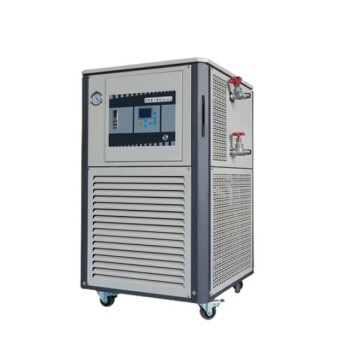
A constant temperature drying oven functions as a precision instrument for quantifying biomass conversion by isolating solid residues from liquid byproducts. By subjecting filtered solids to a controlled thermal environment—typically 70°C—the oven eliminates moisture interference, ensuring the final mass measurement reflects only the dry pulp content necessary for accurate yield calculation.
Core Insight: In biomass processing, water weight is a contaminant that distorts data. The drying oven’s primary role is to reduce solid residues to a "constant weight," creating a reliable baseline for comparing pre-processing biomass against post-processing pulp to determine true process efficiency.
The Mechanics of Accurate Measurement
Eliminating Moisture Interference
The presence of residual moisture or solvents in biomass pulp drastically inflates mass readings.
A constant temperature oven utilizes controlled thermal convection to drive off these volatiles. According to standard protocols, a temperature of 70°C is often utilized to ensure thorough drying without thermally degrading the biological material itself.
Achieving Constant Weight
Drying is not merely a function of time; it is a function of stability.
The oven is used to dry the material until it reaches a constant weight. This indicates that all evaporable liquids have been removed, and the mass reading represents the true weight of the solid residue. This step is non-negotiable for reproducible results.
Evaluating Process Efficiency
Calculating Pulp Yield
Once moisture is removed, technicians can obtain the precise mass of the solid residue.
This dry mass is compared against the initial mass of the biomass before hydrolysis. This comparison is the mathematical foundation for calculating the specific pulp yield, expressed as a percentage of the original material.
Assessing Hydrothermal Liquefaction
The data derived from the dried samples serves a diagnostic purpose.
By determining the pulp yield, operators can evaluate the conversion degree of the biomass components. This metric is the direct indicator of the overall efficiency of the hydrothermal liquefaction process, revealing how effectively the raw biomass was broken down.
Common Pitfalls to Avoid
Temperature Overshoot
While heat is necessary for drying, excessive temperatures can introduce errors.
If the oven temperature significantly exceeds the recommended 70°C, the biomass residue may scorch or decompose. This loss of organic mass leads to an underestimation of the pulp yield.
Premature Measurement
Stopping the drying process before "constant weight" is achieved is a frequent source of error.
If the sample still contains trace moisture, the yield calculation will be artificially high. Relying on a fixed time duration rather than mass stability often results in inaccurate efficiency assessments.
Making the Right Choice for Your Goal
To maximize the utility of your drying process, align your protocol with your specific analytical objectives:
- If your primary focus is Process Efficiency: Prioritize precise "constant weight" measurements to accurately determine the conversion degree of biomass during hydrolysis.
- If your primary focus is Sample Preservation: Adhere strictly to the 70°C temperature limit to prevent thermal degradation of the pulp residue during the drying phase.
Precision in drying is the prerequisite for precision in data.
Summary Table:
| Parameter | Standard Requirement | Purpose in Pulp Yield Determination |
|---|---|---|
| Drying Temperature | Typically 70°C | Prevents thermal degradation while removing moisture. |
| Target State | Constant Weight | Ensures all volatiles are removed for accurate dry mass. |
| Key Metric | Conversion Degree | Measures process efficiency of hydrothermal liquefaction. |
| Primary Output | Percentage Yield | Compares dry residue against initial biomass mass. |
Optimize Your Biomass Research with KINTEK Precision
Inaccurate moisture removal can compromise your entire process efficiency data. KINTEK specializes in high-performance laboratory equipment designed for the most demanding biomass and material science applications. Whether you need high-precision constant temperature drying ovens, crushing and milling systems for sample preparation, or high-temperature reactors for hydrothermal liquefaction, we provide the tools necessary for reproducible, scientific results.
Why choose KINTEK?
- Unmatched Precision: Advanced thermal control to prevent sample scorching.
- Comprehensive Solutions: From pellet presses to PTFE consumables and cooling solutions.
- Expert Support: Tailored equipment recommendations for laboratories and research facilities.
Don't let moisture interference distort your data. Contact KINTEK today to upgrade your laboratory with our premium drying ovens and research consumables!
References
- İrem Deniz. Marin biyokütlenin hidrotermal sıvılaştırılması: Entegre bir proses. DOI: 10.21541/apjes.320484
This article is also based on technical information from Kintek Solution Knowledge Base .
Related Products
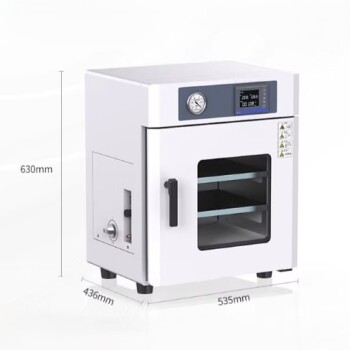
- 23L Laboratory Vacuum Drying Oven
- Laboratory Scientific Electric Heating Blast Drying Oven
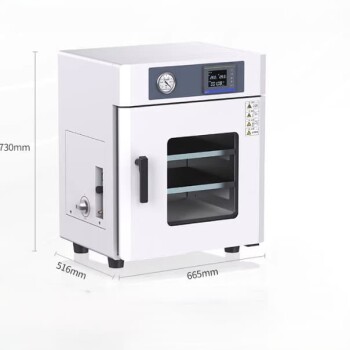
- 56L Vertical Laboratory Vacuum Drying Oven
- 10L Chilling Circulator Cooling Water Bath Low Temperature Constant Temperature Reaction Bath
- High Temperature Muffle Oven Furnace for Laboratory Debinding and Pre Sintering
People Also Ask
- Why is a laboratory vacuum drying oven recommended for rice straw residues? Protect Your Biomass Integrity
- What role does a laboratory vacuum drying oven play in the preparation of modified multi-walled carbon nanotubes?
- What is the importance of using a laboratory vacuum drying oven? Preserving Slow-Release Microcapsule Integrity
- Why is a Laboratory Vacuum Drying Oven recommended for PBAT microspheres? Protect Sensitive Polymer Integrity
- What role does a laboratory vacuum drying oven play in processing nanoparticle powder samples? Protect Sample Integrity