In the intermediate stages of catalyst preparation, a laboratory oven serves as a precision drying instrument designed to remove solvents such as water or ethanol following washing and loading procedures. By maintaining a controlled thermal environment, typically ranging from 60°C to 120°C depending on the material, the oven ensures the gentle elimination of physically adsorbed moisture without compromising the catalyst's structural integrity.
The primary value of the laboratory oven is not merely drying, but the preservation of particle distribution. By controlling the evaporation rate, the oven prevents the rapid agglomeration of nanoparticles and the collapse of pore structures that typically result from uncontrolled dehydration or immediate high-temperature exposure.
Preserving Catalyst Nanostructure
Preventing Nanoparticle Agglomeration
The most critical function of the laboratory oven during the intermediate stage is maintaining the high dispersion of catalyst components.
When catalyst powders are wet with solvents like ethanol or water, the metal nanoparticles are vulnerable. Rapid dehydration can force these particles to clump together, effectively reducing the active surface area.
By setting the oven to a moderate temperature, often around 60°C, the solvent is removed slowly. This controlled pace keeps the nanoparticles distinct and evenly distributed across the support surface.
Avoiding Pore Structure Collapse
Catalysts rely on intricate porous networks to function effectively.
If a wet catalyst is immediately subjected to high-temperature calcination, the trapped moisture can evaporate violently. This internal pressure can fracture the material or cause the pore structure to collapse.
The laboratory oven acts as a stabilizer, removing this moisture gently at temperatures like 115°C. This ensures the material is physically stable before it enters the harsh environment of a calcination furnace.
Pre-treatment of Raw Materials
Facilitating Efficient Grinding
Beyond the final catalyst powder, the oven is also essential for preparing raw precursors, such as waste eggshells used as calcium sources.
Materials are often dried at higher temperatures, approximately 120°C, for extended periods (e.g., 12 hours). This completely removes adsorbed moisture that would otherwise cause the powder to clump or turn into a paste during grinding.
Ensuring Uniform Particle Size
Thorough drying in the oven guarantees that the material is brittle and moisture-free.
This allows for a consistent grind, leading to a uniform particle size distribution. Uniform particles are necessary for efficient chemical transformation during subsequent processing steps.
Understanding the Trade-offs
The Risk of Thermal Overshoot
While removing moisture is essential, the temperature setting is a critical variable that requires balance.
Setting the oven temperature too high can mimic the effects of calcination prematurely. This can lead to the very particle agglomeration you are trying to avoid, particularly with sensitive metal nanoparticles.
The Cost of Incomplete Drying
Conversely, insufficient drying time or temperature can leave residual solvents deep within the catalyst pores.
If these solvents remain during the high-temperature activation phase, they may cause "violent evaporation." This structural trauma can degrade the mechanical strength of the final catalyst bead or pellet.
Making the Right Choice for Your Goal
To optimize your catalyst preparation, you must match the oven parameters to the specific stage of synthesis.
- If your primary focus is preserving high dispersion of metal nanoparticles: Utilize a lower temperature setting (approx. 60°C) to dry the material slowly and prevent particle clumping.
- If your primary focus is preparing raw precursors or ensuring structural stability: Utilize a higher temperature setting (approx. 115°C–120°C) to ensure complete moisture removal prior to grinding or calcination.
Correctly utilizing the laboratory oven ensures that your catalyst retains the surface area and pore architecture required for optimal chemical performance.
Summary Table:
| Process Stage | Typical Temp Range | Primary Objective | Key Benefit |
|---|---|---|---|
| Intermediate Drying | 60°C - 80°C | Solvent removal (e.g., ethanol) | Prevents nanoparticle agglomeration |
| Pre-Calcination | 110°C - 120°C | Complete dehydration | Prevents pore collapse & structural trauma |
| Precursor Preparation | 120°C (12+ hrs) | Raw material drying | Ensures brittle material for uniform grinding |
| Solvent Removal | Varies | Vapor pressure control | Maintains high active surface area |
Elevate Your Catalyst Synthesis with KINTEK Precision
Precise thermal control is the difference between a high-performance catalyst and a failed batch. KINTEK specializes in high-quality laboratory equipment designed to meet the rigorous demands of material science. From our precision laboratory ovens for gentle drying to advanced high-temperature muffle and vacuum furnaces for calcination, we provide the tools you need for every stage of synthesis.
Our extensive portfolio for researchers includes:
- Thermal Solutions: Muffle, tube, and vacuum furnaces for activation and calcination.
- Material Processing: Crushing, milling systems, and hydraulic presses for pellet preparation.
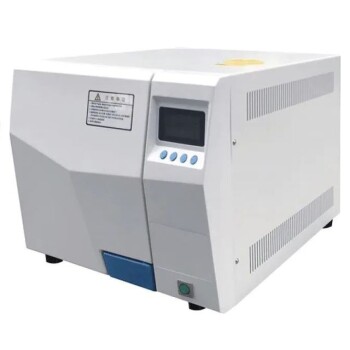
- Lab Essentials: High-pressure reactors, autoclaves, and chemical-resistant PTFE/ceramic consumables.
Ready to optimize your research outcomes? Contact our technical experts today to find the perfect equipment solution for your laboratory.
References
- Martin J. Taylor, Georgios Kyriakou. Atom efficient PtCu bimetallic catalysts and ultra dilute alloys for the selective hydrogenation of furfural. DOI: 10.1016/j.apcatb.2020.119737
This article is also based on technical information from Kintek Solution Knowledge Base .
Related Products
- Laboratory Scientific Electric Heating Blast Drying Oven
- 56L Vertical Laboratory Vacuum Drying Oven
- 23L Laboratory Vacuum Drying Oven
- 1200℃ Muffle Furnace Oven for Laboratory
- 1700℃ Muffle Oven Furnace for Laboratory
People Also Ask
- How does a laboratory electric drying oven contribute to the formation of the initial coating? Expert Insights
- What role does a precision laboratory drying oven play in the synthesis of GO-PANI nanocomposites? Protect Material Integrity
- What role does a laboratory drying oven play in the preparation of zinc oxide nanoparticle precursors?
- What is the necessity of using a laboratory drying oven when processing MoO3/GO composite nanopowders? Find out here.
- What is the role of a laboratory drying oven in cellulose citrate production? Ensure Material Stability & Purity