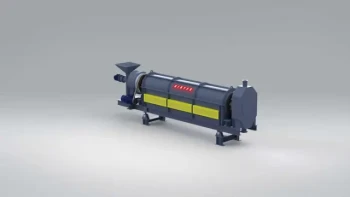
A tubular fluidized reactor functions as a precision testing environment designed to simulate industrial waste gas conditions. By placing catalyst-coated plates—such as titanium alloy with oxide films—inside a heated tube and rigorously controlling gas flow, researchers can measure exactly how effectively the coating converts carbon monoxide (CO) to carbon dioxide (CO2).
The core value of this apparatus lies in its ability to isolate the chemical activity of the coating. It provides the thermal stability and flow control necessary to determine the material’s specific ignition temperature and conversion efficiency without environmental interference.
Simulating Industrial Reaction Environments
To evaluate a catalyst effectively, you must replicate the harsh conditions it will face in real-world applications.
Precise Environmental Control
The reactor utilizes a sophisticated heating system combined with flow rate controllers. This allows researchers to mimic the specific thermal and aerodynamic conditions found in industrial exhaust gas treatment systems.
The Catalytic Subject
Inside the reactor, the test subjects are typically substrates, such as titanium alloy plates, treated with composite oxide films (like Co-Mo-Zr coatings). These coated plates act as the primary catalyst for the reaction being monitored.
The Target Reaction
The system is specifically tuned to evaluate the oxidation of carbon monoxide (CO). By monitoring the input and output gases, the reactor quantifies the conversion of toxic CO into stable carbon dioxide (CO2).
Ensuring Data Integrity with Inert Materials
A common challenge in high-temperature testing is ensuring that the reactor vessel itself does not participate in the chemical reaction.
The Role of High-Purity Quartz
To solve this, high-purity quartz glass is often used for the reactor tube. Quartz offers superior chemical inertness and thermal stability, which is critical when dealing with acidic or oxidizing gases at high heat.
Eliminating Background Noise
Unlike metal reactors, a quartz tube prevents side reactions between the gas and the reactor's internal walls. This ensures that any measured gas conversion is derived exclusively from the activity of the oxide coating, yielding highly accurate performance data.
Critical Performance Metrics
The reactor is not just about making a reaction happen; it is about measuring specific benchmarks of efficiency.
Determining Light-off Temperature
One of the primary goals is to identify the "light-off" or ignition temperature. This is the specific thermal point at which the catalyst begins to actively facilitate the reaction.
Measuring Conversion Efficiency
The equipment allows for the calculation of the conversion rate. This metric defines the percentage of harmful gas successfully treated, verifying the potential of the coating for air purification applications.
Understanding the Trade-offs
While this reactor setup is the gold standard for laboratory testing, it requires careful management of variables to remain effective.
Flow Dynamics Sensitivity
The reliability of the data depends heavily on the precise control of flow rates. Inconsistent gas flow can lead to uneven contact between the gas and the solid catalyst, resulting in skewed conversion data.
Material Limitations
While quartz prevents wall reactions, it is fragile compared to metal. This limits the physical pressure the system can withstand, making it ideal for atmospheric simulations but less suitable for high-pressure industrial modeling.
Making the Right Choice for Your Goal
When designing your experimental setup, your specific objectives should dictate your configuration.
- If your primary focus is fundamental material research: Prioritize a high-purity quartz tube construction to ensure that 100% of the measured activity comes from your coating, not the reactor walls.
- If your primary focus is industrial application scaling: Focus on the "light-off" temperature data, as this metric determines the energy efficiency and feasibility of the catalyst in a real-world plant.
Ultimately, the tubular fluidized reactor bridges the gap between material synthesis and industrial viability by providing a pure, controlled stage for catalytic performance.
Summary Table:
| Feature | Description | Benefit in Testing |
|---|---|---|
| Reactor Vessel | High-purity quartz glass tube | Ensures chemical inertness; eliminates background reactions |
| Heating System | Integrated thermal control | Precise simulation of industrial waste gas temperatures |
| Target Reaction | CO to CO2 oxidation | Quantifies catalytic conversion efficiency |
| Primary Metric | Light-off temperature | Identifies the exact point of catalytic activation |
| Flow Control | Aerodynamic simulation | Ensures consistent gas-to-catalyst contact dynamics |
Elevate Your Material Research with KINTEK Precision
Unlock the full potential of your catalytic coatings with KINTEK’s industry-leading laboratory solutions. Whether you are conducting fundamental research with our high-purity quartz reactors or scaling industrial processes using our advanced high-temperature furnaces (muffle, tube, vacuum) and high-pressure reactors, we provide the accuracy your data demands.
From crushing and milling systems for substrate preparation to specialized ceramics and crucibles, KINTEK specializes in laboratory equipment and consumables designed for peak performance. Our team is ready to help you optimize your experimental setup for maximum reliability.
Ready to achieve superior data integrity? Contact KINTEK today to find the perfect solution for your lab!
References
- N. Sakhnenko, Alexander Galak. A study of synthesis and properties of manganese-containing oxide coatings on alloy VT1-0. DOI: 10.15587/1729-4061.2016.69390
This article is also based on technical information from Kintek Solution Knowledge Base .
Related Products
- Customer Made Versatile CVD Tube Furnace Chemical Vapor Deposition Chamber System Equipment
- Multi Heating Zones CVD Tube Furnace Machine Chemical Vapor Deposition Chamber System Equipment
- 1200℃ Split Tube Furnace with Quartz Tube Laboratory Tubular Furnace
- Vertical Laboratory Tube Furnace
- Custom PTFE Teflon Parts Manufacturer for Microwave Digestion Tank
People Also Ask
- What is a CVD tube furnace? A Complete Guide to Thin-Film Deposition
- What is the function of a high-temperature CVD tube furnace in 3D graphene foam prep? Master 3D Nanomaterial Growth
- How does a CVD tube furnace inhibit the sintering of silver supports? Boost Membrane Durability and Performance
- What is the function of a tube furnace in CVD SiC synthesis? Achieving Ultra-Pure Silicon Carbide Powders
- What is the difference between hot wall CVD and cold wall CVD? Choose the Right System for Your Process