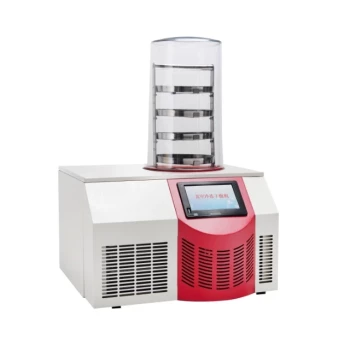
In the preparation of NCM83 cathode electrodes, a vacuum drying oven is utilized to treat coated electrode sheets at elevated temperatures, specifically around 120°C, under a controlled vacuum environment. This critical processing step is designed to thoroughly extract N-Methyl-2-pyrrolidone (NMP) solvents and residual moisture from the electrode slurry after it has been coated onto the current collector.
The vacuum drying oven acts as a stabilization chamber; by lowering the boiling point of solvents, it ensures the complete removal of volatiles without oxidizing the active material, directly safeguarding the battery against electrolyte decomposition and cycle degradation.
The Critical Mechanisms of Action
Efficient Solvent and Moisture Removal
The primary objective of this phase is the elimination of N-Methyl-2-pyrrolidone (NMP) and trace moisture. The vacuum environment lowers the boiling point of these liquids, facilitating their evaporation from the deep micropores of the electrode structure.
Removing these residues is non-negotiable. If NMP or water remains within the electrode, they can trigger internal side reactions that compromise the cell's electrochemical performance.
Prevention of Material Oxidation
Heating NCM83 cathode materials to high temperatures in the presence of air can lead to surface degradation. The vacuum oven mitigates this risk by removing atmospheric oxygen during the heating process.
This oxygen-deprived environment ensures the chemical stability of the active material is maintained even at the requisite drying temperature of 120°C.
Ensuring Structural Integrity
Proper drying is essential for the physical mechanics of the electrode. By removing solvents uniformly, the process ensures strong adhesion between the NCM83 active material and the metal current collector.
This structural bond prevents the electrode material from delaminating during battery assembly or operation, which is vital for maintaining consistent conductivity.
Operational Parameters
Temperature and Duration
For NCM83 electrodes, the standard operating temperature is set to 120°C. The process is typically conducted over an extended period, often described as overnight or approximately 12 hours.
This extended duration ensures that heat penetrates the entire coating thickness and that solvent removal is exhaustive, not just superficial.
The Role of Negative Pressure
The vacuum creates a negative pressure environment that accelerates drying dynamics. It allows for the volatilization of organic residues that would otherwise be difficult to remove at atmospheric pressure without damaging the components.
Understanding the Trade-offs
Thermal Stress vs. Thorough Drying
A balance must be struck between applying enough heat to remove solvents and preserving the material's integrity. While 120°C is standard, deviations can be problematic; too low a temperature leaves residual NMP, leading to electrolyte decomposition.
Vacuum Necessity vs. Process Complexity
Using a vacuum adds complexity compared to standard convection drying, but it is a necessary trade-off to prevent oxidation. Drying in a standard oven at these temperatures would likely degrade the surface of the NCM83 particles, reducing the battery's capacity before it is even assembled.
Making the Right Choice for Your Goal
When configuring your drying protocol for NCM83, prioritize your parameters based on the specific failure mode you are trying to avoid.
- If your primary focus is Cycle Stability: Ensure the drying time is extended (e.g., 12 hours) to remove every trace of moisture, as this prevents side reactions that degrade capacity over time.
- If your primary focus is Mechanical Integrity: Verify that the temperature ramp and hold at 120°C are consistent, ensuring the binder cures correctly for maximum adhesion to the current collector.
By strictly controlling the vacuum and temperature profile, you transform a simple drying step into a critical quality assurance measure for high-performance batteries.
Summary Table:
| Feature | Parameter | Impact on NCM83 Cathode |
|---|---|---|
| Drying Temperature | 120°C | Facilitates NMP evaporation without damaging active material |
| Atmosphere | Vacuum (Negative Pressure) | Prevents oxidation and lowers solvent boiling points |
| Process Duration | ~12 Hours (Overnight) | Ensures deep extraction of moisture from micropores |
| Key Outcome | Adhesion & Purity | Prevents delamination and electrolyte decomposition |
Elevate Your Battery Research with KINTEK Precision Solutions
High-performance NCM83 cathodes demand rigorous thermal processing to ensure stability and longevity. KINTEK specializes in advanced laboratory equipment, providing the precise vacuum drying ovens and cooling solutions necessary to eliminate moisture and protect your active materials from oxidation.
From high-temperature vacuum furnaces and hydraulic pellet presses to battery research tools and essential ceramics, we deliver the comprehensive infrastructure your lab needs for success.
Ready to optimize your electrode drying protocol? Contact our technical experts today to discover how KINTEK’s specialized range of high-temperature ovens and battery consumables can enhance your research efficiency and material integrity.
Related Products
- 56L Vertical Laboratory Vacuum Drying Oven
- 23L Laboratory Vacuum Drying Oven
- Laboratory Scientific Electric Heating Blast Drying Oven
- Benchtop Laboratory Vacuum Freeze Dryer
- Dental Porcelain Zirconia Sintering Ceramic Vacuum Press Furnace
People Also Ask
- Why is a laboratory vacuum drying oven recommended for rice straw residues? Protect Your Biomass Integrity
- What role does a laboratory vacuum drying oven play in the preparation of modified multi-walled carbon nanotubes?
- What is the importance of using a laboratory vacuum drying oven? Preserving Slow-Release Microcapsule Integrity
- Why is a Laboratory Vacuum Drying Oven recommended for PBAT microspheres? Protect Sensitive Polymer Integrity
- What role does a laboratory vacuum drying oven play in processing nanoparticle powder samples? Protect Sample Integrity