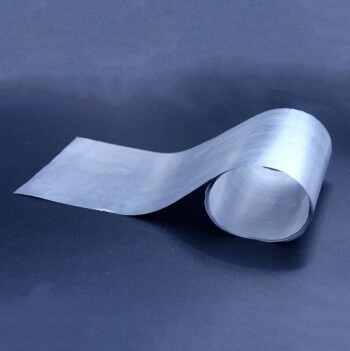
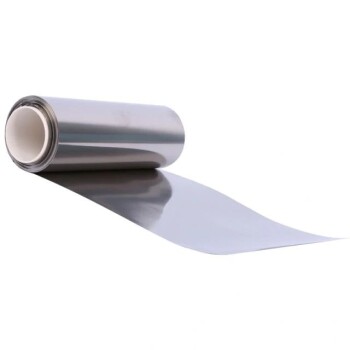
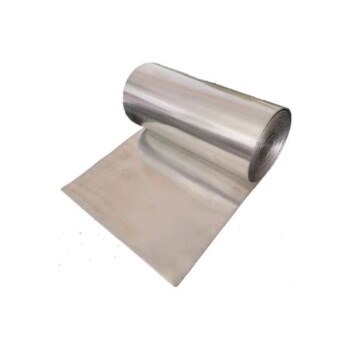
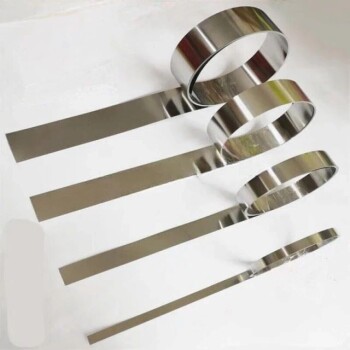
In the assembly of cold sintering molds, aluminum foil is utilized as a vital isolation layer positioned directly between the composite powder and the mold punches. Its primary function is to prevent the powder from adhering to the upper and lower metal punches during the high-pressure sintering process.
Core Takeaway Aluminum foil acts as a sacrificial barrier that facilitates clean demolding by preventing powder adhesion. Simultaneously, it protects precision tooling from wear and corrosion while ensuring the final electrolyte pellet retains a flat, uniform surface.
The Mechanics of Isolation
Strategic Placement
During the assembly phase, the aluminum foil is inserted as a physical barrier. It effectively separates the raw composite material from the mechanical components of the press.
Preventing Adhesion
Under the pressure of cold sintering, composite powders can adhere to metal surfaces. The foil eliminates this risk by preventing direct contact between the powder and the punches.
Facilitating Demolding
By stopping adhesion before it occurs, the foil ensures that the finished pellet releases easily from the mold. This streamlines the extraction process and reduces the risk of damaging the sample.
Asset Protection and Quality Control
Minimizing Tool Wear
Mold punches are precision instruments that can degrade over time. The foil layer protects these mold surfaces from the abrasive wear caused by direct contact with the powder.
Resisting Corrosion
In addition to physical wear, the mold environment can be chemically active. The aluminum foil serves as a shield, protecting the mold surfaces from potential chemical corrosion.
Ensuring Surface Flatness
Beyond protection, the foil contributes to the geometric integrity of the sample. It ensures that the resulting electrolyte pellet achieves a flat surface, which is essential for accurate characterization.
Common Pitfalls to Avoid
The Risk of Omission
Skipping the isolation layer is a critical error in assembly. Without the foil, you risk the powder bonding to the punches, which can seize the mold or ruin the sample during extraction.
Consumable Management
As a designated consumable, the foil is not intended for permanent reuse. It acts as a sacrificial layer to ensure the longevity of the permanent tooling.
Making the Right Choice for Your Goal
To maximize the efficiency of your cold sintering process, consider how this simple addition impacts your workflow:
- If your primary focus is tooling longevity: Prioritize the use of foil to shield expensive punches from cumulative wear and chemical corrosion.
- If your primary focus is sample integrity: Utilize the foil to ensure a flat surface finish and to prevent fractures caused by difficult demolding.
By consistently applying this isolation layer, you protect your equipment investment while ensuring high-quality, reproducible pellet fabrication.
Summary Table:
| Feature | Role of Aluminum Foil in Cold Sintering |
|---|---|
| Primary Function | Acts as an isolation barrier between powder and metal punches |
| Key Benefit | Prevents powder adhesion for easy, damage-free demolding |
| Tool Protection | Shields precision punches from abrasive wear and chemical corrosion |
| Sample Quality | Ensures high surface flatness and geometric integrity of the pellet |
| Usage Type | Sacrificial consumable designed for single-use protection |
Elevate Your Material Research with KINTEK Precision Solutions
Don't let tool wear or sample adhesion compromise your research outcomes. At KINTEK, we understand the nuances of material fabrication, providing high-quality hydraulic presses (pellet, hot, isostatic) and precision crushing and milling systems designed for the most demanding applications.
Whether you are performing cold sintering or advanced thermal processing, our comprehensive portfolio—including high-temperature furnaces, high-pressure reactors, and specialized battery research tools—is engineered to deliver accuracy and durability. Protect your investment and ensure reproducible results with our premium lab consumables and equipment.
Ready to optimize your lab's efficiency? Contact KINTEK today to discover how our tailored solutions can support your next breakthrough!
Related Products
- Aluminum Foil Current Collector for Lithium Battery
- Professional Cutting Tools for Carbon Paper Cloth Diaphragm Copper Aluminum Foil and More
- Aluminum-Plastic Flexible Packaging Film for Lithium Battery Packaging
- Advanced Engineering Fine Ceramics Aluminum Nitride (AlN) Ceramic Sheet
- High-Purity Titanium Foil and Sheet for Industrial Applications
People Also Ask
- Why is aluminum foil selected as the current collector for F-HCNT electrodes? Superior Stability & Conductivity
- How to tell if a lithium-ion battery is bad? Spot the critical signs of failure before it's too late.
- How to check if a lithium battery is good? Safely Test Voltage, Capacity & Internal Resistance
- Is there a way to test lithium batteries? Understand Voltage vs. True Health
- What is the significance of using a 2032-type coin cell configuration? Isolate Intrinsic Graphene Performance.