Knowledge How sustainable is selective laser sintering? Weighing Material Waste vs. Energy Use
Author avatar

Tech Team · Kintek Solution

Updated 6 days ago

How sustainable is selective laser sintering? Weighing Material Waste vs. Energy Use


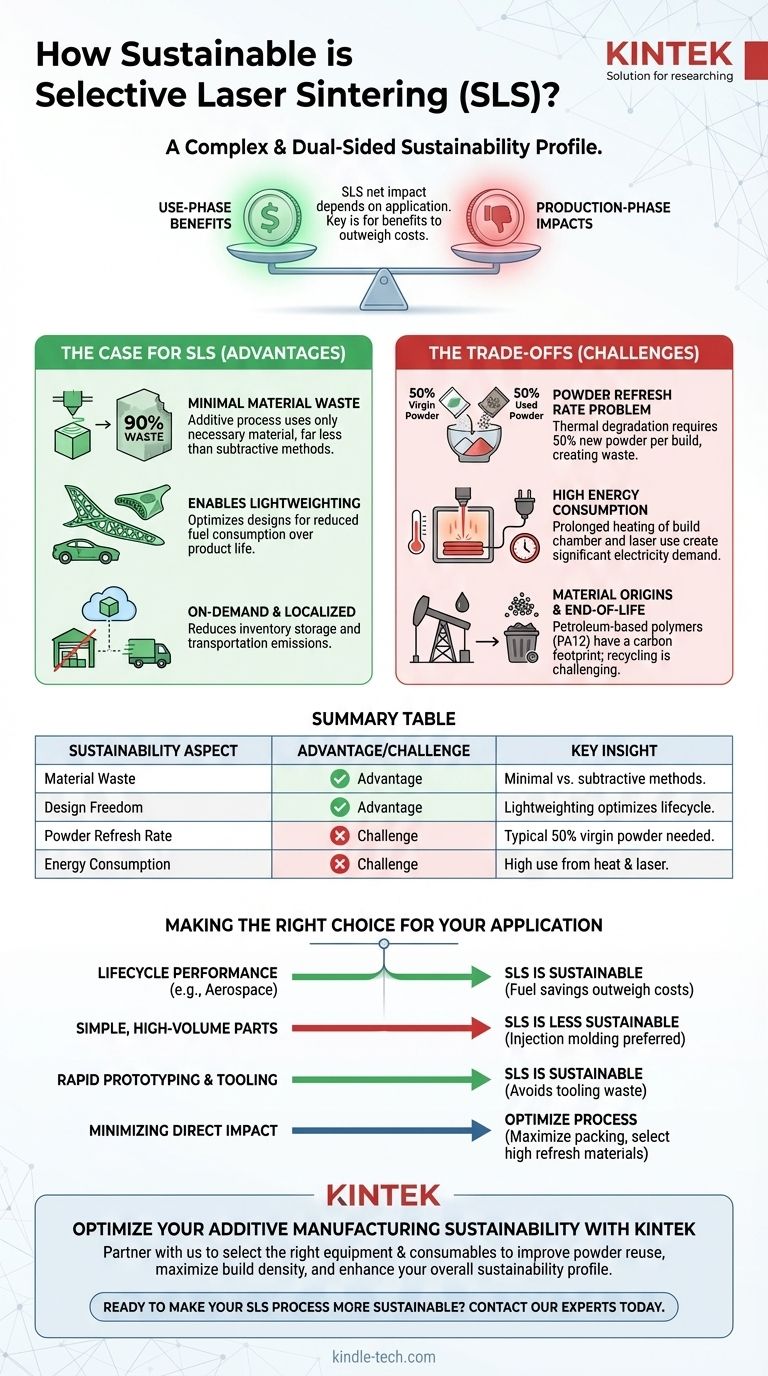
At its core, Selective Laser Sintering (SLS) presents a complex and dual-sided sustainability profile. While the technology offers significant advantages by minimizing material waste per part and enabling highly optimized, lightweight designs, it faces considerable challenges related to high energy consumption and the lifecycle of its powdered materials. Its net environmental impact is not inherent to the technology itself, but rather how it is applied.

While SLS enables the creation of lightweight parts that dramatically improve sustainability during a product's use-phase, the manufacturing process itself carries a notable environmental cost. The key to sustainability with SLS is to ensure the use-phase benefits decisively outweigh the production-phase impacts.

How sustainable is selective laser sintering? Weighing Material Waste vs. Energy Use

The Case for SLS as a Sustainable Technology

The primary sustainability benefits of SLS are centered on how it changes the design and logistics of manufacturing, moving away from the inefficiencies of traditional methods.

Minimal Material Waste in Part Creation

Unlike subtractive manufacturing (like CNC machining), which carves a part from a solid block and can waste up to 90% of the raw material, SLS is an additive process.

It builds parts layer-by-layer, using only the material necessary for the part's geometry and its supports. This results in significantly less direct production waste.

Enabling Lightweight and Optimized Designs

SLS gives engineers the freedom to create complex internal geometries, such as lattices and organically-shaped structures, that are impossible to produce with other methods.

This capability, known as lightweighting, is critical in industries like aerospace and automotive. A lighter part on an airplane or vehicle reduces fuel consumption over its entire operational life, creating a massive downstream environmental benefit.

On-Demand and Localized Production

SLS technology is tool-less, meaning it requires no molds or custom fixtures. This allows for on-demand production of parts, reducing the need for large, energy-intensive warehouses to store inventory.

Furthermore, it supports a distributed manufacturing model, where parts can be printed locally, slashing transportation distances and associated carbon emissions.

Understanding the Trade-offs and Environmental Costs

Despite its advantages, the operational reality of SLS involves significant environmental drawbacks that must be carefully managed.

The Powder Refresh Rate Problem

This is the most significant sustainability challenge for SLS. The unsintered powder in the build chamber is exposed to high temperatures for extended periods, which degrades its properties.

Because of this thermal degradation, you cannot simply reuse 100% of the leftover powder. It must be mixed with a high percentage of new, virgin powder to maintain part quality. This ratio is called the refresh rate.

A typical refresh rate is 50%, meaning for every new build, 50% of the powder must be virgin material. The remaining "used" powder that can no longer be refreshed often becomes waste, though efforts to downcycle it are growing.

High Energy Consumption

SLS machines are energy-intensive. The entire build chamber must be heated to just below the material's melting point and held at that temperature for the entire duration of the print, which can last for many hours or even days.

This prolonged, high-energy state, combined with the power required for the laser, results in a substantial electricity demand per part, especially for small builds with low packing density.

Material Origins and End-of-Life

The most common materials for SLS, such as Nylon 12 (PA12), are polymers derived from petroleum. Their production is fossil-fuel dependent and carries its own carbon footprint.

While bio-based polymers are becoming available, they are not yet mainstream. Furthermore, recycling finished SLS parts is not a widely established or simple process, meaning many parts are destined for landfills at their end of life.

Making the Right Choice for Your Application

The sustainability of SLS is not absolute; it depends entirely on how you leverage its strengths to overcome its weaknesses.

  • If your primary focus is lifecycle performance (e.g., aerospace, high-performance automotive): The massive fuel savings from a lightweighted component will almost certainly outweigh the energy and material costs of its production.
  • If your primary focus is producing simple, high-volume plastic parts: The powder waste and high energy use of SLS make it far less sustainable than a well-optimized process like injection molding.
  • If your primary focus is rapid prototyping and custom tooling: The benefit of avoiding hard tooling and reducing development waste often makes SLS a more sustainable choice than traditional prototyping methods.
  • If your primary focus is minimizing direct manufacturing impact: Maximize the packing density of every build to produce as many parts as possible for the energy consumed, and select materials with a higher refresh rate.

By understanding this balance, you can strategically apply SLS where it delivers a true net-positive environmental impact.

Summary Table:

Sustainability Aspect Advantage/Challenge Key Insight
Material Waste Advantage Minimal waste vs. subtractive methods (e.g., CNC machining).
Design Freedom Advantage Lightweighting optimizes product lifecycle efficiency (e.g., in aerospace).
Powder Refresh Rate Challenge Typical 50% virgin powder requirement leads to material waste.
Energy Consumption Challenge High energy use from heated build chamber and laser over long print times.

Optimize Your Additive Manufacturing Sustainability with KINTEK

Understanding the trade-offs of SLS is the first step. The next is partnering with a supplier who can help you maximize its benefits. At KINTEK, we specialize in providing the lab equipment and consumables that support efficient, high-quality SLS processes.

Whether you are focused on R&D, rapid prototyping, or production, we can help you select the right materials and equipment to improve powder reuse, maximize build density, and enhance your overall sustainability profile.

Ready to make your SLS process more sustainable? Contact our experts today to discuss your specific needs and discover how KINTEK's solutions can support your goals.

Visual Guide
How sustainable is selective laser sintering? Weighing Material Waste vs. Energy Use Visual Guide

Related Products

People Also Ask

Related Products

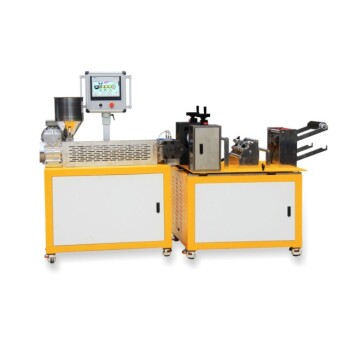
Lab Plastic PVC Calender Stretch Film Casting Machine for Film Testing

Lab Plastic PVC Calender Stretch Film Casting Machine for Film Testing

The cast film machine is designed for the molding of polymer cast film products and has multiple processing functions such as casting, extrusion, stretching, and compounding.

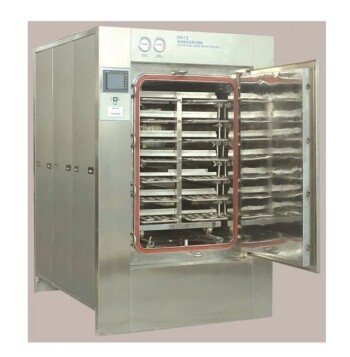
Laboratory Sterilizer Lab Autoclave Herbal Powder Sterilization Machine for Plant

Laboratory Sterilizer Lab Autoclave Herbal Powder Sterilization Machine for Plant

The herbal powder sterilization autoclave machine for Chinese medicine uses saturated steam for effective sterilization. It utilizes the heat and penetrative properties of steam, achieves sterilization after heat preservation, and maintains a good drying effect with a dedicated drying system.

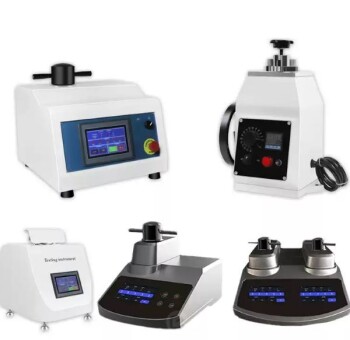
Metallographic Specimen Mounting Machine for Laboratory Materials and Analysis

Metallographic Specimen Mounting Machine for Laboratory Materials and Analysis

Precision metallographic mounting machines for labs—automated, versatile, and efficient. Ideal for sample prep in research and quality control. Contact KINTEK today!

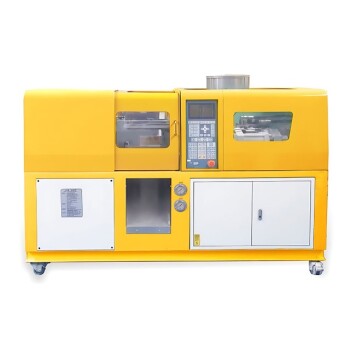
Small Injection Molding Machine for Lab Use

Small Injection Molding Machine for Lab Use

The small injection molding machinehas fast and stable movements; good controllability and repeatability, super energy saving; the product can be automatically dropped and formed; the machine body is low, convenient for feeding, easy to maintain, and no height restrictions on the installation site.

Laboratory Vibratory Sieve Shaker Machine for Dry and Wet Three-Dimensional Sieving

Laboratory Vibratory Sieve Shaker Machine for Dry and Wet Three-Dimensional Sieving

KT-VD200 can be used for sieving tasks of dry and wet samples in the laboratory. The screening quality is 20g-3kg. The product is designed with a unique mechanical structure and an electromagnetic vibrating body with a vibration frequency of 3000 times per minute.

Single Punch Electric Tablet Press Machine Laboratory Powder Tablet Punching TDP Tablet Press

Single Punch Electric Tablet Press Machine Laboratory Powder Tablet Punching TDP Tablet Press

The single-punch electric tablet press is a laboratory-scale tablet press suitable for corporate laboratories in pharmaceutical, chemical, food, metallurgical and other industries.

Desktop Fast Laboratory Autoclave Sterilizer 35L 50L 90L for Lab Use

Desktop Fast Laboratory Autoclave Sterilizer 35L 50L 90L for Lab Use

The desktop fast steam sterilizer is a compact and reliable device used for rapid sterilization of medical, pharmaceutical, and research items. It efficiently sterilizes surgical instruments, glassware, medicines, and resistant materials, making it suitable for various applications.

Powerful Plastic Crusher Machine

Powerful Plastic Crusher Machine

KINTEK's powerful plastic crusher machines process 60-1350 KG/H of diverse plastics, ideal for labs and recycling. Durable, efficient, and customizable.

Single Punch Manual Tablet Press Machine TDP Tablet Punching Machine

Single Punch Manual Tablet Press Machine TDP Tablet Punching Machine

Single punch manual tablet punching machine can press various granular, crystal or powdery raw materials with good fluidity into disc-shaped, cylindrical, spherical, convex, concave and other various geometric shapes (such as square, triangle, ellipse, capsule shape, etc.), and can also press products with text and patterns.

12 Inch 24 Inch High Precision Automatic Diamond Wire Cutting Machine Laboratory Saw Precision Wire EDM Cutting Machine

12 Inch 24 Inch High Precision Automatic Diamond Wire Cutting Machine Laboratory Saw Precision Wire EDM Cutting Machine

The high precision automatic diamond wire cutting machine is a versatile cutting tool that uses a diamond wire to cut through a wide range of materials, including conductive and non-conductive materials, ceramics, glass, rocks, gems, jade, meteorites, monocrystalline silicon, silicon carbide, polycrystalline silicon, refractory bricks, epoxy boards, and ferrite bodies. It is especially suitable for cutting various brittle crystals with high hardness, high value, and easy to break.

High Energy Planetary Ball Mill Machine for Laboratory Horizontal Tank Type

High Energy Planetary Ball Mill Machine for Laboratory Horizontal Tank Type

The KT-P2000H uses a unique Y-axis planetary trajectory, and utilizes the collision, friction and gravity between the sample and the grinding ball.

High Precision Diamond Wire Cutting Machine Laboratory Saw Precision Wire EDM Cutting Machine

High Precision Diamond Wire Cutting Machine Laboratory Saw Precision Wire EDM Cutting Machine

The high precision diamond wire cutting machine is a versatile and precise cutting tool designed specifically for material researchers. It utilizes a continuous diamond wire cutting mechanism, enabling precise cutting of brittle materials such as ceramics, crystals, glass, metals, rocks, and various other materials.

Automatic Heated Hydraulic Press Machine with Heated Plates for Laboratory Hot Press 25T 30T 50T

Automatic Heated Hydraulic Press Machine with Heated Plates for Laboratory Hot Press 25T 30T 50T

Efficiently prepare your samples with our Automatic Heated Lab Press. With a pressure range up to 50T and precise control, it's perfect for various industries.

Inclined Rotary Plasma Enhanced Chemical Vapor Deposition PECVD Equipment Tube Furnace Machine

Inclined Rotary Plasma Enhanced Chemical Vapor Deposition PECVD Equipment Tube Furnace Machine

Introducing our inclined rotary PECVD furnace for precise thin film deposition. Enjoy automatic matching source, PID programmable temperature control, and high accuracy MFC mass flowmeter control. Built-in safety features for peace of mind.

Mini Planetary Ball Mill Machine for Laboratory Milling

Mini Planetary Ball Mill Machine for Laboratory Milling

Discover the KT-P400 desktop planetary ball mill, ideal for grinding and mixing small samples in the lab. Enjoy stable performance, long service life, and practicality. Functions include timing and overload protection.

Single Punch Electric Tablet Press Machine TDP Tablet Punching Machine

Single Punch Electric Tablet Press Machine TDP Tablet Punching Machine

The electric tablet punching machine is a laboratory equipment designed for pressing various granular and powdery raw materials into discs and other geometric shapes. It is commonly used in pharmaceutical, healthcare products, food, and other industries for small batch production and processing. The machine is compact, lightweight, and easy to operate, making it suitable for use in clinics, schools, laboratories, and research units.

Double Plate Heating Press Mold for Lab

Double Plate Heating Press Mold for Lab

Discover precision in heating with our Double Plate Heating Mold, featuring high-quality steel and uniform temperature control for efficient lab processes. Ideal for various thermal applications.

Single Punch Tablet Press Machine and Mass Production Rotary Tablet Punching Machine for TDP

Single Punch Tablet Press Machine and Mass Production Rotary Tablet Punching Machine for TDP

Rotary tablet punching machine is an automatic rotating and continuous tableting machine. It is mainly used for tablet manufacturing in the pharmaceutical industry, and is also suitable for industrial sectors such as food, chemicals, batteries, electronics, ceramics, etc. to compress granular raw materials into tablets.

Touchscreen Automatic Vacuum Heat Press

Touchscreen Automatic Vacuum Heat Press

Precision vacuum heat press for labs: 800°C, 5-ton pressure, 0.1MPa vacuum. Ideal for composites, solar cells, aerospace.

Lab Blown Film Extrusion Three Layer Co-Extrusion Film Blowing Machine

Lab Blown Film Extrusion Three Layer Co-Extrusion Film Blowing Machine

Lab blown film extrusion is mainly used to detect the feasibility of film blowing of polymer materials and the colloid condition in the materials, as well as the dispersion of colored dispersions, controlled mixtures, and extrudates;


Leave Your Message