Strictly speaking, the name Spark Plasma Sintering (SPS) is a misnomer. While the term is widely used, the scientific consensus is that the process is not primarily driven by plasma. Instead, its effectiveness comes from passing a pulsed direct current (DC) through a conductive die and the powder compact, which generates rapid, uniform heat through electrical resistance. The "spark" and "plasma" effects, if they occur at all, are considered secondary to this dominant heating mechanism.
The core takeaway is that "Spark Plasma Sintering" is better understood as a Field-Assisted Sintering Technique (FAST). Its true power lies in using an electrical current for direct Joule heating, which allows for significantly faster and lower-temperature consolidation of materials compared to conventional methods.
What Is Spark Plasma Sintering, Really?
To understand SPS, it's critical to look past the name and focus on the actual physical process. The technology's unique advantages stem from how it applies energy to the material.
The Dominant Force: Joule Heating
The primary mechanism in SPS is Joule heating. An electrical current is passed directly through the graphite pressure die and, if the powder is conductive, through the material itself.
This direct application of current generates internal heat due to electrical resistance. The result is extremely rapid and uniform heating throughout the powder compact.
The Role of the Electrical Current
SPS uses a pulsed DC current, not a continuous one. This repeated application of high-current energy is what facilitates rapid densification.
This method heats the sample both externally (from the hot die) and internally (from the current passing through the powder). This dual-action heating is a key reason for its efficiency.
The "Spark Plasma" Controversy
The name originates from an early theory that electrical discharge, or sparks, would form between powder particles, creating localized plasma. This plasma was thought to clean particle surfaces and enhance bonding.
However, most modern research indicates that this effect is minimal or non-existent under typical operating conditions. The term FAST is now often preferred in technical literature as it more accurately describes the process as an electrical field-assisted technique dominated by Joule heating.
Why Is This Method So Effective?
The unique heating mechanism of SPS provides several significant advantages over traditional furnace-based sintering, where heat must slowly penetrate the material from the outside.
Unprecedented Speed
SPS cycles are incredibly short, often completed in less than 20 minutes. Conventional sintering can take many hours or even days. This allows for rapid material development and prototyping.
Lower Sintering Temperatures
Densification occurs at much lower temperatures—often several hundred degrees Celsius lower than conventional methods.
This is crucial for preserving refined or nano-scale microstructures in advanced materials, which would be destroyed by the high heat and long duration of traditional sintering.
Superior Density and Uniformity
The combination of pressure and rapid, uniform heating results in highly dense, homogenous final parts. SPS is ideal for materials where achieving maximum solid density is a critical performance requirement.
Material Versatility
The process is effective for a vast range of materials, including ceramics, refractory metals, composites, and even amorphous materials like glass. It can be used for both electrical conductors and insulators.
Understanding the Practical Trade-offs
While powerful, SPS is not a universal solution. A trusted advisor must point out the clear limitations that define its ideal use cases.
High Initial Investment
SPS equipment is complex and expensive. This represents a significant capital investment compared to standard furnace technology.
Limited Production Scale
The process is typically used to create one component at a time within a relatively small die. This makes it poorly suited for high-volume, mass production scenarios where cost-per-part is the primary driver.
Geometric Constraints
Because the process relies on uniaxial pressure within a rigid die, it is generally limited to producing simple shapes like discs, cylinders, and rectangular blocks. Complex, near-net-shape parts are not feasible.
Making the Right Choice for Your Goal
Deciding whether SPS is appropriate depends entirely on your project's primary objective.
- If your primary focus is rapid material development or research: SPS is an exceptional tool because it drastically reduces iteration time and preserves novel microstructures.
- If your primary focus is producing small, high-performance components with superior density: The uniform heating and low-temperature consolidation of SPS make it a leading choice for cutting-edge applications.
- If your primary focus is high-volume, low-cost manufacturing: The high initial investment and small batch size of SPS likely make it unsuitable compared to conventional sintering methods.
Ultimately, you should think of SPS not for the "spark," but for the speed and precision it delivers in creating advanced materials.
Summary Table:
| Feature | Spark Plasma Sintering (SPS) | Conventional Sintering |
|---|---|---|
| Primary Mechanism | Joule Heating (Electrical Current) | External Furnace Heating |
| Sintering Time | Minutes (e.g., <20 min) | Hours to Days |
| Temperature | Lower (by hundreds of °C) | Higher |
| Ideal For | Rapid R&D, High-Performance Materials | Mass Production, Simple Parts |
Ready to accelerate your materials research with precise, low-temperature sintering? KINTEK specializes in advanced lab equipment like SPS/FAST systems, delivering rapid densification and superior material properties for laboratories focused on innovation. Contact our experts today to find the perfect solution for your advanced material needs!
Visual Guide

Related Products
- Spark Plasma Sintering Furnace SPS Furnace
- CF KF Flange Vacuum Electrode Feedthrough Lead Sealing Assembly for Vacuum Systems
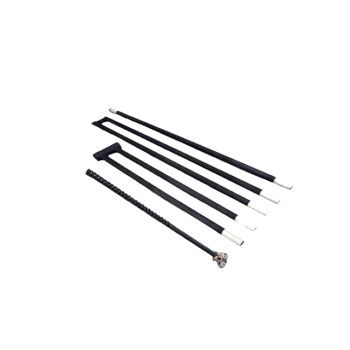
- Silicon Carbide SiC Thermal Heating Elements for Electric Furnace
- Custom PTFE Teflon Parts Manufacturer for Hollow Etching Flower Basket ITO FTO Developing Glue Removal
- Conductive Boron Nitride BN Ceramics Composite for Advanced Applications
People Also Ask
- What is the heating rate of spark plasma sintering? Unlock Rapid, High-Performance Material Densification
- What is the difference between spark plasma sintering and conventional sintering? A Guide to Faster, Better Materials
- What is the mechanism of SPS? Unlock Rapid, Low-Temperature Densification
- What is spark plasma sintering process? Fast-Track to Dense, Fine-Grained Materials
- What is the plasma sintering method? Unlock Rapid, High-Density Material Fabrication