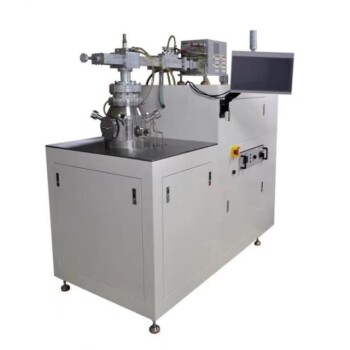
Chemical Vapor Deposition (CVD) is a highly versatile synthesis technique capable of producing materials ranging from advanced nanostructures to robust industrial coatings. It is specifically renowned for growing carbon nanotubes, GaN nanowires, SiC nanorods, and Fe nanoparticles, alongside a broad spectrum of metals, ceramics, and semiconductors.
Core Takeaway CVD is the preferred method for creating high-purity, fine-grained materials that require precise structural control, such as monolayers and nanostructures. It transforms raw precursors into distinct solid materials, significantly altering optical, electrical, and mechanical properties for high-performance applications.
Synthesizing Advanced Nanostructures
Carbon-Based Nanomaterials
CVD is frequently used to grow complex carbon structures. This includes carbon nanotubes (including industrial-scale single-walled variants) and large-scale sheets of graphene.
Additionally, the process is capable of synthesizing diamond. These materials are prized for their exceptional mechanical strength and unique electrical properties.
Semiconductor and Ceramic Nanostructures
The method is instrumental in producing specific semiconductor components like GaN (Gallium Nitride) nanowires. These are critical for optoelectronic applications.
In the realm of ceramics, CVD is used to synthesize SiC (Silicon Carbide) nanorods. It can also produce quantum dots and other ceramic nanostructures with high precision.
Metal Nanoparticles
Beyond complex compounds, CVD is used to synthesize elemental nanostructures. Specifically, it is effective in growing Fe (Iron) nanoparticles.
Industrial Coatings and Thin Films
Broad Compositional Range
CVD is not limited to nanomaterials; it produces a wide array of chemical compositions. This includes carbides, nitrides, oxides, and intermetallic phases.
These compositions are often applied as coatings. They serve as protective layers for high-performance automotive or aerospace parts where hardness and lubricity are critical.
Elemental Deposits
The technology can produce most metals and key non-metals. Silicon is a primary example, making CVD central to the electronics and solar panel industries.
It also fabricates thin films of polymeric materials. These films are utilized in applications ranging from microelectronics to optical coatings for sunglasses.
Understanding the Trade-offs
Deposition Rate vs. Quality
While CVD produces materials that are fine-grained, impervious, and of high purity, the process is generally slow.
Coatings are typically deposited at rates of only a few microns per minute (or sometimes hundreds of microns per hour). This makes the process ideal for high-value, precision applications, but potentially less suitable for scenarios requiring rapid, high-volume bulk material production.
Making the Right Choice for Your Goal
To determine if CVD is the right synthesis method for your specific material needs, consider the following:
- If your primary focus is Nanotechnology: CVD is essential for growing precise structures like carbon nanotubes, GaN nanowires, and SiC nanorods.
- If your primary focus is Surface Durability: CVD provides carbides and nitrides that are harder and more corrosion-resistant than conventional ceramics.
- If your primary focus is Semiconductor Manufacturing: CVD is the standard for depositing high-purity silicon and creating the thin films required for microelectronic devices.
CVD remains the definitive choice when material purity and structural precision outweigh the need for rapid production speeds.
Summary Table:
| Material Category | Specific Examples | Key Applications |
|---|---|---|
| Carbon Nanostructures | Graphene, Carbon Nanotubes, Diamond | Electronics, aerospace, high-strength composites |
| Semiconductors | Silicon (Si), Gallium Nitride (GaN) | Solar panels, microelectronics, optoelectronics |
| Ceramics & Nanorods | Silicon Carbide (SiC) nanorods, Carbides | Protective coatings, high-temperature tools |
| Metal Nanoparticles | Iron (Fe) nanoparticles, Various thin films | Catalysis, magnetic storage, industrial coatings |
Elevate Your Material Research with KINTEK Precision
Unlock the full potential of Chemical Vapor Deposition with KINTEK’s industry-leading laboratory equipment. Whether you are synthesizing carbon nanotubes, developing next-generation semiconductors, or applying advanced industrial coatings, our comprehensive range of CVD and PECVD systems, high-temperature tube furnaces, and vacuum solutions provide the thermal precision and atmospheric control your research demands.
From high-purity ceramics to complex nanostructures, KINTEK specializes in providing the tools that drive innovation. We offer a full suite of laboratory essentials, including high-pressure reactors, PTFE consumables, and crushing systems to support your entire workflow.
Ready to optimize your synthesis process? Contact our experts today to find the perfect equipment solution tailored to your laboratory's specific needs.
Related Products
- Chemical Vapor Deposition CVD Equipment System Chamber Slide PECVD Tube Furnace with Liquid Gasifier PECVD Machine
- Microwave Plasma Chemical Vapor Deposition MPCVD Machine System Reactor for Lab and Diamond Growth
- 915MHz MPCVD Diamond Machine Microwave Plasma Chemical Vapor Deposition System Reactor
- Customer Made Versatile CVD Tube Furnace Chemical Vapor Deposition Chamber System Equipment
- HFCVD Machine System Equipment for Drawing Die Nano-Diamond Coating
People Also Ask
- What are the advantages of chemical vapor deposition? Achieve Superior Thin Films for Your Lab
- What types of substrates are used in CVD to facilitate graphene films? Optimize Graphene Growth with the Right Catalyst
- What is the chemical vapor deposition growth process? Build Superior Thin Films from the Atom Up
- How expensive is chemical vapor deposition? Understanding the True Cost of High-Performance Coating
- Why is Chemical Vapor Deposition (CVD) equipment uniquely suited for constructing hierarchical superhydrophobic structures?